NASA is accelerating its push to Mars, even as it races back to the moon with international and commercial partners. The space agency plans to test a nuclear-powered spacecraft in 2028 that could dramatically shorten travel times to the Red Planet, opening the door to deeper exploration and eventual human settlement.
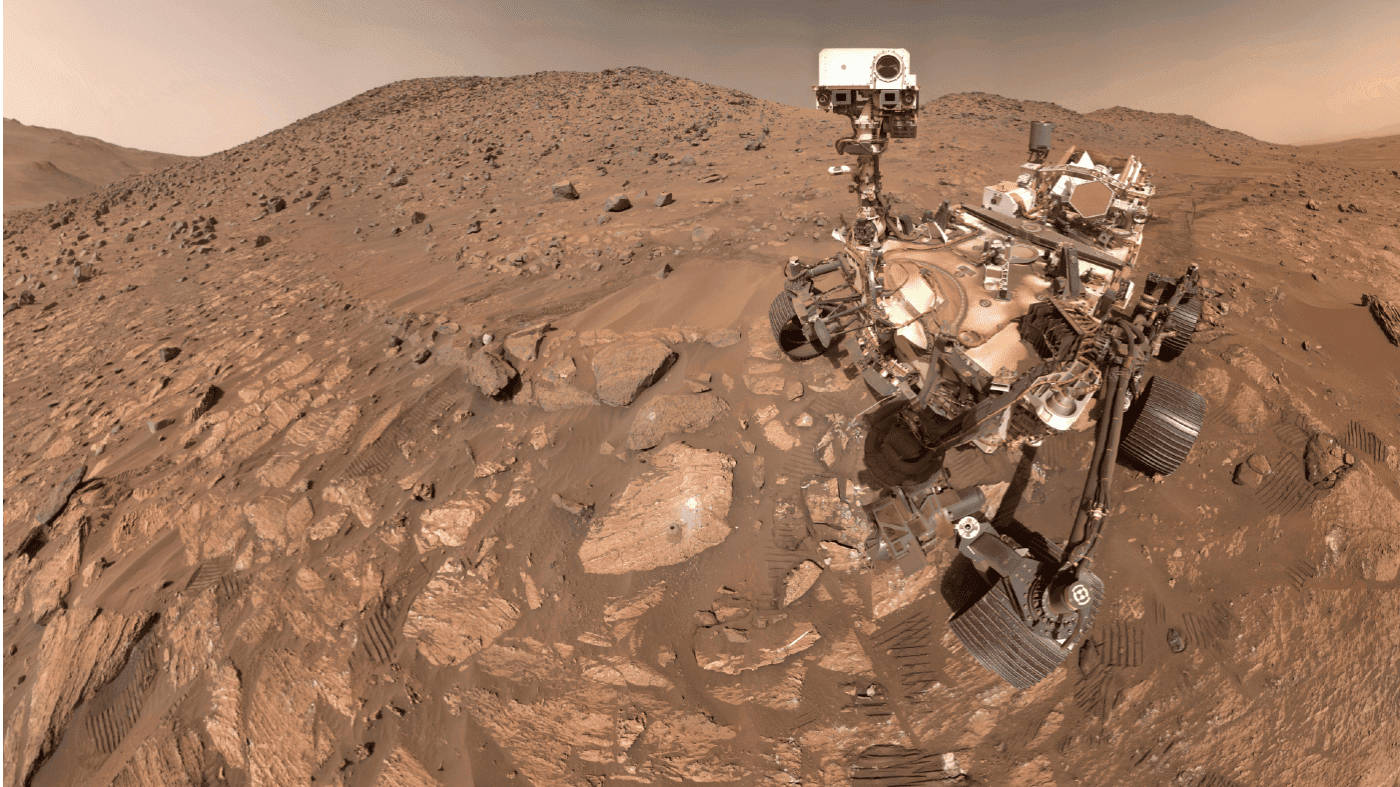
Dubbed Space Reactor-1 Freedom, the spacecraft will carry three helicopters called Skyfall to Mars, similar to the Ingenuity drone that accompanied the Perseverance rover in 2021. Once deployed, Skyfall will scout potential landing sites for future crewed missions. The mission was unveiled as part of NASA's broader Ignition announcement in March.

Space Reactor-1 Freedom is a nuclear electric rocket, which uses electricity to ionize a propellant like xenon, generating a steady, low thrust that over time accelerates faster than conventional chemical rockets. After launching atop a standard rocket, it will fire its nuclear electric engine in space. NASA has already flown solar-powered electric rockets, such as the Psyche mission to the asteroid belt, but nuclear power offers a critical edge for deep space missions where sunlight is too weak.
Nuclear propulsion is not new to NASA. The agency worked on the Nuclear Engine for Rocket Vehicle Application (NERVA) in the 1960s, conducting ground tests before the program was canceled under President Nixon as part of post-Apollo budget cuts. NERVA, unlike Space Reactor-1 Freedom, was a nuclear thermal rocket that superheated propellant for massive thrust. The concept resurfaced in the late 1980s under the Strategic Defense Initiative's Timberwind program, but never advanced beyond early planning due to a lack of political support.
Today, the political climate is different. Bipartisan backing in Congress and among the public for lunar and Martian exploration has revived interest in nuclear technology—not just for propulsion, but for powering moon bases and Mars settlements. According to Space News, Space Reactor-1 Freedom will take about a year to reach Mars and deploy its helicopters. Future, more powerful nuclear electric rockets could cut that journey to two or three months, far less than the seven months or more required by chemical rockets.
The benefits extend beyond Mars. Nuclear rockets could slash travel times to outer planets like Jupiter and Saturn, reducing crew exposure to microgravity and radiation—key hazards of interplanetary travel. Meanwhile, Elon Musk's plan to establish a million-person settlement on Mars relies on SpaceX's Starship, a chemical rocket that requires multiple refueling flights in low Earth orbit and a seven-month voyage to an unforgiving planet. The Mars settlement is not only Musk's dream but also the basis for what he has called the largest CEO payday in history.
Some experts suggest combining Starship with a nuclear engine, perhaps by docking with a NASA-provided nuclear stage, to cut travel time in half. The engineering challenges are immense given Starship's mass, but the possibility warrants serious study. As nuclear energy gains momentum in the U.S., such a hybrid could be the key to opening the solar system to human exploration and settlement.
Mark R. Whittington, a space policy analyst and author of several books on space exploration, including "Why Is It So Hard to Go Back to the Moon?" and "The Moon, Mars and Beyond," notes that the current bipartisan support for deep space missions makes nuclear propulsion more likely to succeed than in past decades. The path to Mars, it seems, may be powered by the atom.