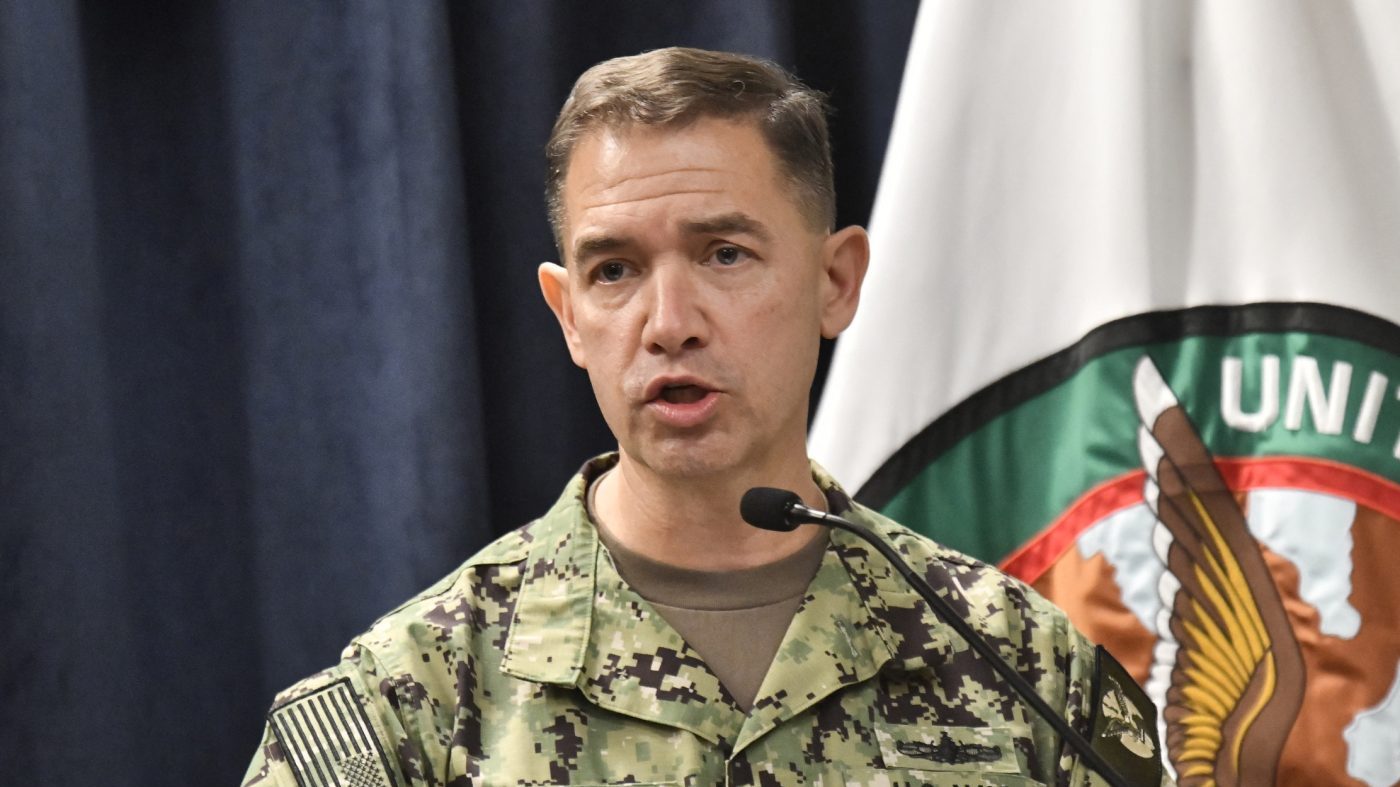
The commander of U.S. Central Command stated on Thursday that Iran has sustained a catastrophic blow to its military capabilities, even as over 50,000 American troops maintain a defensive posture under a tenuous ceasefire agreement.
In a video statement, Navy Admiral Brad Cooper asserted that while offensive operations have paused, U.S. forces "remain present, we remain vigilant and we remain ready if called." The ceasefire follows a nearly six-week campaign, Operation Epic Fury, which began on February 28.

A Declared Victory and Lingering Threats
Senior U.S. officials have framed the conflict's pause as a decisive triumph. President Trump earlier this week characterized the outcome as a "total and complete victory," a sentiment echoed by Defense Secretary Pete Hegseth, who proclaimed an "overwhelming victory" over Tehran.
However, military leaders have tempered this rhetoric with stark warnings about the ceasefire's fragility. Joint Chiefs of Staff Chair General Dan Caine acknowledged Wednesday that the pause "could give way to more fighting," emphasizing that the U.S. military "remains ready if ordered or called upon to resume combat operations." This readiness is underscored by the continued presence of a massive U.S. force in the region.
The Scale of Iran's Defeat
Admiral Cooper provided a blunt assessment of the damage inflicted on Iran. "Iran has suffered a generational military defeat," he stated, crediting coordinated U.S. and Israeli actions with having "systematically destroyed Iran's ability to conduct large-scale military operations for years to come."
He elaborated that the campaign's objective was to "dismantle the Iranian regime's ability to project power beyond its own borders," a task he claimed was "clearly accomplished." Cooper concluded that Iran's conventional military capability "has been eliminated." This declaration of a decisive military victory forms the core of the administration's current narrative.
Strains on the Ceasefire
The temporary peace faces immediate challenges. Admiral Cooper noted the situation remains "tenuous" due to two primary factors: continued Israeli bombardment of Lebanon, which Iran claims violates the agreement, and Tehran's sustained control over the strategic Strait of Hormuz.
The ongoing Israeli strikes in Lebanon represent a significant point of contention that could quickly unravel the diplomatic pause. President Trump has previously threatened escalated military strikes should Iran breach the ceasefire terms.
Cost and Continued Posture
The military campaign has come at a price. CENTCOM confirmed that thirteen U.S. service members have been killed and at least 381 wounded since Operation Epic Fury commenced. Despite the human cost and the declared victory, the U.S. military footprint in the Middle East shows no signs of diminishing in the immediate term.
The administration's stance, as outlined by the President, is to maintain military pressure on Iran until a satisfactory long-term agreement is secured. This positions the current ceasefire not as an endpoint, but as a conditional pause, with American forces poised for potential rapid re-engagement should diplomacy fail or hostilities resume.