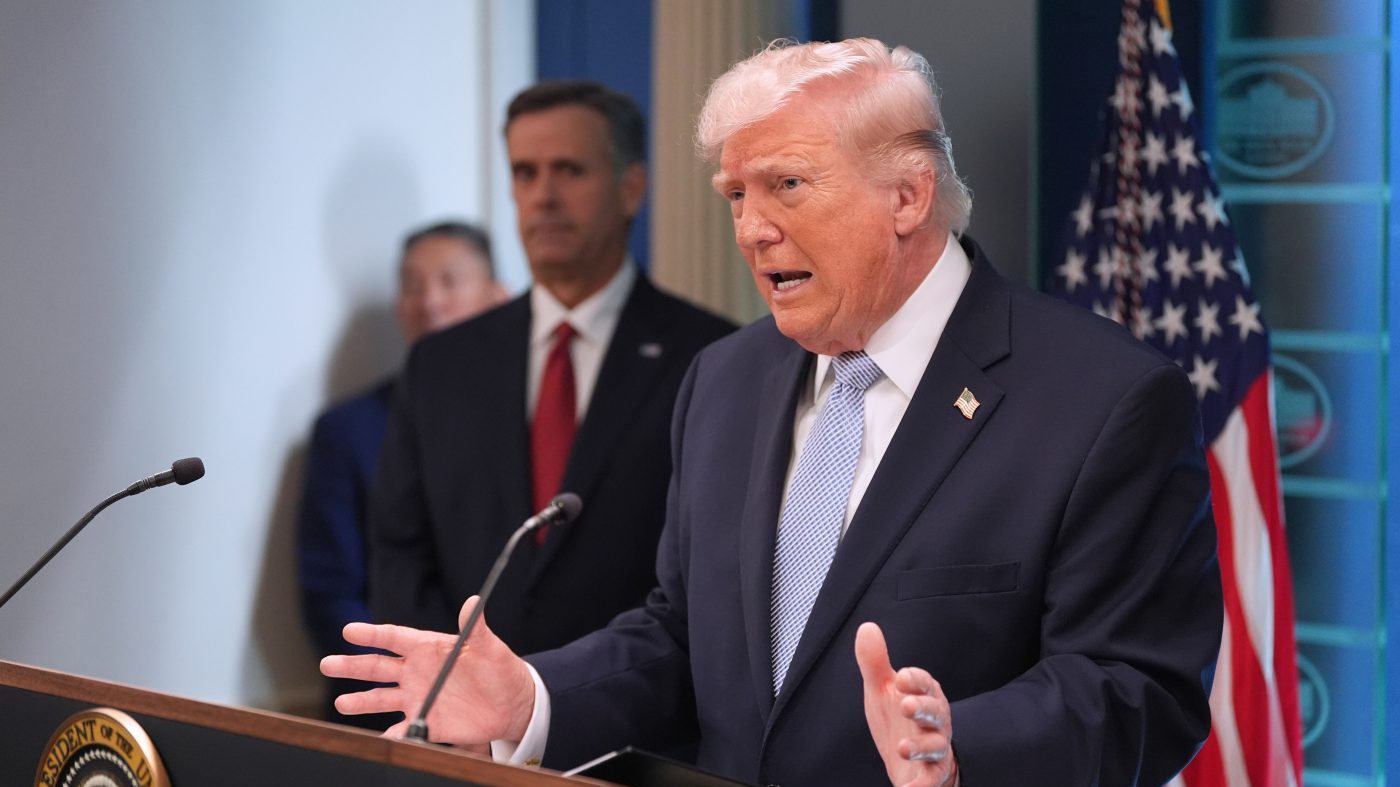
President Donald Trump issued a stark warning to Iran late Wednesday, threatening to authorize dramatically escalated military strikes if Tehran fails to adhere to the terms of a newly negotiated ceasefire. In a social media post, the president stated that U.S. military assets would remain deployed in the region, ready for what he described as a potential lethal prosecution of the conflict.
"If for any reason [the agreement] is not [complied with], which is highly unlikely, then the 'Shootin' Starts,' bigger, and better, and stronger than anyone has ever seen before," Trump wrote. He emphasized that the core demands were a prohibition on nuclear weapons and guaranteed safe passage through the Strait of Hormuz, claiming these terms were "agreed, a long time ago."
The warning follows the announcement of a two-week ceasefire, brokered by Pakistani Prime Minister Shehbaz Sharif and Army Chief Asim Munir. Trump revealed the agreement just before an 8 p.m. EDT deadline he had set for Iran to reopen the critical waterway. This development comes after a 38-day military campaign that has drawn scrutiny from both sides of the aisle.
Earlier on Tuesday, the president had made an even more severe threat, suggesting that a "whole civilization" in Iran—a nation of approximately 93 million—could perish if no deal was reached. On Easter, he vowed strikes on Iranian infrastructure and energy targets. Legal experts note that intentional attacks on civilians or non-military targets could constitute war crimes under the Rome Statute, a treaty the U.S. signed but has not ratified.
The ceasefire remains precarious. Maritime traffic through the Strait of Hormuz has plummeted to roughly five vessels in 24 hours, a fraction of the typical daily average of 60, according to monitoring groups. This contradicts assertions from Defense Secretary Pete Hegseth that the passage is open. Furthermore, escalating Israeli strikes in Lebanon are prompting pushback from Iran, threatening to unravel the fragile pause in hostilities.
Diplomatic efforts are set to continue this weekend in Islamabad, where a U.S. delegation led by Vice President J.D. Vance, envoy Steve Witkoff, and senior advisor Jared Kushner will meet with Iranian officials. The path forward is uncertain, with key lawmakers like Senator Lindsey Graham raising concerns about the ceasefire's viability.
Trump's aggressive posture and the ongoing crisis have ignited a fierce debate in Washington. While some Republicans have cautiously welcomed the diplomatic opening, Senate Democrats are moving to check the president's authority, having forced a vote to curtail his war powers. Critics, including Senator Chris Van Hollen, have blasted administration claims of victory as deceptive.
The president concluded his warning with a characteristically bullish statement: "In the meantime our great Military is Loading Up and Resting, looking forward, actually, to its next Conquest. AMERICA IS BACK!" The coming days will test whether the ceasefire holds or if the region faces the "bigger, better, stronger" confrontation Trump has promised.