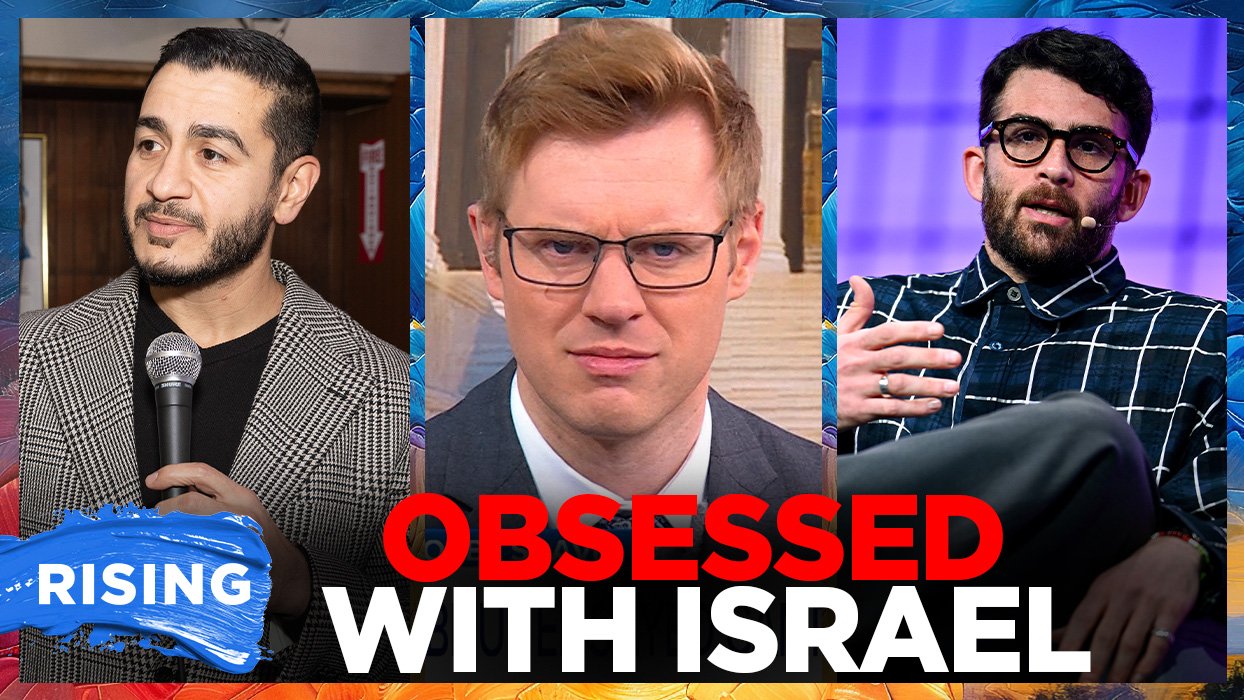
Michigan Democratic Senate candidate Abdul El-Sayed is facing intense scrutiny over his political alliance with controversial online commentator Hasan Piker, raising questions about judgment and coalition-building on the party's left flank. The controversy centers not merely on appearing on Piker's platform, but on El-Sayed's decision to feature Piker as a campaign surrogate and his subsequent refusal to directly criticize the streamer's history of inflammatory remarks.
A Strategic Embrace
El-Sayed, running in a competitive primary, has actively campaigned alongside Piker, inviting him to speak on the candidate's behalf. This move goes beyond the approach suggested by figures like Rep. Ro Khanna, who has argued Democrats can engage with Piker's large audience provided they challenge his more extreme positions. For El-Sayed, Piker represents a direct conduit to a young, digitally-engaged progressive base, a strategic calculation detailed in our report on how the candidate is courting the online left.
Dodging Disagreement
When pressed by journalists to articulate any disagreements with Piker—who has made statements sympathetic to authoritarian regimes and suggested America deserved the 9/11 attacks—El-Sayed declined to offer specific critiques. Critics argue this evasion is significant; by featuring Piker as a surrogate, El-Sayed implicitly endorses him, making the candidate's views subject to public evaluation. The core criticism is that aspiring national leaders must demonstrate discernment in choosing who represents their campaign.
"You weren't being asked to cancel him," one critique holds, "you were being asked if you have disagreements with him, because he's standing next to you and representing your campaign. That reflects on your judgment."
Equivocation on Local Anti-Semitism
Further compounding the controversy, El-Sayed offered a notably qualified response when asked about a recent anti-Semitic attack on Temple Israel, a synagogue in West Bloomfield Township, Michigan. Rather than issuing an unequivocal condemnation, his statement was viewed by critics as equivocal, attempting to contextualize the violence within broader global conflicts. This response has sparked accusations that he is prioritizing distant geopolitical narratives over clear moral condemnation of an attack on his potential constituents.
The incident highlights a persistent tension within progressive politics: how to critique Israeli government policy without veering into rhetoric that minimizes or excuses anti-Semitic violence. This debate occurs against a volatile international backdrop, including escalating cross-border strikes between Israel and Hezbollah in Lebanon which threaten to destabilize regional diplomacy.
The Broader Democratic Dilemma
The El-Sayed-Piker alliance exemplifies a broader challenge for Democrats: managing a coalition that includes both establishment figures and online leftist influencers whose rhetoric often clashes with mainstream party values. While figures like Piker command massive audiences, their statements praising authoritarian states and militant groups force Democratic candidates into difficult positions. The party must decide whether to distance itself from such voices or risk having their most extreme positions define the broader left.
This internal conflict is not isolated. Other Democratic figures have faced similar scrutiny for their associations with Piker, creating an ongoing rift about the boundaries of acceptable coalition partners. The fundamental question is whether embracing such figures represents a necessary expansion of the tent or a compromise of core principles.
Foreign Policy as Fault Line
Underlying the controversy is a specific foreign policy divergence. Critics of Piker and some elements of the left argue there exists a disproportionate focus on condemning Israel compared to other global actors. "This relentless focus on the unique evil of Israel is exhausting," one perspective notes, "particularly when it comes from people who won't lift a finger to complain about Russia or China." This perceived imbalance leads to accusations of underlying anti-Semitic bias, a charge that becomes politically toxic for candidates.
These tensions are magnified by ongoing violence. Recent major Israeli strikes against Hezbollah have further complicated the diplomatic landscape, with key players like Iran warning that U.S.-brokered talks are meaningless if attacks continue.
For Abdul El-Sayed, the controversy represents a critical test. His campaign's embrace of Hasan Piker and his responses to questions of anti-Semitism will likely define his candidacy, testing whether a candidate can harness the energy of the digital left without being consumed by its most controversial associations. The outcome in Michigan will be closely watched as a bellwether for the Democratic Party's ongoing identity struggle.