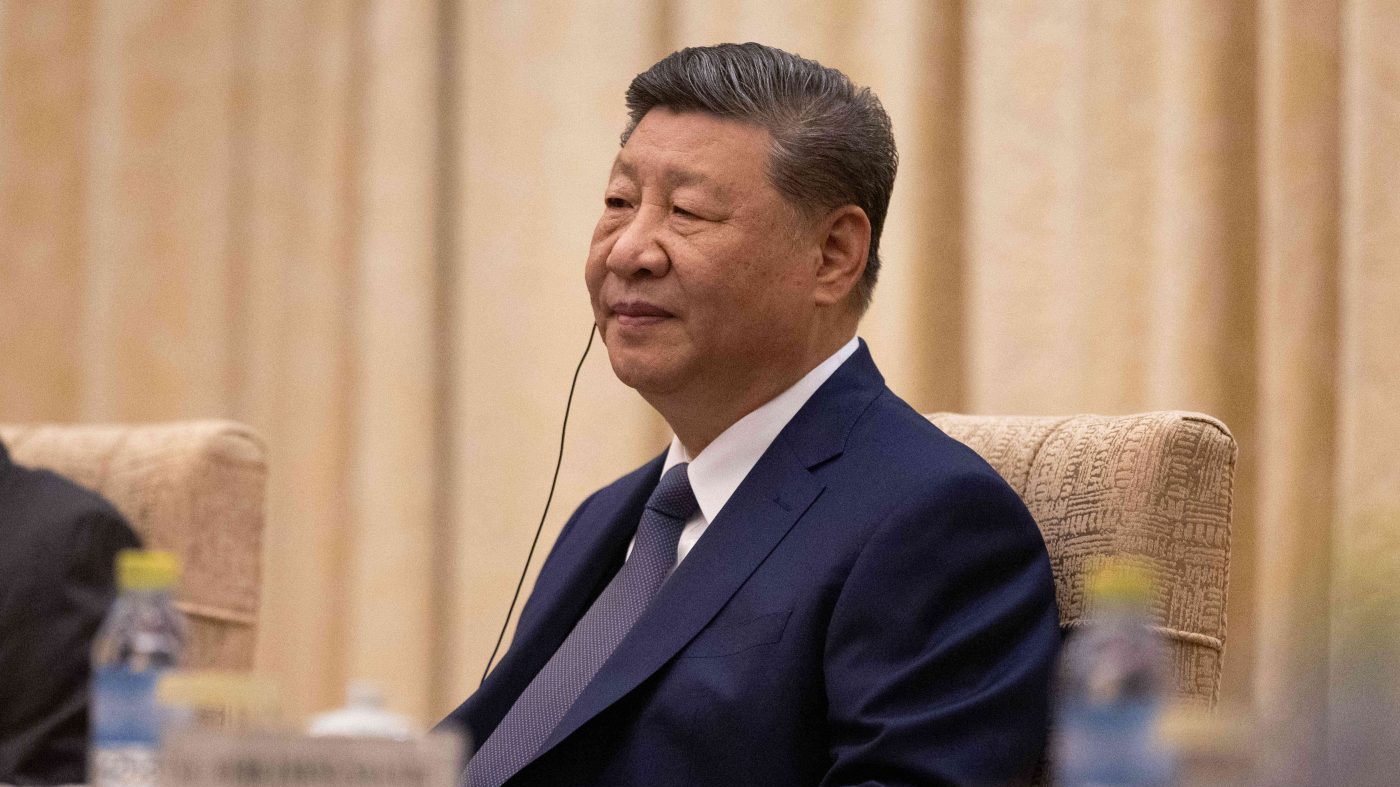
Chinese President Xi Jinping has broken his silence on the strategic Strait of Hormuz, explicitly calling for the restoration of normal maritime traffic through the critical chokepoint that Iran has effectively closed for a month. The remarks, made during a phone call with Saudi Crown Prince Mohammed bin Salman, represent Beijing's most direct intervention yet in the escalating crisis triggered by U.S. and Israeli strikes on Iranian targets.
Beijing's Diplomatic Push
According to China's state-run Xinhua news agency, Xi urged an "immediate and comprehensive ceasefire" across the Middle East and Gulf region. He framed the reopening of the strait as serving "the common interest of regional countries and the international community." The statement signals a calculated move by Beijing to leverage its relationships with both Tehran and Gulf Arab states to position itself as a mediator, while protecting its substantial economic interests.
China's intervention underscores the severe global repercussions of the strait's closure. As the world's largest oil importer, China relies heavily on shipments through the Hormuz passageway. The blockade has sent global oil prices soaring, disrupting energy markets and supply chains worldwide. Beijing's economy is particularly vulnerable to such energy shocks.
Balancing Regional Alliances
Xi's call to the Saudi leader is part of a broader diplomatic offensive. Just last week, he met with the President of the United Arab Emirates, Sheikh Khaled bin Mohamed bin Zayed Al Nahyan, emphasizing the need for stronger ties with Gulf Cooperation Council states and a "sustainable security architecture" in the region. He warned against a return to the "law of the jungle," advocating instead for the "international rule of law."
This delicate balancing act highlights China's complex position: maintaining its close political and economic partnership with Iran while cultivating strategic relationships with Iran's regional rivals, Saudi Arabia and the UAE, who have themselves been targeted by Tehran's proxies.
Military and Economic Standoff
The geopolitical stalemate continues with no clear path to de-escalation. Iran has maintained tight control over the strait, reportedly imposing tolls for safe passage. In response, the United States has enforced a naval blockade, turning back vessels and seizing a sanctioned Iranian oil tanker. This tit-for-tat has created a volatile military flashpoint. The U.S. Navy's seizure of an Iranian vessel after ignored warnings exemplifies the high risk of miscalculation.
A temporary ceasefire is set to expire on April 22, and the prospect of a second round of U.S.-Iranian talks in Islamabad remains uncertain. While the Trump administration is preparing to send a delegation, Tehran has not formally committed to the negotiations. Former President Trump has warned of renewed strikes if Iran does not relent, and figures like Congressman Mike Waltz have signaled that military options remain on the table.
Global Economic Fallout
The economic consequences are profound and widespread. The strait's closure has choked off roughly a fifth of the world's oil supply and a significant portion of liquefied natural gas, triggering energy insecurity and inflationary pressures globally. U.S. Energy Secretary Wright has indicated that U.S. gasoline prices may not fall below $3 per gallon until 2025 due to the ongoing crisis. The disruption extends beyond energy, affecting shipments of foodstuffs and other vital commodities.
Xi Jinping's unprecedented statement is a clear indicator that the economic pain has reached a threshold compelling major powers without direct military involvement to demand a resolution. It adds diplomatic weight to calls from U.S. lawmakers like Senator Tim Kaine, who has demanded universal access to the waterway. As the deadline approaches, all sides are maneuvering, with the U.S. military preparing for further potential boardings and seizures of Iran-linked ships, ensuring the situation remains on a knife's edge.