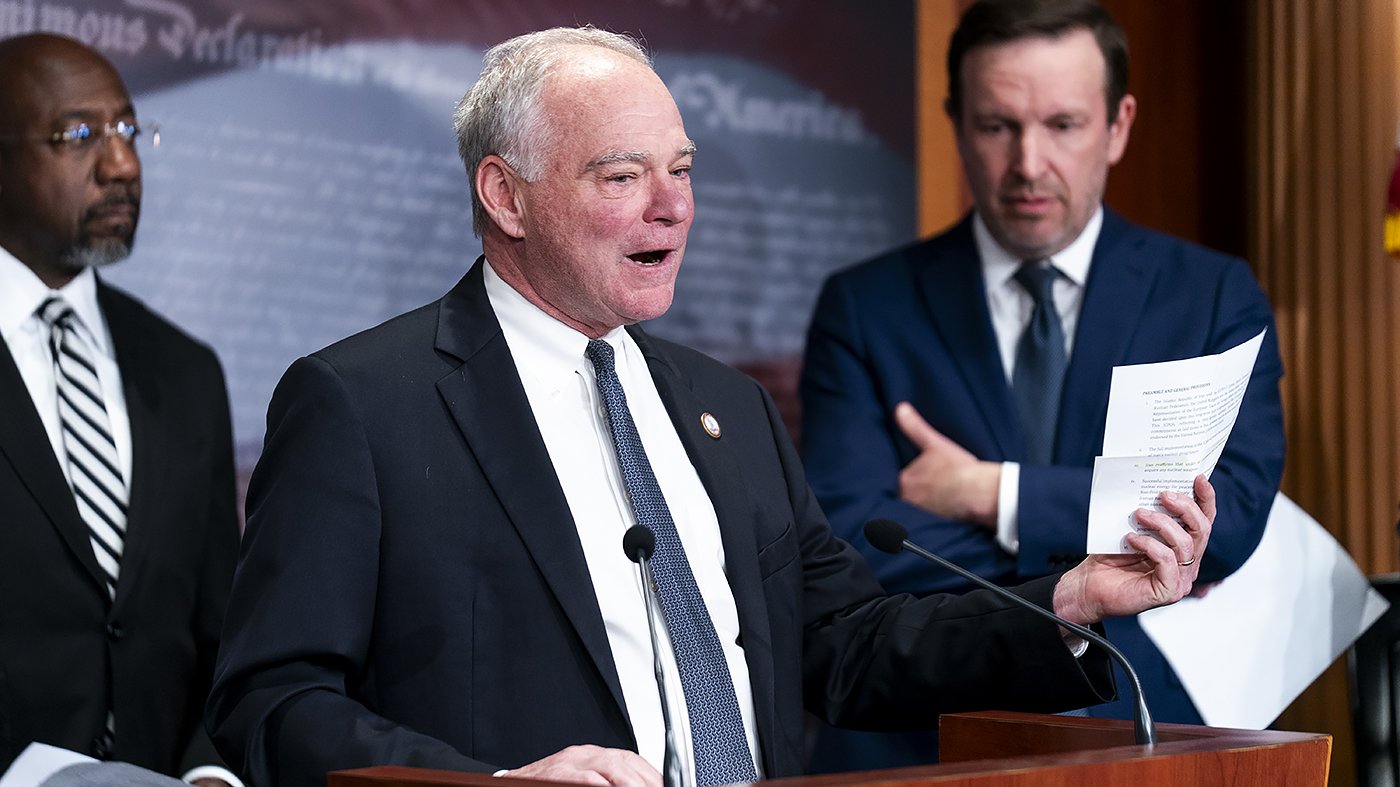
Senator Tim Kaine, a Virginia Democrat and member of key foreign policy committees, declared on Sunday that the Strait of Hormuz must be universally accessible for commercial shipping, directly challenging Iran's recent closure of the critical waterway. His comments come amid a tense U.S. military blockade and a fragile, expiring ceasefire that has roiled global energy markets.
Strategic Chokepoint in Crisis
The strategic corridor, through which a significant portion of the world's seaborne oil passes, has been effectively closed since late February following joint U.S.-Israeli strikes against Iran. A brief two-week ceasefire earlier this month led Tehran to agree to a reopening, but that agreement collapsed days later after Israeli military action in Lebanon, prompting Iran to reimpose its closure. This renewed military control by Iran has created a volatile standoff with the United States.
"If they're going to be open, I think they have to be open to all," Kaine stated during an appearance on Fox News Sunday, directly addressing the U.S. blockade of Iranian ports and military interdiction of some vessels. He framed the issue as one of fundamental maritime law and global economic stability, arguing that selective access is unsustainable.
Diplomatic Maneuvers and Market Pressure
The political and economic pressure is intensifying as the ceasefire is set to lapse this week. President Trump announced on Friday that the passageway would reopen, a declaration swiftly contradicted by Iran's Islamic Revolutionary Guard Corps, which stated it would remain closed as long as the U.S. blockade persists. Parliament Leader Mohammad-Bagher Ghalibaf reinforced this position on social media, stating passage would require Iranian authorization via a "designated route." This direct contradiction of U.S. declarations underscores the diplomatic deadlock.
Kaine expressed hope that ongoing talks could first secure an extension of the ceasefire, creating a window for broader negotiations. "Then we would talk about this nuclear issue," he said, suggesting a sequenced approach. He believes a sustained pause in hostilities would allow Washington and Tehran to negotiate key issues, including Iran's nuclear program, without the acute pressure of spiking global energy prices. "You can take the time to get that right without bombs falling and commerce choked off and everybody's gas prices going crazy all around the world," Kaine argued.
Administration Signals a Harder Line
In contrast to Kaine's call for immediate, universal access, Energy Secretary Christ Wright presented a more conditional outlook. When asked on CNN's State of the Union when safe passage might resume, Wright replied, "After a deal is reached." He indicated a resolution was "probably a reasonable timeframe" within the next two weeks, but framed the ultimate goal as a permanent end to conflict. "The best way to do it is to have an end to the conflict and a defanged and dearmed Iran," Wright stated, aligning with the administration's maximalist position. This stance suggests the closure may persist until a comprehensive deal is struck.
The economic repercussions are immediate and severe, with oil and gas prices spiking worldwide due to the constrained flow of energy. The blockade and counter-closure have created a scenario where, as U.S. naval forces prepare for further escalation, commercial shipping faces unprecedented risks. Secretary Wright has previously warned that the crisis could keep fuel prices elevated for an extended period, a forecast that adds urgency to the diplomatic efforts.
President Trump is dispatching another delegation to Islamabad on Monday in a renewed push for an agreement with Tehran. The success of these talks carries immense weight, not only for regional security but for the stability of the global economy, which remains hostage to the status of this narrow maritime passage.