Armenia's upcoming parliamentary election on June 7 is far more than a routine political contest. For the nation of 3 million, it represents a critical test of whether it can successfully distance itself from Moscow and align more closely with the West, challenging decades of Russian dominance in the South Caucasus.
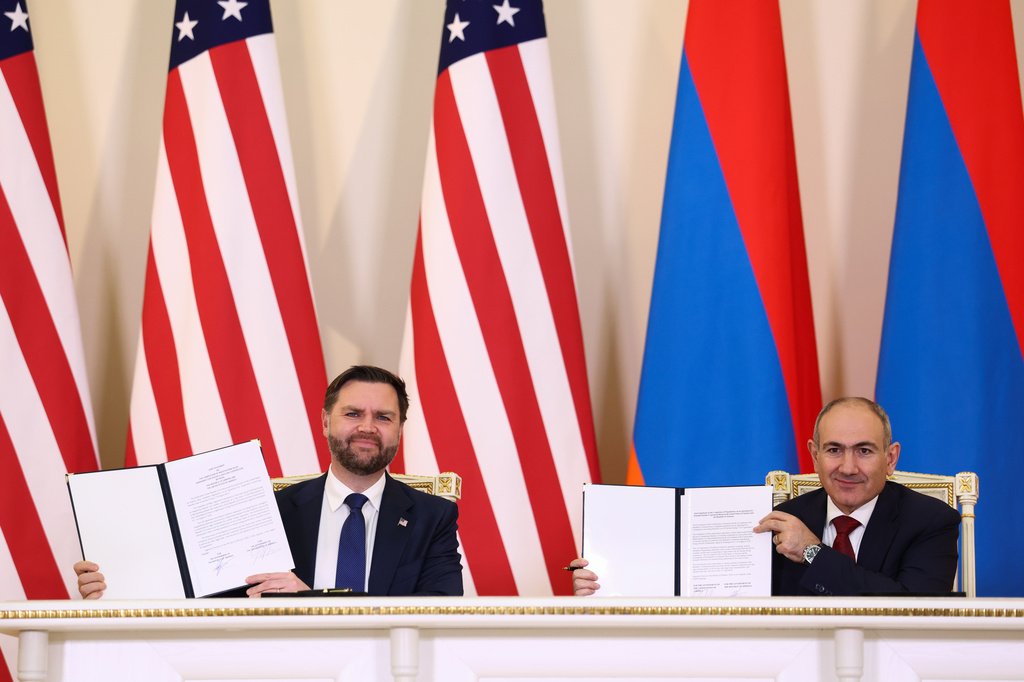
The vote comes as U.S. diplomacy has helped advance a peace framework between Armenia and Azerbaijan, opening the door to broader regional integration. A recent transit and trade corridor agreement brokered by Washington has created what analysts call a historic opening to stabilize the region while advancing American strategic interests. If sustained, this peace process could reduce the influence of outside powers and foster a more stable, economically connected South Caucasus.

Secretary of State Marco Rubio's visit to Yerevan last week underscored the deepening U.S.-Armenia relationship. According to experts from the McCain Institute, which recently sent delegations to the region, this is a pivotal geopolitical moment. Russia's influence is waning, and Armenia is actively seeking alternatives to Moscow, particularly as the South Caucasus becomes a key corridor for transit and access to critical minerals.
Yet Armenia's internal politics remain fragile. Assessments ahead of the 2026 elections have flagged vulnerabilities to disinformation, foreign interference, and democratic backsliding. A greater risk, experts warn, is that diminished U.S. and European engagement could empower pro-Kremlin forces. This dynamic is especially evident among younger voters, many of whom are politically undecided or open to candidates aligned with Moscow. Their uncertainty stems from war fatigue, economic anxiety, and a sense of insecurity, rather than ideology alone.
The two defining issues of the campaign are security and economic prosperity. Russia, once seen as Armenia's indispensable protector, has lost credibility after its failure during the Nagorno-Karabakh crisis. Prime Minister Nikol Pashinyan's open defiance of the Kremlin—signaling that Armenia's future lies with Europe—would have been unthinkable just a few years ago.
But the outcome is not assured. Russia is actively pushing back, targeting Armenian exports and threatening to withhold energy supplies ahead of the vote. Domestic instability, economic frustration, and security fears could still reverse Armenia's trajectory, strengthening pro-Kremlin candidates. That is precisely why continued U.S. engagement is critical now.
Armenia's movement away from Russia is real, if incomplete and contested. To support this pivot, Washington must demonstrate that nations choosing democratic self-governance and independent foreign policies will find committed partners. While the election is ultimately for Armenians to decide, sustained American involvement is essential to securing a more stable South Caucasus and reducing Russian pressure in the region.
Evelyn Farkas, Ph.D., executive director of the McCain Institute, served as Deputy Assistant Secretary of Defense for Russia, Ukraine, and Eurasia. This analysis draws on her expertise and recent Institute visits to Armenia.