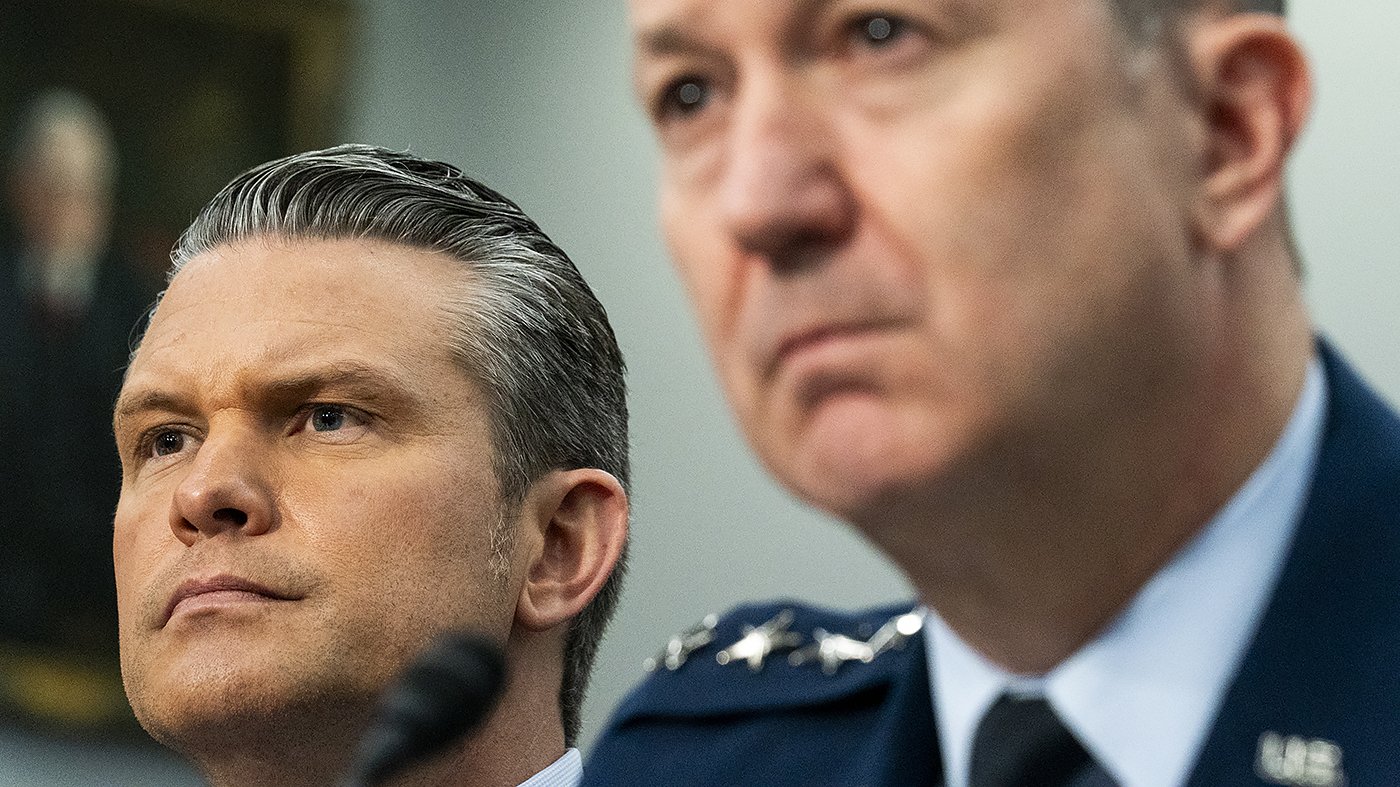
Defense Secretary Pete Hegseth and Chairman of the Joint Chiefs of Staff Gen. Dan Caine are set to face the Senate Appropriations Committee on Tuesday to defend the administration's $87 billion supplemental funding request, just days after an escalation in the U.S.-Iran conflict claimed the lives of three American service members.
The hearing, scheduled for 10 a.m., also includes Agriculture Secretary Brooke Rolling. The supplemental request, formally submitted by the White House on June 24, allocates $67 billion for defense funding. Lawmakers from both parties are demanding clarity on the Pentagon's long-term strategy in Iran and how the funds will be used.
The request covers costs for the Iran war, efforts to contain the Ebola outbreak, and aid to U.S. farmers, among other items. However, Democrats, whose votes are critical to passing the measure, have greeted it with skepticism. Their position appears unchanged in recent weeks.
This testimony marks the first extensive public remarks from Hegseth and Caine since hostilities with Iran intensified in July. U.S. forces have conducted 10 consecutive days of airstrikes against Iranian targets, part of President Trump's campaign to pressure Tehran and retaliate for attacks on commercial shipping in the Strait of Hormuz. Iran has responded by striking U.S. outposts in Jordan, Kuwait, Bahrain, and Qatar, causing casualties and damage. Two U.S. service members were killed in Jordan and one in Iraq in recent days, incidents Democrats on the panel are expected to scrutinize.
The Pentagon reported Monday that nearly 100 service members have been injured since July 7, with 96 percent returning to duty. The rising cost of the war is another likely topic. Office of Management and Budget Director Russell Vought previously estimated the conflict's cost at around $30 billion, but experts interviewed by The Hill put the figure much higher. Linda J. Bilmes, a public policy lecturer at Harvard Kennedy School, estimates the cost at $100 billion, calling it the "tip of the iceberg."
Senate Democrats pressed Pentagon Comptroller nominee Jay Hurst last week on the war's cost, but he said he lacked updated estimates, stating, "I haven't been in the position of comptroller, but if confirmed, I'm happy to work with you to get that answer." Sen. Elissa Slotkin (D-Mich.) calculated the cost at roughly $98 billion.
Hegseth and Caine last testified before Congress in early May on the Pentagon's $1.5 trillion budget request. That same period saw their last media briefing on Iran operations, on May 5. Before the Senate hearing, Hegseth will hold a classified briefing Tuesday morning with House and Senate lawmakers on the Iran war and the supplemental request, according to sources familiar with the matter.
The U.S. death toll in the Iran conflict has now reached 17, pushing the administration toward further escalation. Meanwhile, the Pentagon's strategy has faced criticism, with some analysts arguing that Iran's mosaic defense makes decapitation strikes insufficient to win the war.