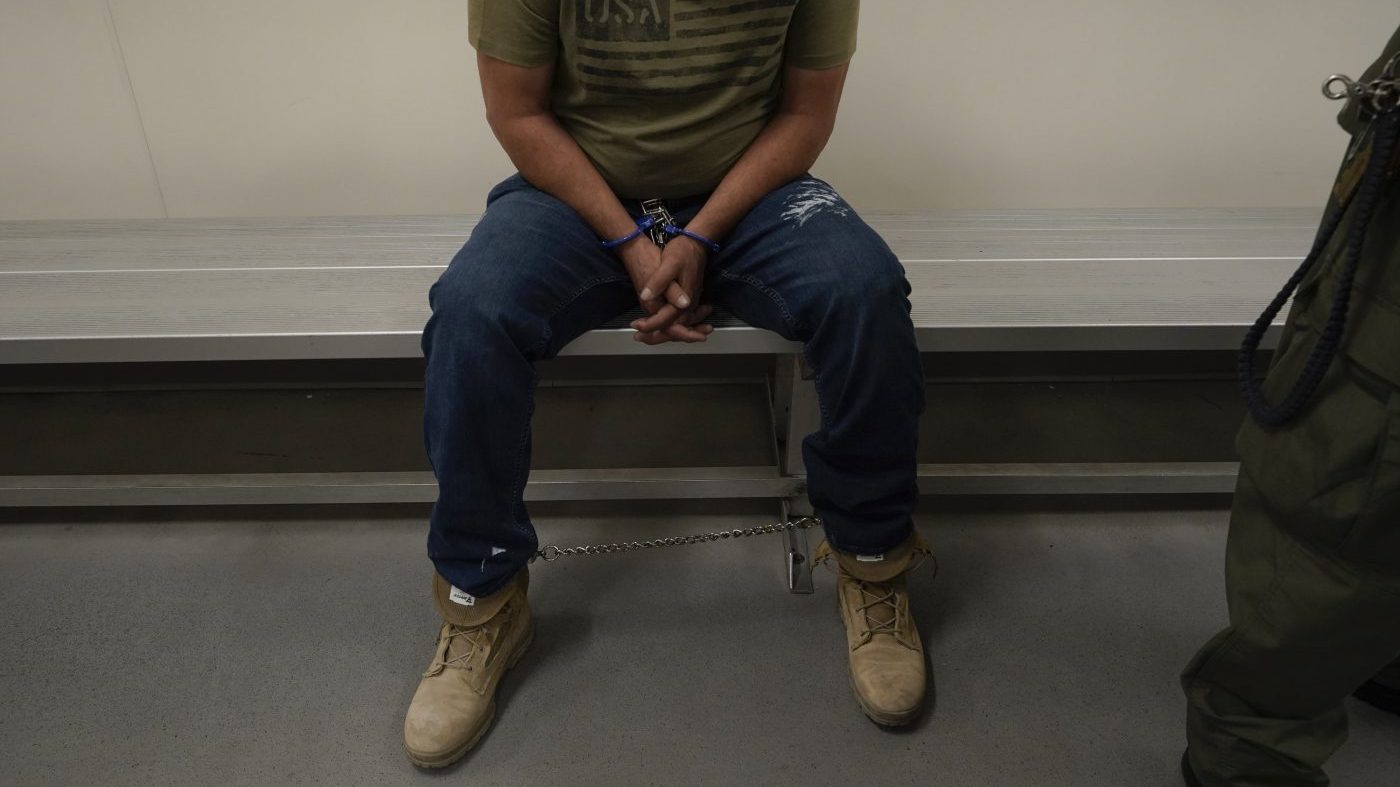
The Trump administration is quietly ending a requirement that U.S. Immigration and Customs Enforcement publicly report deaths of detainees within 30 days of their release, a move critics say will shield the agency from scrutiny over medical care in its facilities.
An internal memo from acting ICE Director David Venturella, obtained by The Washington Post, instructs staff to stop tracking deaths that occur after an individual leaves agency custody. Instead, ICE will only report fatalities that happen while someone is still detained.
“ICE is returning to the standard practice of reporting deaths that occur while an individual is in agency custody,” Venturella wrote in the memo.
The change rescinds a Biden-era directive that required ICE to investigate deaths of released detainees within 30 days and notify Congress. That 2021 policy was designed to prevent the agency from sidestepping accountability by releasing migrants with serious health issues. In a high-profile 2020 case, a migrant who contracted COVID-19 at an ICE detention center in California died shortly after being released.
An agency spokesperson defended the shift as part of President Trump’s “common sense” reforms, arguing that ICE should not be responsible for monitoring deaths once a person is no longer in its custody. “Under this updated policy, when an individual is no longer in ICE custody then ICE will no longer be responsible for monitoring or reviewing deaths that may occur,” the spokesperson said. “This is common sense. ICE is not responsible when an individual passes away weeks after leaving their custody.”
ICE maintains that its facilities provide adequate care, including medical, dental, and mental health screenings, as well as emergency services. “This is the best healthcare many aliens have received in their entire lives,” the spokesperson added, asserting that “ensuring the safety, security, and well-being of individuals in our custody is a top priority.”
But the policy reversal comes amid ongoing scrutiny of ICE detention conditions, which have sparked protests over inadequate healthcare and poor food. Recent clashes between detainees and officers at facilities housing tens of thousands of migrants have drawn attention to the agency’s handling of medical needs.
Critics argue that ending post-release death reporting could make it harder to identify fatalities linked to substandard care received while detained. A federal judge recently blocked Trump’s immigration freeze on 39 nations, a separate legal battle that underscores ongoing tensions over immigration enforcement. Meanwhile, Congress has poured billions into Trump’s immigration crackdown, including a $69.5 billion enforcement bill passed after GOP infighting over a fund aimed at preventing “weaponization” of the Justice Department.
The agency insists its facilities are safe, but the policy change raises questions about transparency and accountability as the administration pushes forward with its immigration agenda.