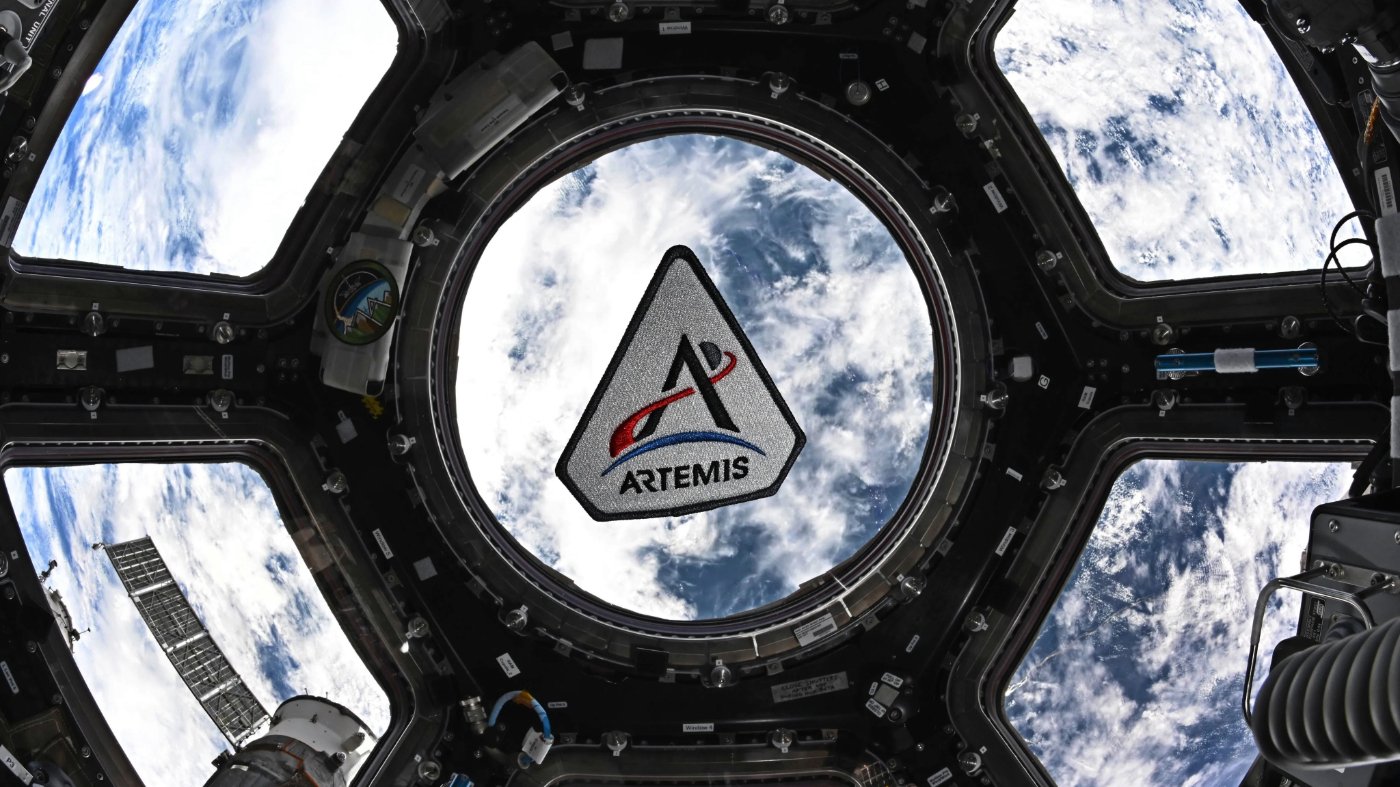
As NASA prepares for the Artemis II mission to orbit the moon, the agency has detailed ambitious plans to establish a permanent lunar outpost. The White House has framed this endeavor as a definitive break from past policy, declaring on social media that the United States will never again relinquish its lunar ambitions.
Correcting Historical Course
The administration's statement explicitly addresses what it views as a strategic misstep by the Nixon administration more than five decades ago: the termination of the Apollo program after achieving President Kennedy's goal. That decision canceled three planned moon landings and dismantled an infrastructure that supporters argue could have evolved into a sustained lunar presence by the 1970s, potentially accelerating crewed missions to Mars.

This renewed commitment arrives amid what many policymakers describe as a new space race, with strategic competition from China driving urgency. The announcement of NASA's 21st-century lunar base initiative has generated widespread approval across political and international lines.
Strategic and Political Alignment
Senator Ted Cruz (R-Texas), who chairs the Senate committee overseeing NASA, emphasized the strategic dimension, stating, "Space is not just symbolic. It is strategic. A sustained lunar surface presence ensures America, not China, leads the next era of exploration." This sentiment reflects broader concerns about China's growing capabilities, which have replaced prior geopolitical rivals as a primary focus for many in Washington. The administration's stance suggests a belief that ceding lunar leadership is no longer an option, a view that resonates in a political climate where global power competition frequently tops the agenda.
Support extends beyond traditional space advocates. The Mars Society, typically focused on red planet exploration, endorsed NASA's "Ignition" plan as a "long-overdue shift toward faster missions, sustained lunar ops and a clearer path to Mars." International partners like the Italian Space Agency have also pledged collaboration, stating they are "proud to contribute to the future of lunar exploration alongside NASA."
Execution and Enthusiasm
The program's projected cost—approximately $20 billion over seven years—appears modest compared to historical deep-space proposals, making it politically palatable. NASA Administrator Jared Isaacman's entrepreneurial background and personal investment in private spaceflight bring a distinct management style focused on innovation and persuasion. However, the initiative's success hinges on executing complex partnerships with private companies and international agencies within stated timelines and budgets.
The ongoing Artemis II mission, carrying commander Reid Wiseman, pilot Victor Glover, mission specialist Christina Koch, and Canadian astronaut Jeremy Hansen, serves as a critical confidence-builder. Their journey represents the farthest human travel in over fifty years, providing essential data and recapturing public imagination. As with any major policy shift, the challenge of maintaining coalition support through implementation phases remains.
Proponents envision the lunar base as more than a scientific outpost; they see it as a future hub for commerce and a stepping stone for Mars missions. In a world often dominated by terrestrial conflicts, the project offers a narrative of hope and exploration. Yet, its ultimate justification may be geopolitical: ensuring American leadership in a domain increasingly viewed as critical to national security and technological supremacy. The White House's vow signals that lunar policy is now intertwined with broader defense and strategic initiatives aimed at maintaining a competitive edge.