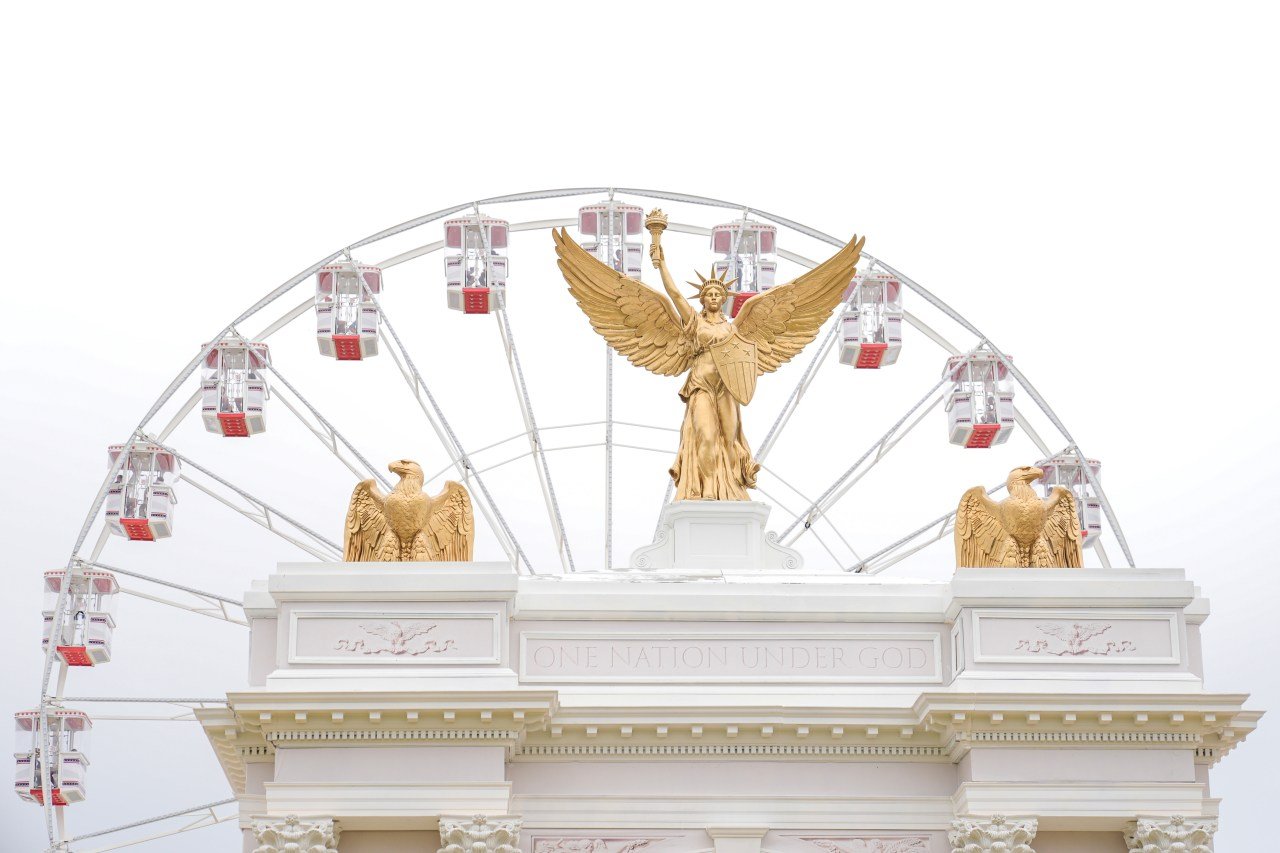
The National Capital Planning Commission is set to revisit President Donald Trump's ambitious plan to erect a 250-foot triumphal arch in Washington, D.C., on Thursday, but the agency's staff is urging revisions before giving final approval. The arch, which would tower over the Lincoln Memorial and alter the capital's historic skyline, has sparked controversy over its size and potential disruption to cherished sightlines.
In a detailed 185-page report, NCPC staff recommended that the commission approve preliminary site and building plans but insisted on design tweaks to comply with the Height of Buildings Act, a federal law that limits building heights downtown to preserve views. The staff noted that the law would require redistributing height among the main structure, a habitable roof, and gilded statues, though the arch could still reach Trump's desired 250 feet with those changes. The commission must also seek more data on traffic impacts, the granite exterior, and other project details before the Interior Department returns for final approval.

The arch is slated for a traffic circle on the Virginia side of the Memorial Bridge, a location that opponents argue would break the symbolic sightline between the Lincoln Memorial and Arlington National Cemetery—a vista meant to represent post-Civil War reunification. Veterans and a historian have sued the Trump administration in federal court to block the project, citing these concerns.
Despite pushback, Trump's allies dominate both the NCPC and the U.S. Commission of Fine Arts, which approved the design in May. Will Scharf, a top White House aide, leads the planning commission, signaling the administration's resolve to push the project forward. The arch would stand more than twice as tall as the Lincoln Memorial, at 99 feet, and nearly half the height of the Washington Monument, at 555 feet.
Trump has claimed the arch could be funded by unused donations from a $400 million ballroom project at the White House, which he said was financed by corporations and wealthy donors. However, public funds are now involved in both projects, and the White House has not released a cost estimate for the arch.
The NCPC's review comes amid broader political tensions, including debates over defense spending and international crises. For instance, Trump's pledge on Turkey sanctions has sparked a Capitol Hill clash over F-35s, while the collapsing Iran ceasefire threatens Senate defense bills. The arch project, though domestic, reflects the administration's focus on monumental gestures.
Critics argue the arch is an oversized vanity project that ignores the city's architectural heritage. The NCPC staff's recommendation for revisions could delay final approval, but with Trump appointees in key roles, the path to construction remains open. The commission's decision on Thursday will be a key test of whether the project can overcome regulatory hurdles.