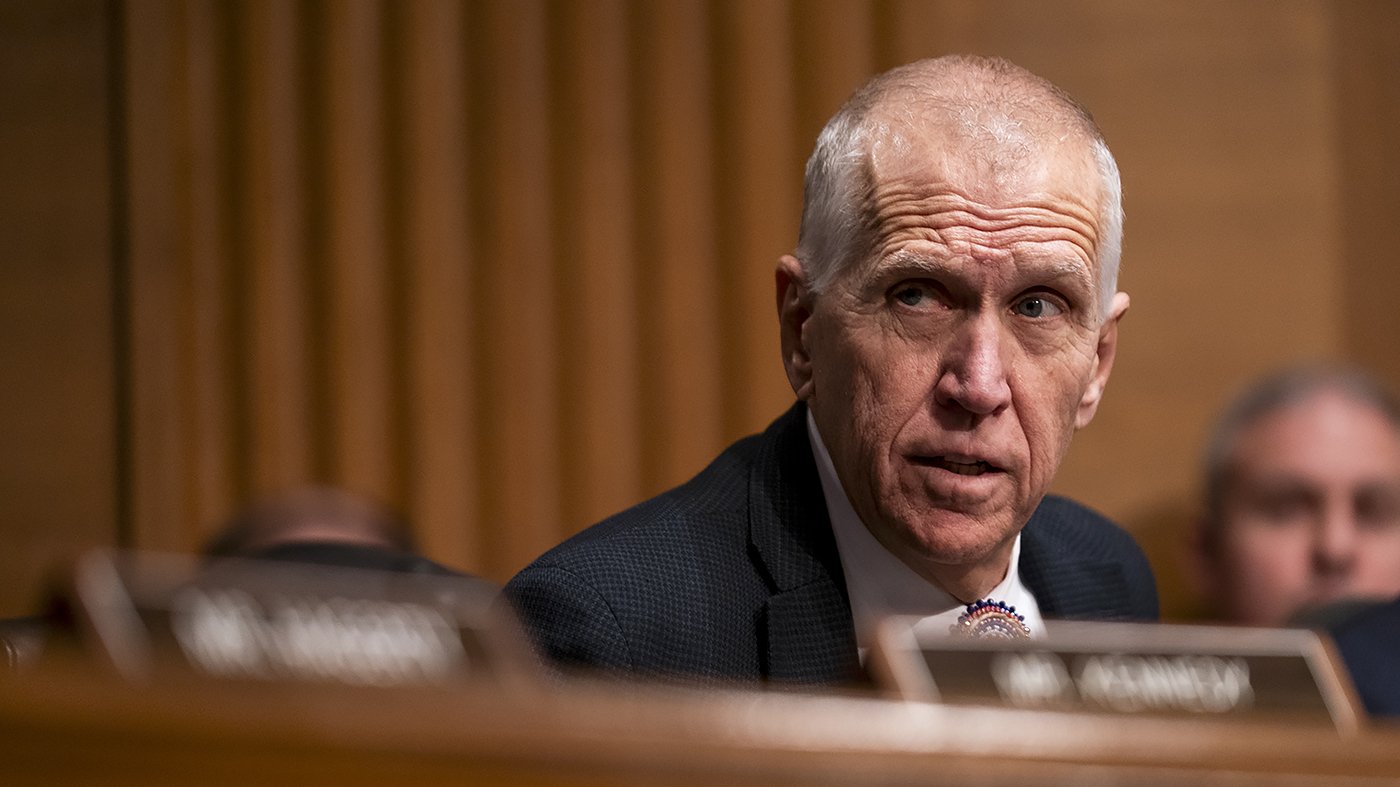
Republican Senator Thom Tillis of North Carolina delivered a blunt assessment of former President Donald Trump's recent suggestion that the United States should charge tolls on vessels transiting the Strait of Hormuz, dismissing the proposal as "crazy" and economically nonsensical.
"I think that that is crazy. That makes no sense. It's another tariff. You can call it a toll but now it's a water tariff. That doesn't make sense to me," Tillis stated on Tuesday. He warned that such a levy would directly impact U.S. allies in Asia, specifically naming Taiwan and South Korea, which depend heavily on energy imports passing through the strategic chokepoint.
Targeting Allied Economies
Tillis argued that penalizing these partners for circumstances stemming from U.S. policy toward Iran was fundamentally flawed. "To suggest that we're going to add a toll onto their energy costs for a condition that existed only because of our legitimate interest in denuclearizing Iran doesn't sound right to me," he said. "Doesn't sound right for our trading partners, like Taiwan. You got to talk about the people who would be paying that toll, the businesses and the citizens of Taiwan and South Korea."
The senator's comments came in response to Trump's remarks to reporters last week, where he floated the concept of the U.S. collecting fees for passage through the waterway. "What about us charging tolls?" Trump asked. "I'd rather do that than let them have them. Why shouldn't we? We're the winner." The former president characterized the idea as a "beautiful thing" and a method of securing the strait, even suggesting a potential "joint venture" with Iran during a media interview.
Legal and Strategic Concerns
The proposal has sparked immediate concerns about its legality under international maritime law. Imposing unilateral tolls would likely violate the United Nations Convention on the Law of the Sea, a treaty ratified by over 170 nations but not by the United States or Iran. The concept also represents a significant escalation in the long-standing U.S. pressure campaign against Tehran.
In recent days, Trump has appeared to pivot from the toll idea toward advocating for a naval blockade of Iranian ports, a move he frames as leverage against the regime. This shift in rhetoric, however, has drawn its own international condemnation. China, a major importer of Iranian oil, issued a statement this week denouncing a potential blockade as a "dangerous and irresponsible act." The evolving strategy continues to create friction, as seen when U.S. officials asserted full enforcement of maritime restrictions despite reported transits by sanctioned Chinese tankers.
The internal GOP criticism from Tillis highlights ongoing divisions within the Republican Party over Trump's foreign policy approach. It also underscores the complex geopolitical calculations surrounding the Strait of Hormuz, through which about one-fifth of the world's oil passes. The proposal fits a pattern of Trump advocating for unilateral economic measures, a theme echoed in other policy areas, such as the ongoing process where Customs and Border Protection is developing a system to refund billions in invalidated tariffs from his administration.
Trump's focus on Iran remains a central feature of his foreign policy platform, with his team signaling that negotiations with Tehran continue and praising Pakistan's role in the stalled diplomatic process. However, the toll and blockade concepts have introduced new volatility into an already tense region, prompting warnings from allies and critics alike about the risks of economic coercion and military confrontation.