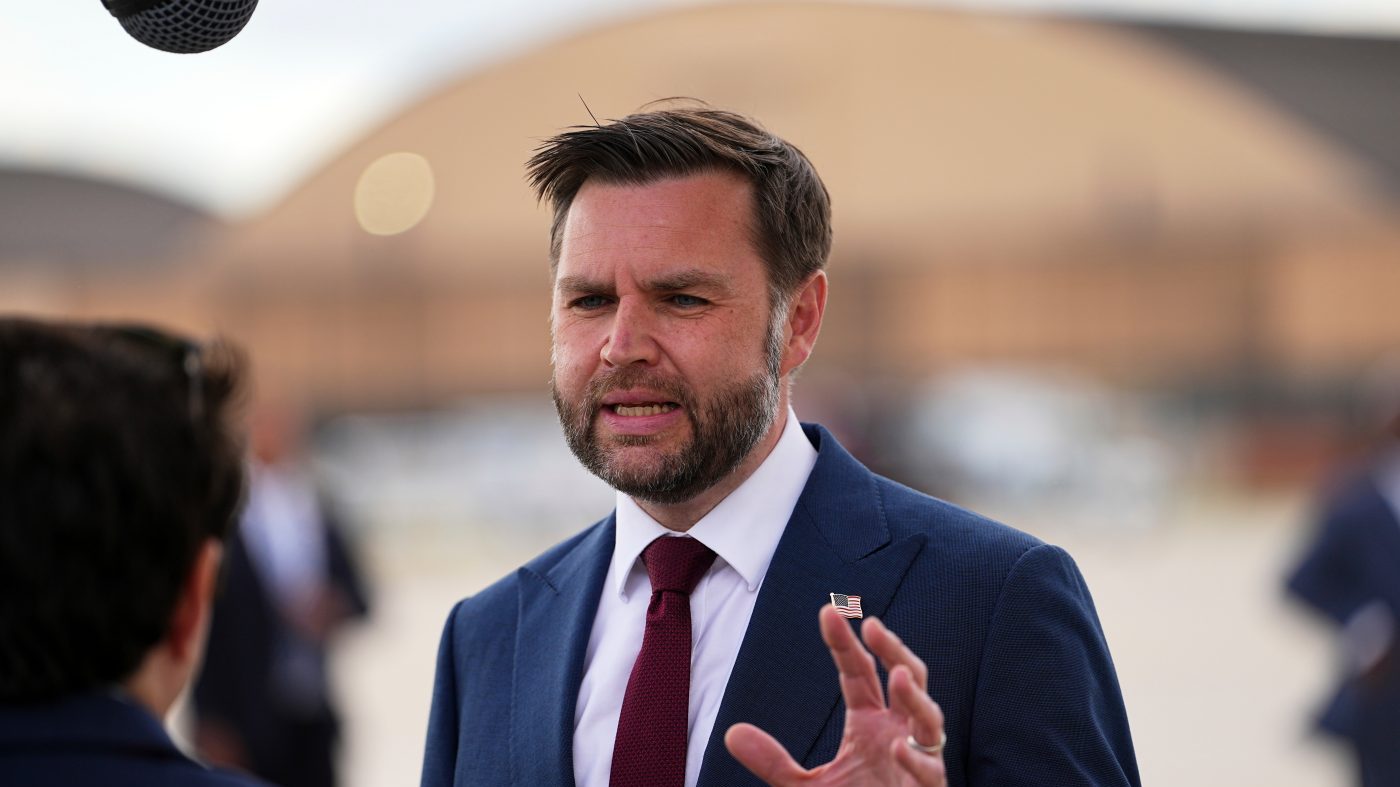
Vice President Vance indicated Thursday that the United States is on the verge of finalizing a tentative agreement with Iran, even as negotiators wrestle with unresolved nuclear issues. Speaking at Joint Base Andrews, Vance described the state of talks as “very close” to completion, but acknowledged that several key points remain in dispute.
According to U.S. sources, the emerging memorandum of understanding would extend the current fragile ceasefire by 60 days, ensure the reopening of the Strait of Hormuz, and establish a framework for further discussions on the future of Tehran’s nuclear program. The deal still requires approval from President Trump and Iranian leadership, with Vance noting that negotiators are “going back and forth” on specific terms.
“There are a couple of issues on the nuclear stuff, the highly enriched stockpile and also the question of enrichment,” Vance told reporters. He added that the Iranians are “negotiating, at least so far, in good faith” and that “we’re making some progress.” The vice president expressed cautious optimism, saying, “Hopefully, we’ll continue to make progress, and the President will be in a position where he can endorse the agreement, but obviously that’s still to be decided.”
The talks follow a failed round of face-to-face negotiations in Islamabad, Pakistan, last month, where Vance led the U.S. delegation. Those discussions, the first direct talks between the two nations since 1979, collapsed over disagreements on the nuclear dimension. The Trump administration has maintained a firm stance that Tehran must be barred from enriching uranium and must relinquish its existing stockpile—conditions the regime has so far rejected, insisting its enrichment activities are for peaceful purposes such as energy production.
Under the proposed MOU, Iran would commit not to pursue nuclear weapons, opening a 60-day window for detailed negotiations, as reported by Axios. Vance sidestepped questions on specific terms, including whether Iran has agreed to have its enriched uranium removed from its territory. “There are certain details that are going to have to be figured out that are going to take a little bit of time,” he said. “Just take, for example, even if you come to an agreement on, let’s say, destroying the enriched stockpile. How do you do it? When do you do it? How do you actually get access to it?”
President Trump has weighed in publicly, writing on Truth Social that the “nuclear dust” could either be turned over to the U.S. or destroyed “at another acceptable location.” The president had previously considered deploying U.S. ground troops into Iran to remove radioactive material buried deep underground in facilities damaged by joint U.S.-Israeli strikes last June. The ongoing nuclear talks are set against a backdrop of broader geopolitical tensions, including U.S. strikes on Iran that threatened the fragile peace process earlier this year.
Vance remained cautiously optimistic about the prospects for a final deal. “We’re getting to a point where we could potentially sit down and settle these issues, but that requires us to make a little bit more progress,” he said. “I can’t guarantee that we’re going to get there, but right now I feel pretty good about it.” The outcome will likely shape the trajectory of U.S.-Iran relations and could influence domestic political dynamics, especially as Vance and Rubio remain in a statistical dead heat for the 2028 GOP nomination.