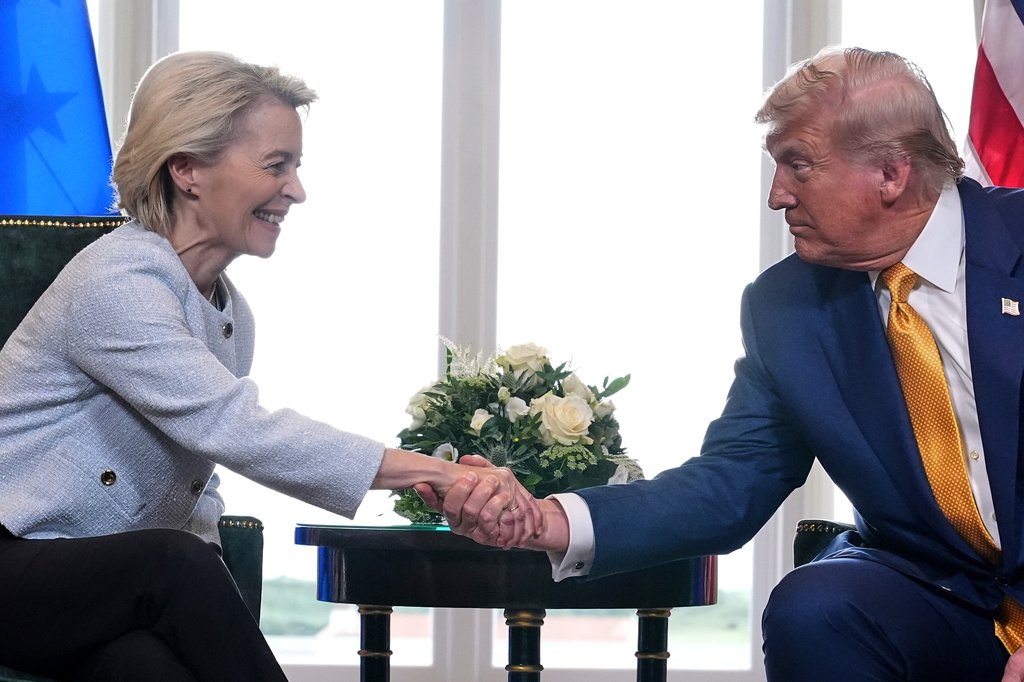
When President Trump threatened in May to hike tariffs on European autos from 15 to 25 percent, he set a July 4 deadline—but the EU chose restraint over escalation. In June, European leaders advanced a trade deal with Washington through their own institutions, a move that falls short of ideal but underscores a deliberate strategy of damage control.
This pattern of forbearance is hardly unique. Across the globe, U.S. trading partners have largely refrained from tit-for-tat retaliation against a barrage of unilateral American tariffs. While some may fear Trumpian intimidation, the deeper reasons reflect a commitment to the rules-based multilateral system that Washington has abandoned.

The Trump administration has jettisoned the WTO's core principle of non-discrimination—the most-favored-nation obligation—in favor of arbitrary, whim-driven trade barriers. Yet other WTO members, particularly the European Union, continue to uphold these hard-won norms, preferring to resolve disputes within the multilateral framework rather than through unilateral escalation.
This restraint is not passive. Many nations are actively diversifying their trade relationships, redirecting supply chains away from the United States. Given that the U.S. accounts for only about 10 percent of world exports and 13-15 percent of global trade, they can simply take their business elsewhere—and they are. They import from other sources, export to alternative markets, and reorganize production to avoid American tariffs.
The logic is straightforward: engaging in a mutually destructive trade war would harm their own economies more than absorbing the initial tariff hit. By contrast, expanding trade with other partners boosts their prosperity while the U.S. loses out on opportunities that could benefit American producers, workers, and consumers.
This approach also reflects a historical understanding. The principle of non-discrimination in trade traces back eight centuries to the Hanseatic League, and its economic rationale remains irrefutable. Countries recognize that lowering barriers—not raising them—maximizes global gains through collective cooperation.
Meanwhile, Trump's tariffs are illegal under international law, yet the U.S. is even trying to erase non-discrimination from the WTO agreement. Other nations, however, stick by the rule of law, knowing that trade governed by agreed principles is far superior to the whims of a single leader's social media posts.
In practical terms, this restraint is reshaping global commerce. As one analyst noted, the EU's decision to implement a trade deal with the U.S. despite provocation is a responsible move—even if voters rarely credit leaders for preventing worse outcomes. The same applies to other countries: they are quietly pivoting away from the U.S. market, a shift with long-term implications for American influence.
For now, the world's trading powers are betting that multilateralism will outlast Trump's tariffs. But as they reroute trade flows, the U.S. risks permanent damage to its economic standing—a price of this unilateral trade war.