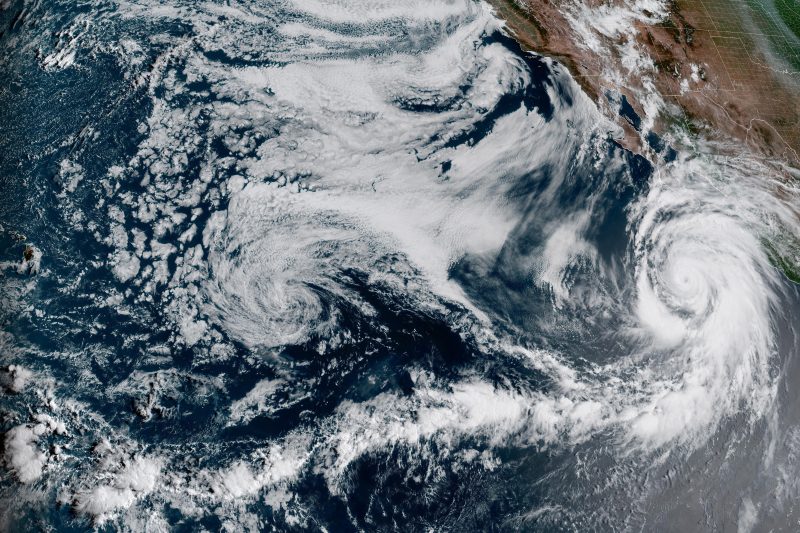
The Climate Prediction Center has significantly upgraded its forecast for this year's El Niño, now warning it will likely be both stronger and longer-lasting than previously anticipated. The agency reported Thursday that there is a 97% chance the climate phenomenon will extend into next year, persisting through spring 2027, and an 81% probability it will reach 'very strong' status—often termed a 'super' El Niño—by its peak in early winter.
Such super El Niños are rare. If the forecast holds, this event 'would rank among the largest El Niño events in the historical record going back to 1950,' according to the Climate Prediction Center. Columbia University atmospheric scientist Michael Tippett told CNN, 'I think it's fair to say that, depending on the model, the forecasts are close to unprecedented.'
But a super El Niño does not automatically guarantee catastrophic weather everywhere. The Climate Prediction Center explained, 'Even the strongest El Niño events do not lead to the typical impact everywhere, but stronger events can more significantly tilt the odds in favor of expected outcomes.' In plain terms, a super El Niño increases the likelihood of classic El Niño patterns—such as wetter winters in the southern US and drier conditions in the north—but no outcome is certain, and some regions may face harsher effects than others.
The United Nations has already issued warnings for an exceptionally hot summer due to El Niño, and parts of the US have already experienced record-breaking heat. During summer and fall, El Niño typically suppresses Atlantic hurricane activity while fueling tropical storms in the eastern and central Pacific. However, its most pronounced impact often comes in winter, bringing warmer, drier weather to the northern US and Ohio Valley, while the southern half of the country can expect increased precipitation, including rain and snow. The exact dividing line shifts annually based on the jet stream's position.
High-tide flooding is also expected to become more problematic during El Niño years, especially along the West Coast, according to the National Weather Service. Past El Niño events have also spurred harmful algae blooms in West Coast waters, posing additional environmental and economic risks.
These developments come amid broader concerns about national security and climate resilience. For instance, Congress must act to address national security risks that could be exacerbated by extreme weather events. Additionally, the deepening patriotism divide in the US may complicate bipartisan responses to climate-related challenges. Meanwhile, national report cards expose educational stagnation that could hinder the country's ability to adapt to a changing climate.
As the super El Niño unfolds, policymakers and emergency managers are urged to prepare for potential disruptions to agriculture, water supplies, and infrastructure. The coming months will test the nation's readiness for what could be one of the most significant climate events in decades.