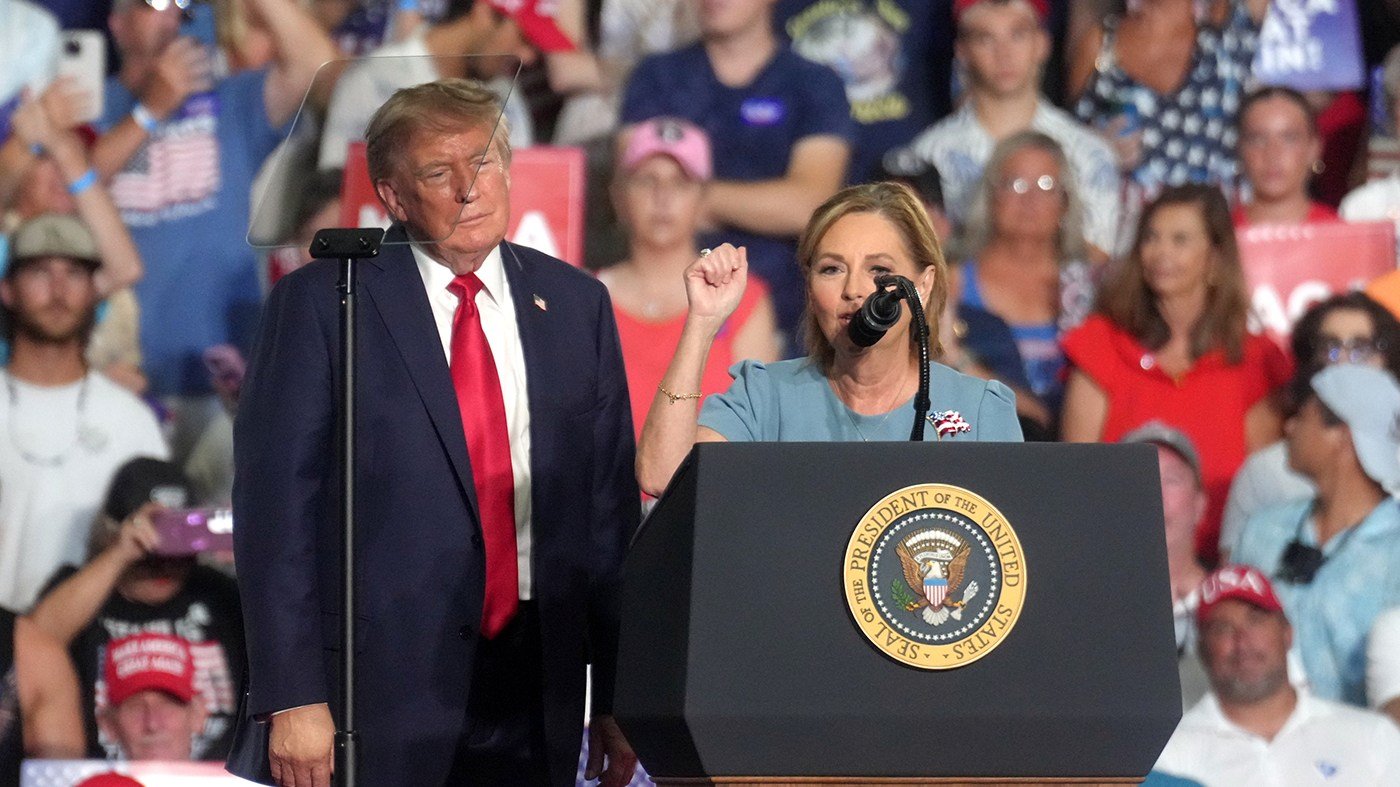
Ahead of America's 250th anniversary, a stark divide has emerged: national pride is no longer a shared value across party lines. Gallup's latest polling shows that 93% of Republicans say they are extremely or very proud to be American, while only 27% of Democrats feel the same—a record low for the party and a chasm that has widened dramatically over the past two decades.
In January 2001, when Gallup first posed the question, 92% of Republicans and 87% of Democrats expressed high levels of pride. Both parties could claim a fundamental love of country. That era is over. The erosion is not simply a reaction to who occupies the White House; Republicans have maintained higher pride levels through Democratic presidencies, while Democrats increasingly tie their patriotism to the occupant of the Oval Office.
The sentiment extends beyond polling. An Elon University survey found that 55% of Democrats said they would rather live in another country, compared to only 10% of Republicans. Meanwhile, the rest of the world still views the United States as the top destination for immigrants, willing to take enormous risks to get in. Even comedian Bill Maher recently noted during the World Cup that foreign visitors remind Americans, in his words, “this place is kind of awesome.”
Rejection of Capitalism
This erosion of pride correlates with a broader rejection of the economic system that built the nation. Gallup data reveals that 74% of Republicans prefer capitalism over socialism, while Democrats favor socialism by a 66% to 42% margin—a reversal that began around 2016 and has hardened since. Critics argue that socialism, as one analysis put it, “will always fail because it’s a flawed system based on completely faulty principles that aren’t consistent with human behavior.” President Trump has called socialism the “biggest threat to our nation” since the founding.
The shift is particularly pronounced among younger Americans frustrated by a fading American Dream, but it reflects a deeper ideological realignment within the Democratic Party. The party's embrace of socialist ideas has become mainstream, as seen in the rise of figures like Zohran Mamdani, Bernie Sanders, and others who push for open borders, abolishing ICE, and hostility toward law enforcement.
Antisemitism and the Israel Divide
Another fault line is the party's stance on Israel and antisemitism. Roughly 70% of Republican voters sympathize with Israelis over Palestinians in the post-October 7, 2023 conflict. Among Democrats, about 65% side with Palestinians, while only 17% back Israelis. Gallup pinpoints a decisive shift in Democratic opinion to early 2023, with rising pro-Palestinian sentiment moving in lockstep with rising antisemitism. Jews make up only 2% of the U.S. population, yet anti-Jewish hate crimes accounted for 16% of all reported hate crimes—and nearly 70% of religion-based hate crimes—in 2024.
Democratic leaders have largely refused to confront the “Squad” and the Democratic Socialists of America, instead focusing on Trump derangement. Jewish Democrats are now sounding the alarm, but the party remains unresponsive. This radicalism, if unchecked, could hand Republicans continued congressional power in 2026, but elections alone won't save the Republic. The gravest threat to America, as one analyst put it, is not coming from abroad—it is growing from within.