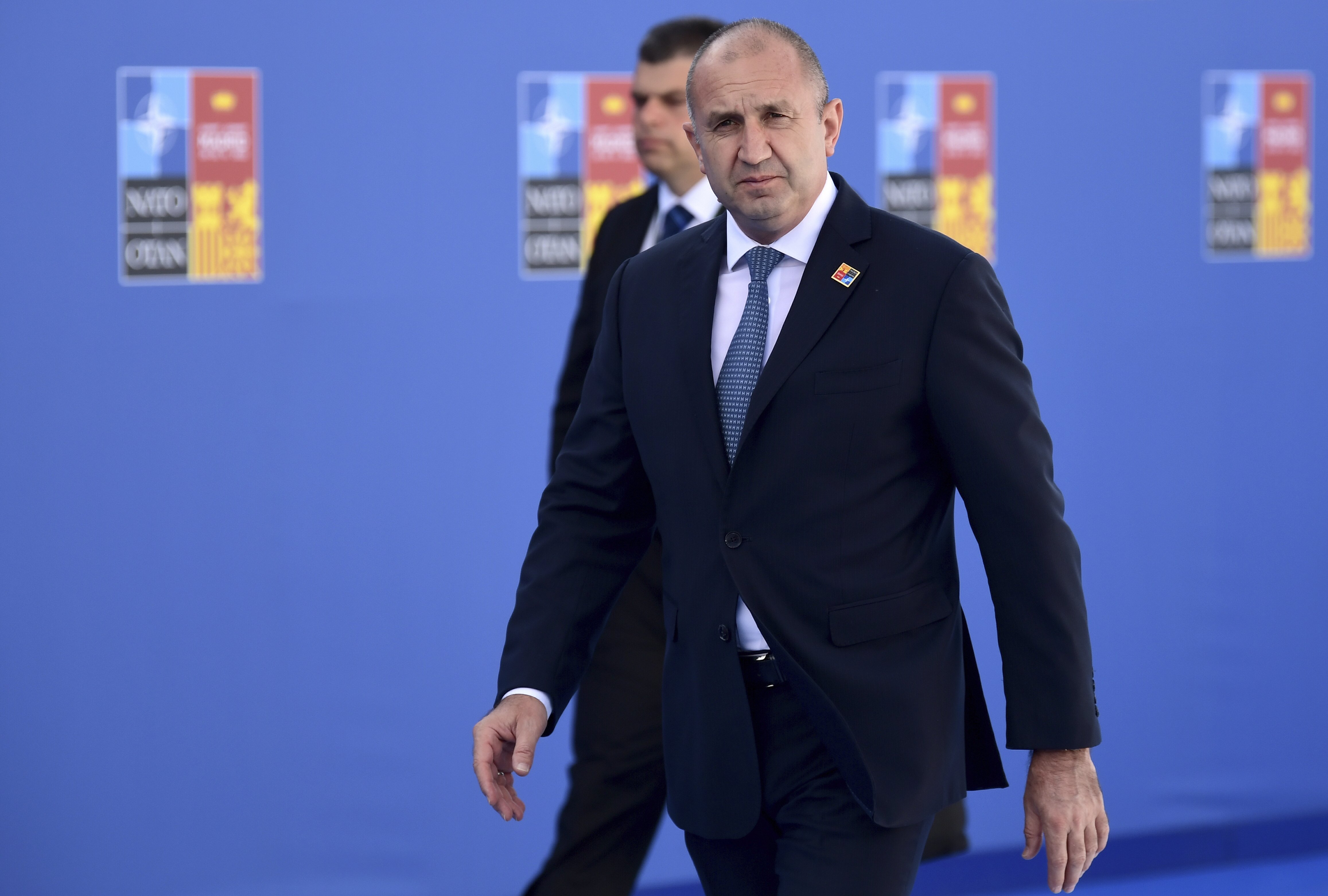
Bulgarian Prime Minister Rumen Radev announced Friday that his country will terminate the long-term stay of US military aircraft at Sofia's Vassil Levski airport at the end of June, following the Trump administration's failure to approve visa-free travel for Bulgarian citizens.
Radev, whose Progressive Bulgaria party won April's parliamentary elections, said he raised the visa issue directly with President Trump earlier this month but received no commitment. “I called for the suspension of visas for Bulgarian citizens during my conversation with the U.S. President, but I have not received a positive answer,” he told Balkan Insight. “While I fully understand the complexity of all the regulatory procedures, we also have our priorities and we cannot respond positively to the request for long stays of aircraft and tankers at Sofia airport.”
The prime minister emphasized the move is not abrupt. “We’re extending the permission until the end of June so we can give time to our allies to reschedule and find another location,” he added, allowing the US military to redeploy its assets elsewhere.
The current agreement, set to expire this month, allowed up to 15 US military aircraft, including Lockheed C-130 Hercules transport jets, Boeing C-17 Globemaster III heavy-lift transports, and Boeing KC-135 Stratotanker refueling planes, along with 500 personnel. Bulgaria’s Government Information Service confirmed the extension through June 30.
This development comes amid broader tensions in US-Bulgaria relations and ongoing American military operations in the region. In recent weeks, the Trump administration has been asserting a military edge in negotiations with Iran, though Sofia had previously insisted the aircraft were not linked to any kinetic action against Tehran.
In early March, then-caretaker Defense Minister Atanas Zapryanov told reporters the Trump administration had not requested to base aircraft in Bulgaria for potential strikes against Iran. He reiterated in late February that the deployment was part of a joint exercise at Vrazhdebna Air Base. “The exercise is in no way related to the situation with Iran or U.S. negotiations,” he said, according to broadcaster BTA.
The White House did not immediately respond to a request for comment on the Bulgarian decision. The move underscores how diplomatic disputes can directly impact military cooperation, even among NATO allies. As the Hormuz crisis deepens, Washington may need to quickly find alternative basing options for its aircraft in Eastern Europe.
Bulgaria, a NATO member since 2004, has been a key partner for US military logistics in the region. The visa dispute highlights growing friction between the Trump administration and some European allies over reciprocal travel privileges. Bulgarian tourists currently require visas for US visits, while Americans enjoy visa-free access to Bulgaria.