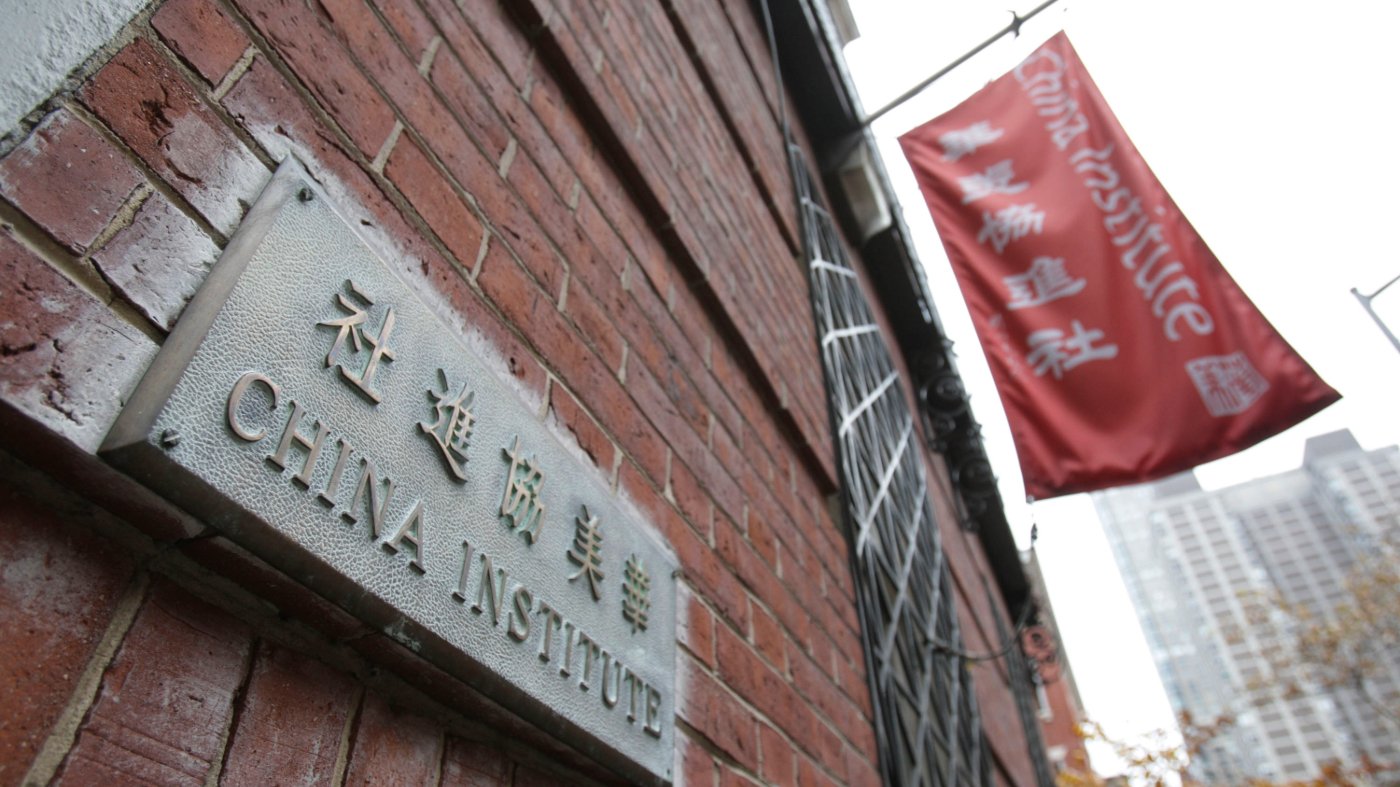
When American students learn Chinese in public schools, the curriculum may still carry Beijing's imprint, even after the formal closure of most Confucius Institutes. A new report and public records show that successor organizations, operating under innocuous names, are quietly preserving the Chinese Communist Party's reach into K-12 classrooms.
In 2004, China launched Confucius Institutes on US campuses, which spawned roughly 500 Confucius Classrooms in public schools. Congressional backlash forced nearly all campus-based institutes to shut down, but as the National Association of Scholars documented in 2022, some survived by rebranding or transferring operations to third-party groups.
One such entity is the Center for Bridging Cultures, a Virginia-based nonprofit founded in 2021 amid the mass closures. Its executive director, Gao Qing, previously ran the Confucius Institute U.S. Center, which the State Department labeled “the de facto headquarters” of the network and designated as a Chinese government foreign mission in 2020, calling it a vehicle for “global propaganda and malign influence.” The center continues to bring Chinese teachers into American classrooms, organize exchange trips, and partner with Alfred University’s former Confucius Institute, according to public school documents.
The funding trail is murky. As a tax-exempt nonprofit, the Center for Bridging Cultures does not disclose donors publicly, though IRS filings show it has received over $2.5 million in donations since 2022. The Beijing Language and Culture University, which operates directly under China’s Ministry of Education and coordinates with the United Front Work Department, lists the center as one of its “global institutes,” explicitly noting it fills roles once played by Confucius Institutes. The State Department has described the United Front Work Department’s mission as conducting foreign influence operations to “neutralize sources of potential opposition.”
The center’s reach is nationwide. Its IRS forms show it has distributed funds to public school districts, private schools, a community college, a private university, an online Chinese learning platform, and a Chinese immersion charter school in Washington. It also advertises 12-day trips to China for American principals and superintendents and runs a U.S.-China Friendship Schools Initiative that pairs schools across the two countries.
State and local education authorities can decline partnerships with Beijing-backed organizations, but a lack of transparency often leaves parents and lawmakers in the dark. That gap has prompted the TRACE Act in Congress, which would tie federal K-12 funding to disclosure of foreign influence—though it would not require schools to reveal ties to nominally independent U.S. nonprofits like the Center for Bridging Cultures.
Some experts suggest the IRS could tighten vetting of tax-exempt organizations to surface hidden links. Meanwhile, the center’s website continues to promote its mission, and the Beijing Language and Culture University touts its role in “continuing and expanding” Chinese language programs once offered by Confucius Institutes. The persistence of these networks underscores how Beijing adapts to maintain influence, even as Washington tries to close the door.