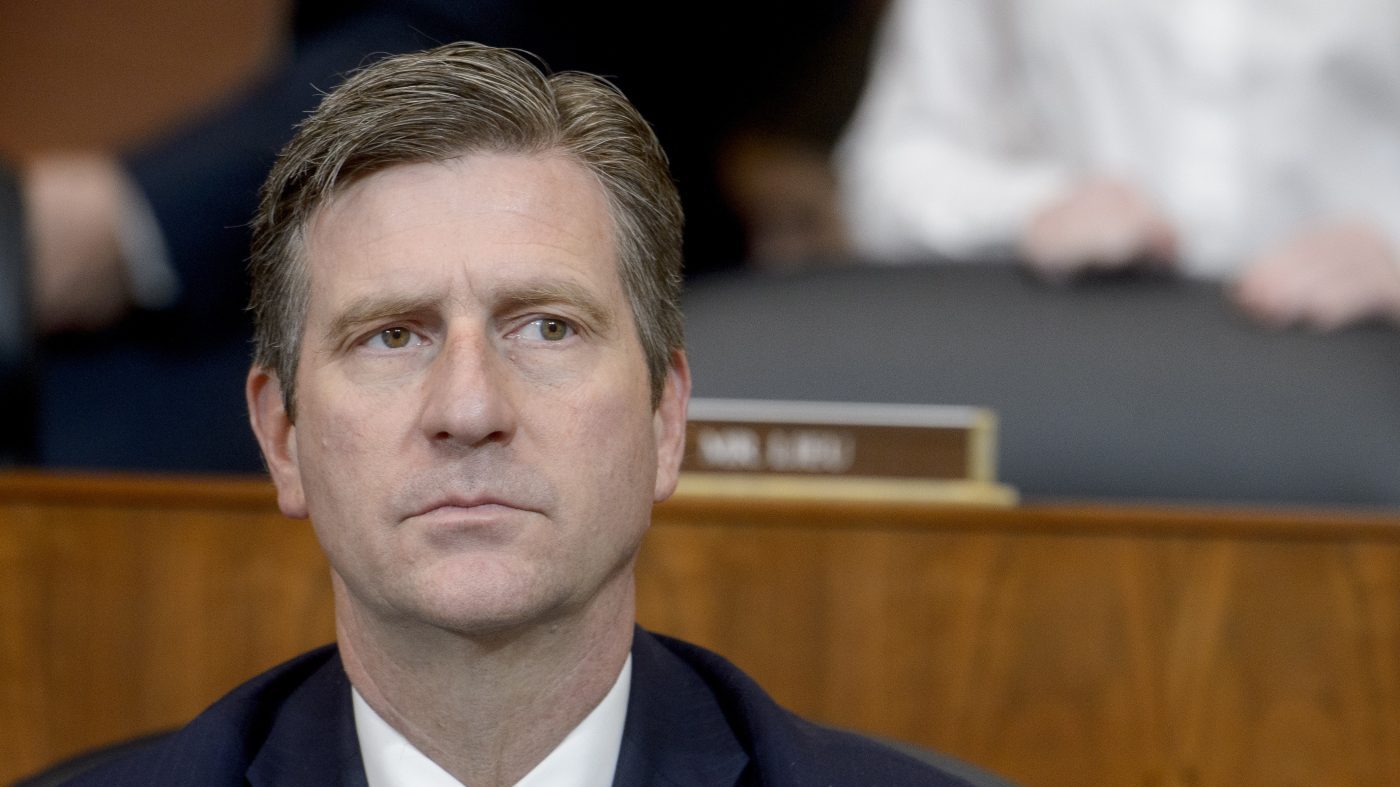
Democratic Representative Greg Stanton of Arizona cast doubt on the notion that China would pressure Iran to reopen the Strait of Hormuz, even as President Donald Trump met with Chinese President Xi Jinping in Beijing to discuss the crisis. In an interview with NewsNation, The Hill's broadcast partner, Stanton bluntly dismissed the possibility, asking, “Why would he?”
“Right now, our country sadly is losing support around the globe,” Stanton said. “The president has issued tariffs on all of our allies, and we have so few allies to support us in this war.” The Arizona Democrat serves on the House Select Committee on Strategic Competition Between the U.S. and the Chinese Communist Party, giving him a front-row seat to the dynamics at play.
China remains the largest buyer of Iranian oil, and Trump’s naval blockade in the Strait of Hormuz has hit Beijing’s energy supplies hard. Roughly one-fifth of the world’s oil passes through that narrow waterway daily, making its closure a global economic flashpoint. Trump told reporters aboard Air Force One on Friday that the U.S. has “done no business” in the last two and a half weeks, estimating losses at “approximately $500 million a day.” The blockade followed Iranian counterstrikes on Gulf states that had effectively shut the corridor.
Secretary of State Marco Rubio had earlier voiced hope that China could persuade Iranian Foreign Minister Abbas Araghchi to loosen Tehran’s grip on the strait. “I hope the Chinese tell him what he needs to be told, and that is that what you are doing in the strait is causing you to be globally isolated. You’re the bad guy in this,” Rubio said ahead of Araghchi’s May 6 trip to China. Rubio has previously argued that the U.S. and China share an interest in avoiding militarization of the Strait of Hormuz, as noted in Rubio's alignment with China against strait militarization.
When pressed on whether Xi committed to pressuring Iran, Trump deflected, saying he is “not asking for any favors.” “We don’t need favors,” the president added. “We’ve wiped out their armed forces essentially. We may have to do a little cleanup work because we had a little monthlong ceasefire.”
Stanton’s skepticism reflects broader bipartisan unease with Trump’s approach to the crisis. The blockade has strained relations with allies and drawn criticism from Democrats who argue the administration’s tariff policies have eroded U.S. influence. Meanwhile, China has publicly described the U.S.-Iran conflict as “pointless,” as reported in China's declaration that the conflict is pointless, and has urged an end to hostilities without committing to specific actions.
The standoff continues to roil global energy markets, with the Strait of Hormuz remaining a chokepoint for oil shipments. Trump’s meeting with Xi yielded no public deals, and China has instead called for a diplomatic resolution, according to reports that Trump left Beijing empty-handed. For now, Stanton’s pointed question—“Why would he?”—hangs over the administration’s strategy, as the U.S. navigates a conflict with few clear partners.