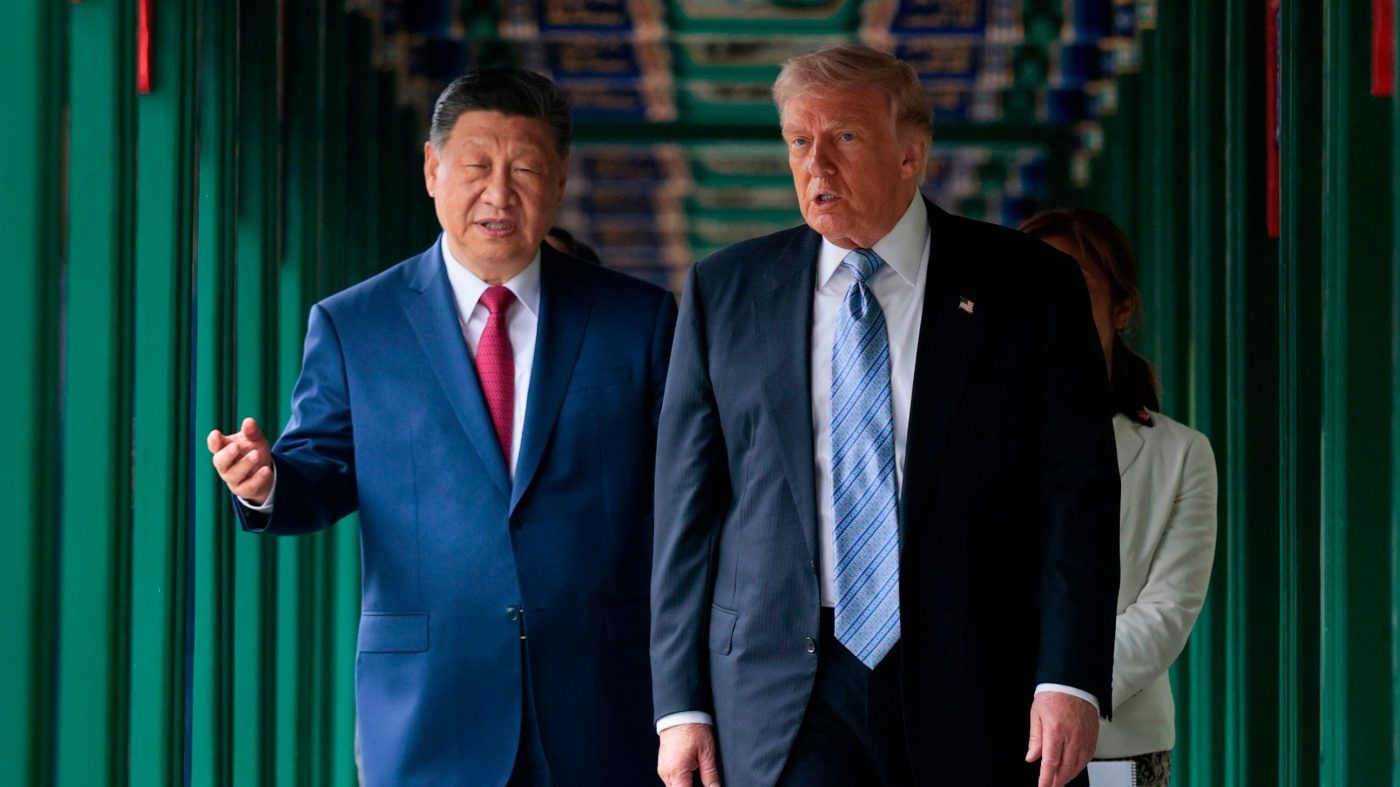
Beijing publicly dismissed the ongoing U.S.-Iran conflict as pointless on Friday, even as President Donald Trump claimed he had secured Chinese leader Xi Jinping's backing on key issues like reopening the Strait of Hormuz.
"There is no point in continuing this conflict which should not have happened in the first place," a Chinese foreign ministry spokesperson said, sidestepping questions about whether Trump and Xi discussed Iran during their bilateral meeting. The statement called for an immediate ceasefire and renewed diplomatic talks, arguing that resolving the situation is in the interest of the U.S., Iran, regional states, and the world.
The remarks came at the close of a two-day summit between the leaders of the world's two most powerful economies, a meeting dominated by trade disputes, tensions over Taiwan, and the escalating situation in the Middle East. Trump had been pressing China to use its leverage as the primary buyer of Iranian oil to push Tehran toward a deal. According to the U.S.-China Economic and Security Review Commission, China purchases roughly 90 percent of Iran's exported oil, generating tens of billions in annual revenue for the regime.
Trump told reporters on Friday that the U.S. and China feel "very similar" about wanting the two-month conflict to end, citing shared goals of preventing Iran from acquiring a nuclear weapon and keeping the Strait of Hormuz open. The strait, through which about one-fifth of the world's oil supply flows in peacetime, has been a flashpoint in the standoff, with a sustained halt in shipping traffic roiling global oil prices for months.
A White House readout of Thursday's meeting stated that Xi "made clear" China opposes the "militarization of the Strait" and any effort to charge a toll for its use. The readout also noted Xi "expressed an interest in purchasing more American oil" to reduce China's future dependence on the waterway. Trump separately told Fox News's Sean Hannity that Xi committed during their meeting to withhold military equipment from Iran—a significant shift, as Beijing has previously maintained it is not supplying Tehran with weapons. "That's a big statement," Trump said, adding that Xi also acknowledged Iran's role as a major oil customer for China.
Diplomatic efforts to secure a longer-term deal between Washington and Tehran appear to have stalled, with each side rejecting the other's most recent offer. As the impasse continues, the Trump administration is increasingly looking to Beijing to mediate. Senator Marco Rubio has pressed China to step into the fray as the Strait crisis deepens, while Bill O'Reilly has characterized Trump's outreach to Xi as a bet that China can help end the war and rescue the U.S. economy.
The summit also touched on other contentious issues, including Xi's warning to Trump that Taiwan is a matter of "fire and water" that could threaten the broader U.S.-China relationship. The House of Representatives has unanimously passed a resolution demanding Trump act on China's detention of Uyghurs and other ethnic minorities, and the president has been urged to confront Xi over the country's crackdown on religious believers.
Meanwhile, the administration's push to restrict Chinese access to advanced U.S. artificial intelligence technology has faced skepticism. Senator John Cornyn has argued that such rules are "impossible to enforce," even as Trump added Nvidia CEO Jensen Huang to his China trip delegation after denying reports of a snub.
As the U.S.-Iran conflict grinds on, with no end in sight, Beijing's pointed declaration that the war is "pointless" signals that China is positioning itself as a potential peace broker—but also underscores the limits of its willingness to be drawn into Washington's strategic priorities.