The Senate Banking Committee voted Thursday to advance a sweeping cryptocurrency regulation bill, sending the Clarity Act to the full Senate with a 15-9 tally that saw two Democrats break ranks. The vote marks a significant milestone for the legislation, which has been under negotiation for months, but also exposed deep divisions within the Democratic caucus that could complicate its floor prospects.
Sens. Ruben Gallego of Arizona and Angela Alsobrooks of Maryland sided with Republicans to move the bill forward, providing the bipartisan support needed to clear the committee. The measure now heads to the Senate floor, where it will need at least 60 votes to overcome a potential filibuster—a threshold that will require more than just a handful of Democratic defections.

“Through serious, bipartisan negotiations, we have made incredible progress on this bill. We have narrowed the gap on many of the outstanding issues,” Gallego said in a statement after the markup. But he added a cautionary note: “My vote today is so we can continue these efforts. But I want to be clear: my vote here does not guarantee a vote on the floor.”
The Clarity Act aims to establish clear federal guidelines for regulating digital assets, a sector that has grown rapidly but remains largely ungoverned by traditional financial rules. The bill’s path through the Senate has been tortuous, with negotiations between Republicans and a group of crypto-friendly Democrats stretching into the final hours before Thursday’s vote.
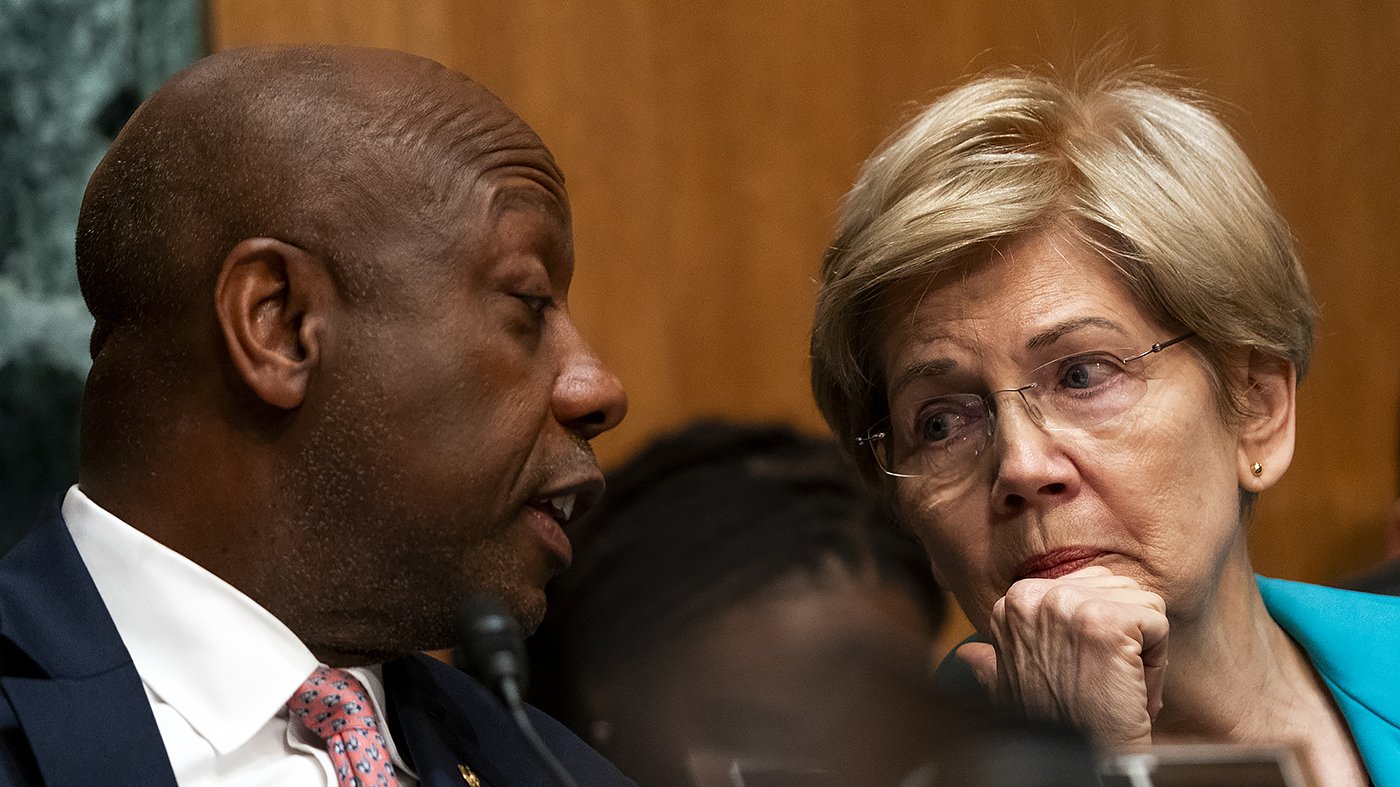
Chairman Tim Scott, a South Carolina Republican, made a late-stage effort to shore up bipartisan support by incorporating several amendments requested by Democrats during the markup itself. “To make this a bipartisan outcome,” Scott said as he introduced the changes, a move that underscored the unusual coalition politics surrounding crypto policy.
The maneuver drew sharp criticism from Senator Elizabeth Warren of Massachusetts, the committee’s top Democrat and a vocal opponent of the bill. Warren, who has described the Clarity Act as “a bill written by the crypto industry for the crypto industry,” accused Scott of violating the committee’s own procedural rules. “It seems to me, Mr. Chairman, following the rules you announced at the beginning, either we know all of the amendments when we walk in and that’s the end of it, or if you’re going to start opening it up, let’s open it up to everyone,” she said.
The procedural dispute briefly threw the markup into disarray. Senator Thom Tillis, a North Carolina Republican, suggested deferring the amendments to the floor, but Senator Mark Warner, a Virginia Democrat, urged the committee to approve them immediately. “I would actually prefer, because of the good faith that Sen. Lummis has shown and I intend to work more on this bill, but … this would move me much closer if these amendments are not put off until the floor,” Warner said.
The vote comes amid a broader push for crypto regulation on Capitol Hill, where lawmakers are grappling with how to balance innovation with consumer protection. The bipartisan coalition that advanced the bill Thursday reflects a growing recognition that digital assets are here to stay, but the partisan rift over how to regulate them remains wide.
For now, the Clarity Act’s fate hinges on whether its backers can peel off enough Democrats to reach 60 votes. The committee vote may have been a win, but the real test lies ahead on the Senate floor.