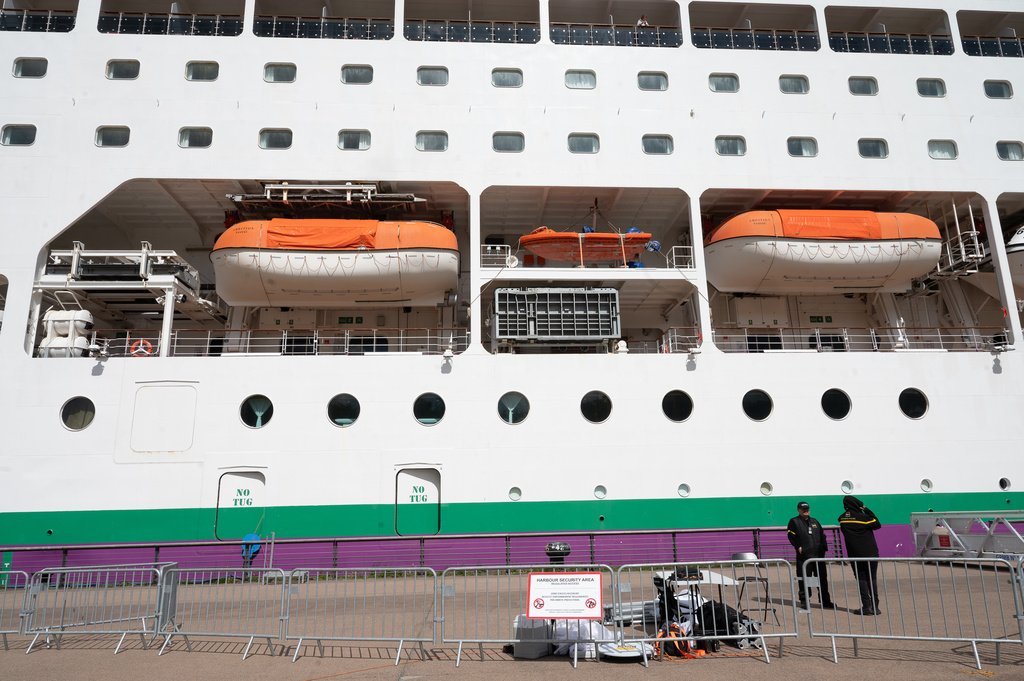
French authorities have quarantined 1,700 passengers aboard the British cruise ship Ambition after a norovirus outbreak, while the Caribbean Princess reported a similar incident affecting 3,100 passengers. These events follow global health monitoring of a hantavirus outbreak linked to the MV Hondius, raising fresh concerns about disease transmission on cruise liners.
The Centers for Disease Control and Prevention describes cruise ships as semi-enclosed environments where highly contagious pathogens can spread easily. Passengers from diverse regions, some carrying infections, interact in crowded, poorly ventilated spaces over extended periods—days or even weeks. Dr. Emily Abdoler, an infectious diseases specialist at the University of Michigan, told USA Today that if people took week-long airplane rides, similar issues would arise.

Age is a critical factor, according to Vikram Niranjan, assistant professor of public health at the University of Limerick. He wrote in The Conversation that cruise holidays attract older adults, many with underlying health conditions that exacerbate infections. Norovirus, often called the winter vomiting bug, is the most common cause of stomach illness on cruises, the CDC says.
Despite the attention, cruise ships account for only about 1% of reported norovirus outbreaks in the U.S., with long-term care facilities, hospitals, restaurants, and schools being far more common settings. The industry's relatively low share may surprise some, given the high-profile nature of recent incidents.
COVID-19 demonstrated how quickly a virus can spread in such settings, as seen on the Diamond Princess in early 2020. Hundreds tested positive during that outbreak, leading to prolonged quarantines aboard the ship. That event reshaped global perceptions of cruise safety and prompted stricter hygiene protocols.
Hantavirus outbreaks remain rare, both on land and at sea, Niranjan noted. The virus typically spreads through rodent droppings, not person-to-person contact. However, the Andes strain, endemic in parts of Argentina and Chile, appears capable of human-to-human transmission in close quarters. The European Centre for Disease Prevention and Control suspects a passenger from that region brought the virus onto the MV Hondius, where it then spread to fellow travelers.
The juxtaposition of these outbreaks underscores the challenges of managing infectious disease in enclosed travel environments. As the cruise industry rebounds post-pandemic, health authorities are closely monitoring for new clusters. For policymakers, the incidents highlight the need for robust surveillance and rapid response mechanisms to protect vulnerable populations.