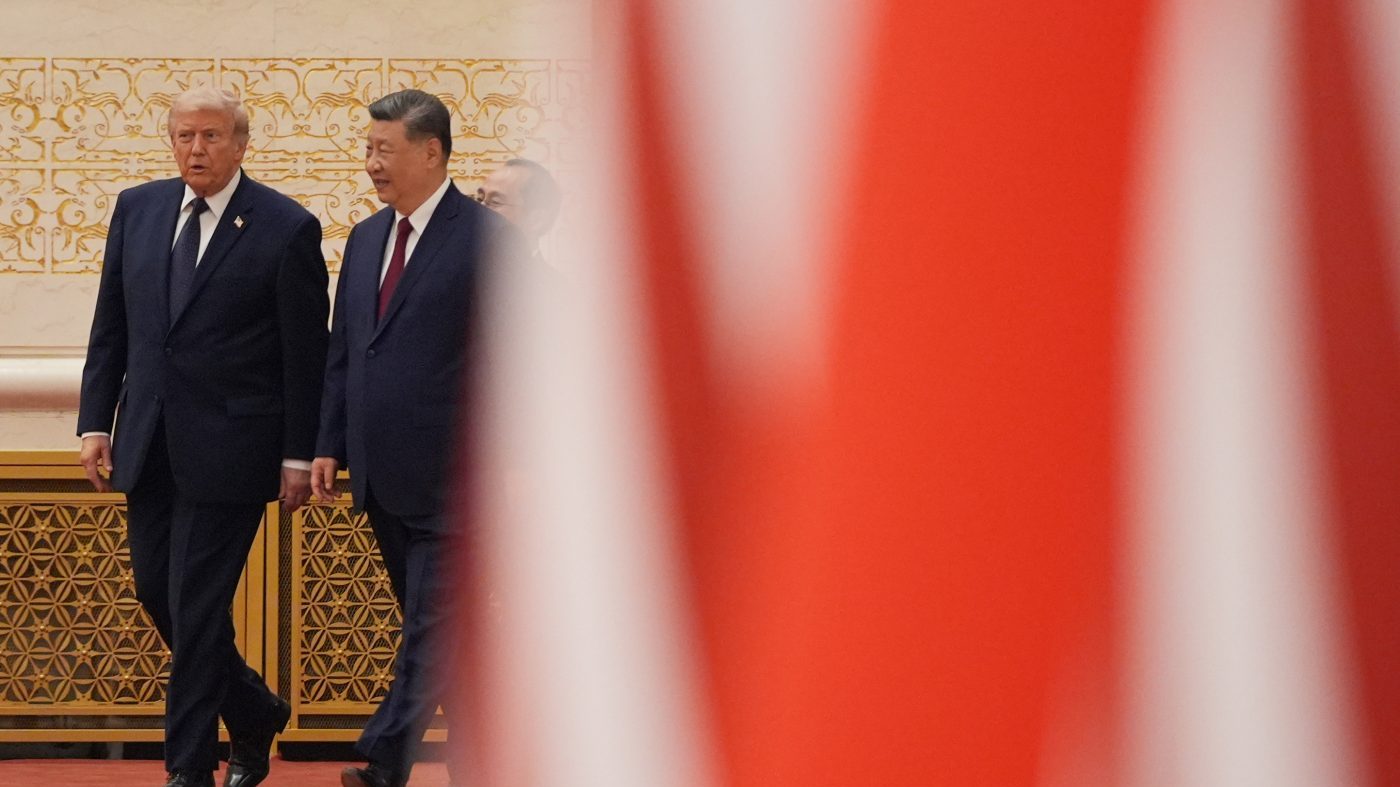
President Donald Trump used his state banquet in Beijing on Thursday to extend a formal invitation to Chinese President Xi Jinping for a White House visit on September 24. Speaking before a gathering of officials, Trump thanked Xi for the elaborate welcome and said he looked forward to hosting Xi and his wife, Peng Liyuan, later this year.
“It is my honor to extend an invitation to you, Madam Peng, to visit us at the White House this September 24,” Trump said. “We look forward to it.” The invitation came as the two leaders wrapped up a bilateral meeting that lasted more than two hours, signaling a continued effort to manage the world’s most consequential bilateral relationship.
In his banquet remarks, Xi underscored the weight of U.S.-China ties. “We both believe that the U.S.-China relationship is the most important bilateral relationship in the world,” he said. “We must make it work and not mess it up.” The Chinese leader’s comments reflected a shared desire for stability, even as underlying frictions persist.
Trump’s visit to Beijing marked his first trip to China in nearly nine years. His last face-to-face meeting with Xi occurred in October 2025 during a stop in South Korea. The two leaders have maintained a dialogue punctuated by both cooperation and confrontation, particularly over trade, technology, and regional security.
According to a White House readout, the meeting covered business and trade ties, as well as the ongoing war in Iran and the situation in the Strait of Hormuz. The discussions come as the Trump administration pushes for increased economic engagement with Beijing, even as Congress weighs new restrictions on Chinese investments. For more on the economic signals from the summit, see our analysis of trade signals from the Beijing meeting.
Chinese officials, however, indicated that Xi also delivered a pointed warning on Taiwan. The self-governing island remains a flashpoint, with Beijing viewing any U.S. engagement with Taipei as a violation of its core interests. Xi’s admonition echoed earlier statements that the Taiwan issue could put relations on a “fire and water” trajectory. For more on that exchange, read Xi’s warning to Trump on Taiwan.
The invitation to the White House suggests both leaders are eager to maintain a veneer of diplomatic normalcy, even as their teams haggle over tariffs, technology transfers, and regional alliances. Trump has previously praised Xi as a “friend,” a characterization that has drawn criticism from human rights groups and some lawmakers. For context on Trump’s tone during the visit, see Trump’s praise of Xi and sidestepping of Taiwan and detainee pressures.
September’s White House meeting will test whether the two leaders can translate warm rhetoric into tangible progress on trade imbalances, intellectual property protections, and security concerns. With the Iran conflict and Taiwan sovereignty both simmering, the stakes for the bilateral relationship remain high.