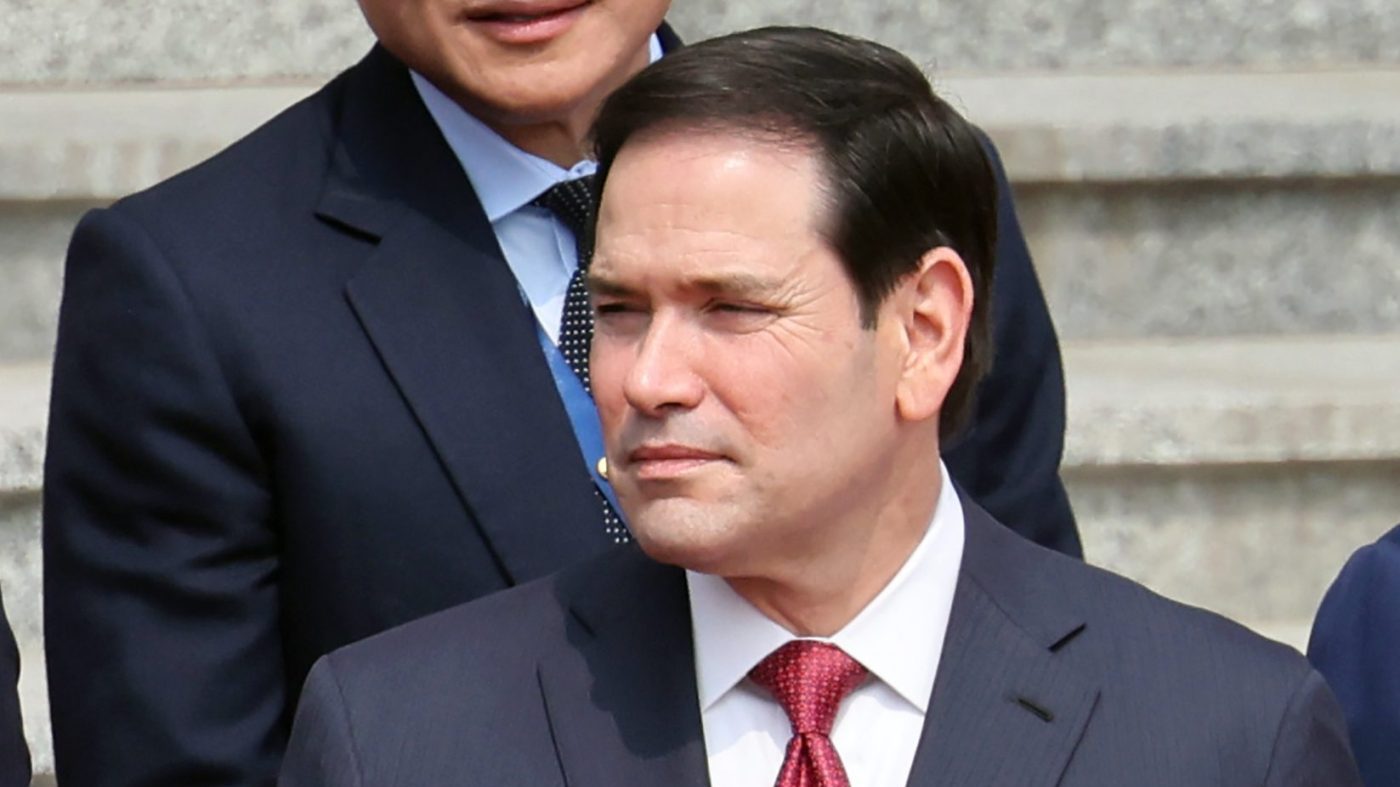
Secretary of State Marco Rubio stated Thursday that the United States and China share a common position against the militarization of the Strait of Hormuz, even as Tehran continues to block the critical waterway following a ceasefire in its conflict with Washington and Israel.
Speaking to NBC News from Beijing, where he accompanied President Donald Trump for high-stakes talks with Chinese President Xi Jinping, Rubio emphasized that the U.S. has not requested China’s intervention regarding Iran. “The Chinese side said they are not in favor of militarizing the Straits of Hormuz, and they’re not in favor of a tolling system, and that’s our position,” Rubio told NBC’s Tom Llamas. “We will never support an Iranian tolling system in the Straits of Hormuz, nor do we think they have a right to put mines in international waters.”
The top U.S. diplomat noted that Beijing opposes Iran’s pursuit of nuclear weapons, but he drew a sharp contrast between diplomatic statements and concrete action. “We’re actually trying to do something about it,” Rubio said, pointing to the U.S. naval blockade of Iranian shipping through the strait as a direct response to Tehran’s actions.
Rubio also predicted that reopening the Strait of Hormuz would lead to a significant drop in energy prices. “All that pent-up oil that’s being held hostage by Iran—once that reaches the marketplace, it will have a very positive impact,” he said, forecasting a “dramatic reduction” in costs over time.
When pressed by Llamas on whether Trump’s remark that he doesn’t “think about Americans’ financial situations” during Iran negotiations seemed out of touch, Rubio defended the president. “No, because I think what the president is making clear is that we’re not going to let Iran use that as leverage,” he replied. “If the Iranians think that they are going to use our domestic politics to pressure him into a bad deal, that’s not going to happen.”
Earlier, Rubio told Fox News’ Sean Hannity that the administration would push Xi to take an “active role” in ending the war with Iran, which has disrupted shipping to China, the world’s largest buyer of Iranian energy. According to a March report from the U.S.-China Economic and Security Review Commission, Chinese purchases account for roughly 90 percent of Iran’s exported oil.
Progress in U.S.-Iran talks has stalled since the early April ceasefire. Trump recently rejected Tehran’s 14-point peace proposal, and Iran’s Parliament Speaker Mohammad Bagher Ghalibaf urged Washington to reconsider. “The longer they drag their feet, the more American taxpayers will pay for it,” Ghalibaf warned, targeting U.S. negotiators.
Rubio has pressed Beijing to mediate the crisis, as reported earlier. Meanwhile, House Speaker Mike Johnson downplayed Trump’s remarks on Iran, citing the Strait of Hormuz crisis as a key concern.