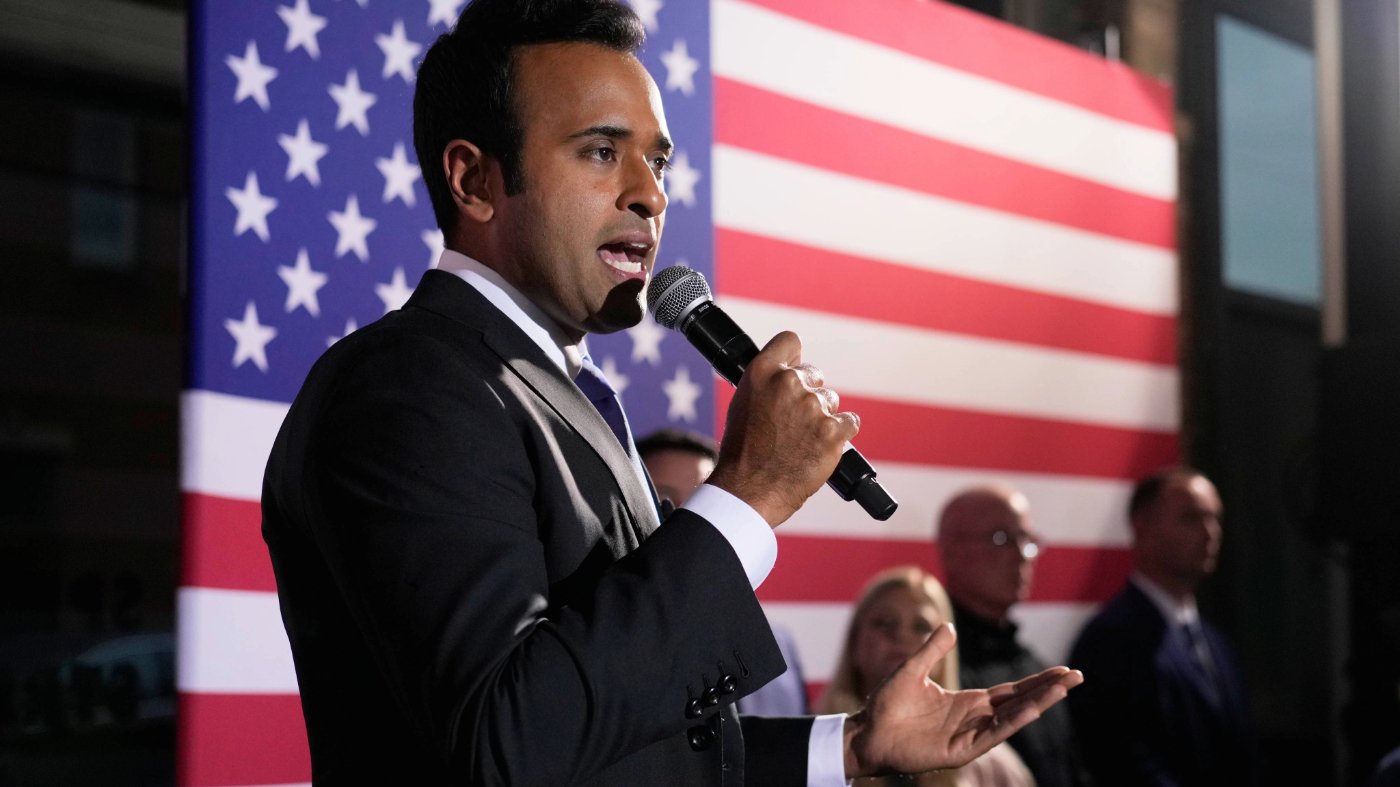
When Ohio gubernatorial candidate Vivek Ramaswamy speaks about the racism and cultural suspicion he has faced as an Indian American Hindu, he touches on a painful reality. Many Americans still struggle to accept leadership from a brown-skinned Hindu, no matter how accomplished. Denying that experience insults millions of immigrants who navigate the gap between achievement and acceptance daily.
Yet if Ramaswamy intends to center his Hindu identity in his public image and political philosophy, he must also confront the deeper obligations and contradictions that come with it. He is invoking a tradition far older, more complex, and spiritually demanding than the simplistic political framing that dominates American discourse today.

This observation stems from lived experience, not moral superiority. It reflects how easily identity, ambition, grievance, and politics can entangle, distorting both personal conviction and public understanding. Hindu philosophy teaches that humans become trapped by the constant conflict of opposites—praise and criticism, victory and defeat, attraction and resentment. True spiritual growth requires discernment, self-awareness, and detachment from emotional polarization, not permanent immersion in it.
The Bhagavad Gita does not endorse endless outrage or perpetual grievance. It calls for mastery over the ego and warns against letting anger, attachment, and resentment dictate conduct. That distinction matters enormously in today's political environment, where emotional escalation and ideological combat are rewarded, while restraint and nuance are dismissed as weakness. Identity itself becomes weaponized rather than examined honestly.
If Ramaswamy genuinely wants to be a Hindu voice in American conservatism, his conduct must reflect the discipline Hinduism demands. Otherwise, he risks reducing one of the world's oldest spiritual traditions to another instrument of political tribalism. There is also an uncomfortable reality: most Indian Americans are not conservatives, and they vote Democratic not because they reject hard work or family values, but because they are uneasy with rhetoric around immigrants, religion, and nationalism.
Mahatma Gandhi faced a similar challenge in a different context. He understood that invoking spirituality while inflaming resentment created contradiction, not coherence. Moral authority came from disciplined conduct rooted in restraint, humility, and self-control, not declarations of faith.
A deeper irony lies in the intersection of Hindu identity and modern conservatism. In India, Hindu conservatism has increasingly become associated with suspicion toward Muslims and other minorities, conflicting with the tradition's historical pluralism. Classical Hindu philosophy was expansive, absorbing ideas from multiple traditions, tolerating ambiguity, and recognizing that truth cannot be reduced to rigid categories. A spiritually secure civilization does not need perpetual hostility to preserve its identity.
If Ramaswamy wants Americans to understand Hinduism beyond stereotypes, he must demonstrate through conduct that Hindu philosophy offers more than reactive nationalism wrapped in spiritual language. Restraint in moments of outrage, balance in polarization, and humility in ambition are more convincing than political messaging designed to appeal to grievance and identity. Words alone, scripture references, and selective faith invocations will not persuade skeptics—people judge belief systems by the conduct of those who claim to represent them.
The real question is not whether America can accept a Hindu politician—it eventually accepts anyone who succeeds within its cultural framework. The question is whether a politician invoking Hindu identity is willing to embody the difficult spiritual discipline it requires, rather than using identity as another political tool in an exhausted culture of polarization. For more on how political polarization is reshaping American discourse, see Gladwell and Perino's surprising cure for polarization. The broader trend of identity-driven politics also echoes in debates over the FACE Act becoming a political weapon.