In September 2025, the Trump administration deployed the Freedom of Access to Clinic Entrances Act (FACE Act) against pro-Palestinian demonstrators outside a New Jersey synagogue. Just months later, federal prosecutors charged 39 people—including journalist Don Lemon—for disrupting a church service. These actions underscore a growing concern: the FACE Act has become a partisan tool, wielded by successive administrations to silence dissent.
Enacted in 1994 with a 69-30 Senate vote largely along Democratic lines, the FACE Act was ostensibly designed to protect access to abortion clinics. Its drafters extended protections to pregnancy centers and places of worship to secure bipartisan support, but critics argue this neutrality was superficial. The law has since been used primarily against conservative activists, but recent cases show its scope broadening.
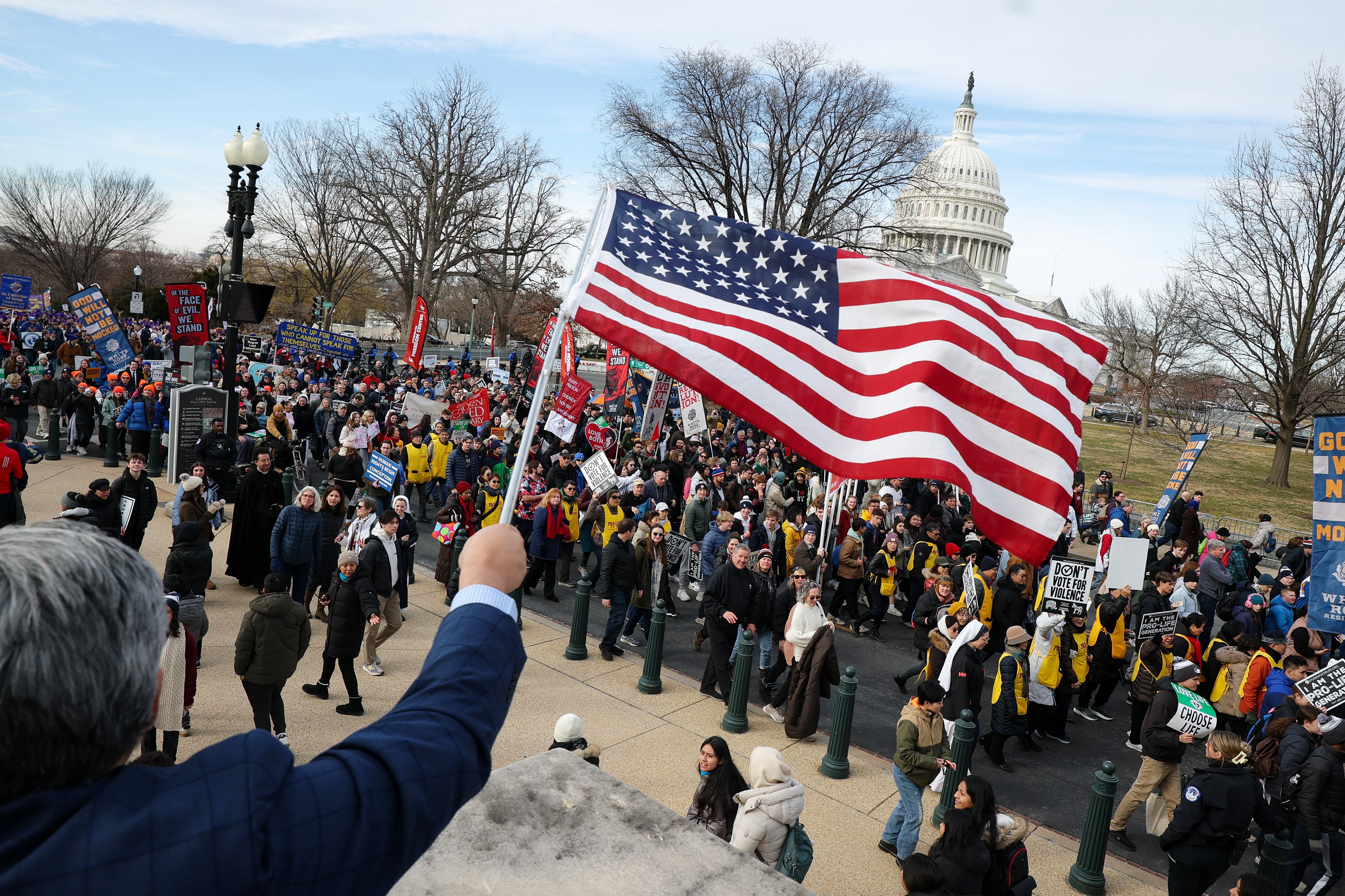
Carol Crossed, vice president of Feminists Choosing Life-New York and a veteran of civil disobedience, recalls a time before the FACE Act. Arrested 19 times—at nuclear facilities, for civil rights, and at abortion clinics—she experienced consequences that were proportionate and local. In 1983, 950 women protesting nuclear weapons at Seneca Army Depot were charged under state trespass laws, not federal statutes. Similarly, 600 anti-abortion protesters arrested in Buffalo in 1992 faced only state misdemeanors and were ultimately acquitted.
The FACE Act changed that dynamic. A recent Justice Department report found that under the Biden administration, despite over 100 attacks on pregnancy centers after the Dobbs leak, only five FACE cases were brought against abortion-rights defendants. The CompassCare Pregnancy Services center in Buffalo, firebombed in June 2022 and vandalized again months later, received little attention until Attorney General Todd Blanche, under the current administration, vowed to end a “two-tiered system of justice.” Yet critics note the same statute is now being used against left-leaning protesters.
Democrats who supported the FACE Act when it targeted pro-life activists now face a reckoning as it targets journalists and anti-war protesters. This selective enforcement undermines the principle of equal justice. A federal judge recently blocked Trump sanctions on a UN rights investigator, citing free speech violations, highlighting broader concerns about government overreach.
The FACE Act’s application has also raised questions about legal tools used to defend migrant rights, as similar statutes are deployed against protesters across the political spectrum. The Supreme Court’s new intent standard gutted the Voting Rights Act, showing how laws can be reinterpreted to serve partisan ends.
Crossed and Kristen Day, executive director of Democrats For Life of America, argue that Congress should repeal the FACE Act. They contend that peaceful civil disobedience—from lunch counter sit-ins to the Seneca encampment—has historically been handled at the state and local levels, with consequences proportional to the conduct. “If a single statute can be used aggressively against pro-life activists under one president and against anti-ICE protesters under another, the problem is not who is wielding the weapon, but that the weapon exists,” they wrote.
As the FACE Act continues to be used against diverse groups, the call for its repeal grows louder, echoing the tradition of nonviolent protest championed by Mahatma Gandhi and Dr. Martin Luther King Jr.