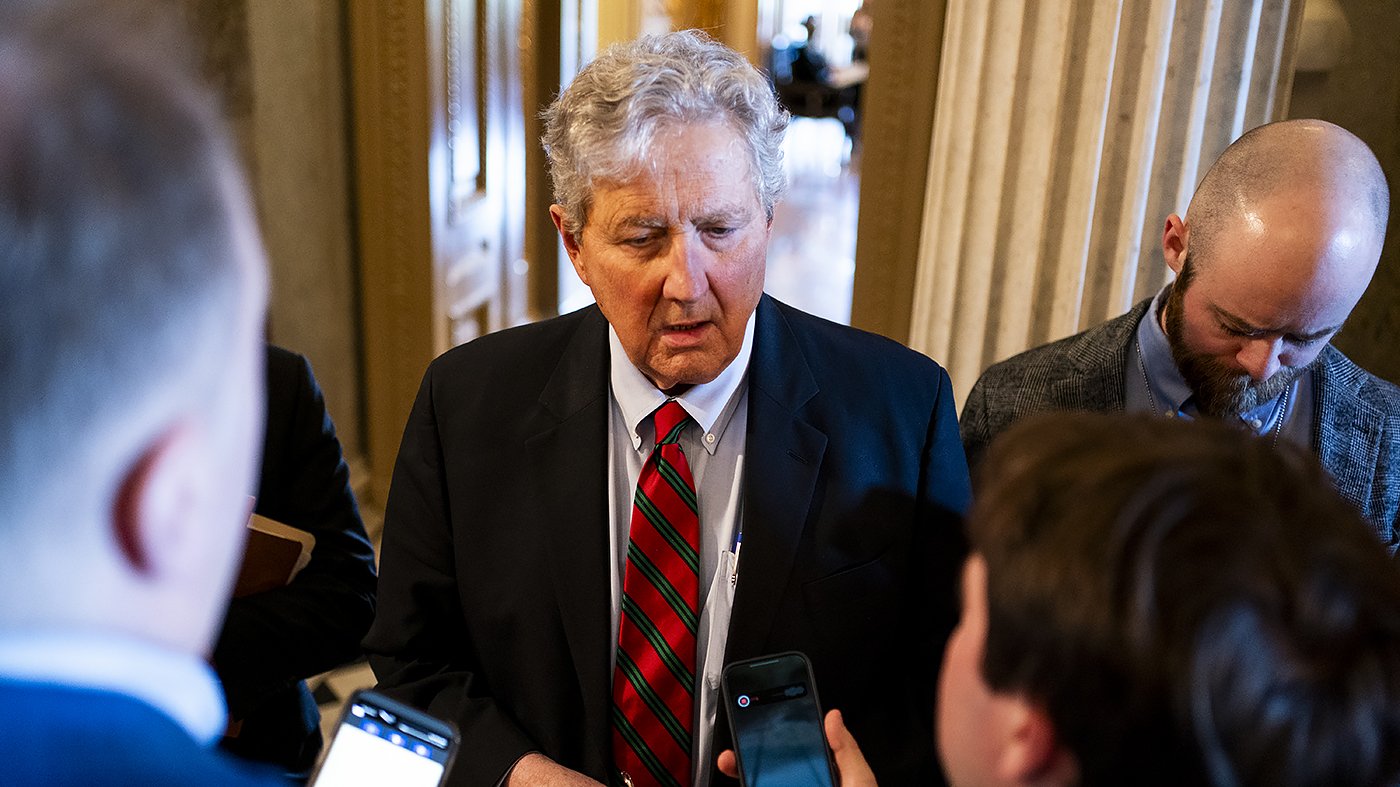
The Senate took a rare bipartisan step Wednesday, unanimously voting to advance a resolution that would suspend senators' pay during any future government shutdown. The measure, sponsored by Sen. John Kennedy (R-La.), is designed to give lawmakers a direct financial stake in preventing the kind of prolonged funding impasses that have become a recurring feature of Washington's political battles.
The resolution passed 99-0 on a motion to end debate, signaling overwhelming support for the proposal. However, it applies only to Senate members and does not require House approval or the president's signature. Under the plan, senators would not lose their salaries—the money would be placed in an escrow account—but they would not have access to it while the government remains shuttered.
The vote comes after a stretch of record-breaking shutdowns. In the fall of 2025, the federal government closed for 43 days over a dispute about enhanced health insurance premium subsidies. Earlier this year, the Department of Homeland Security was shuttered for 76 days after Democrats refused to fund Immigration and Customs Enforcement and Border Patrol without reforms, following the fatal shooting of two protesters in Minneapolis by federal agents. These events have fueled growing frustration among lawmakers, with Kennedy noting that "shutting down government should not be our default solution."
Kennedy had initially pushed for the resolution to take effect immediately, citing concerns that Democrats might force a shutdown before the midterm elections to create chaos. But he acknowledged that the 27th Amendment, which bars Congress from changing its own pay until after the next House election, prevents the measure from kicking in until after November. "I'm very concerned that my Senate colleagues on the Democratic side are going to try to shut down government yet again right before the elections," Kennedy said on the floor.
Senate Democratic Leader Chuck Schumer (D-N.Y.) indicated Tuesday that he would support the resolution, paving the way for its passage. The bipartisan backing underscores a shared interest in curbing the political brinkmanship that has led to repeated funding lapses. As the midterms approach, the resolution could become a talking point for both parties, though its practical impact will be delayed until after voters head to the polls.
The push to tie lawmakers' pay to government funding comes amid broader debates over fiscal discipline and national security. GOP senators have urged the administration to prioritize Iran over other foreign policy flashpoints, while discussions about energy costs and federal spending remain heated. The resolution also highlights the ongoing tension between Congress's budget responsibilities and the executive branch's demands, a dynamic that has intensified under President Trump's tenure.
While the measure is seen as a symbolic gesture, its unanimous advancement suggests a rare moment of consensus in a deeply divided Senate. Kennedy framed it as a necessary check on legislative dysfunction: "We ought to hide our heads in a bag. It's got to stop." The resolution now moves toward a final vote, likely to pass with strong cross-aisle support.
For now, the threat of another shutdown looms, with Republicans expecting a possible funding lapse this fall. The resolution, once enacted, could reshape how future Congresses approach budget negotiations, though its full effect won't be felt until after the midterms. As debates over security spending and other priorities continue, the Senate's move adds a new tool—and a new incentive—for avoiding the gridlock that has become all too familiar.