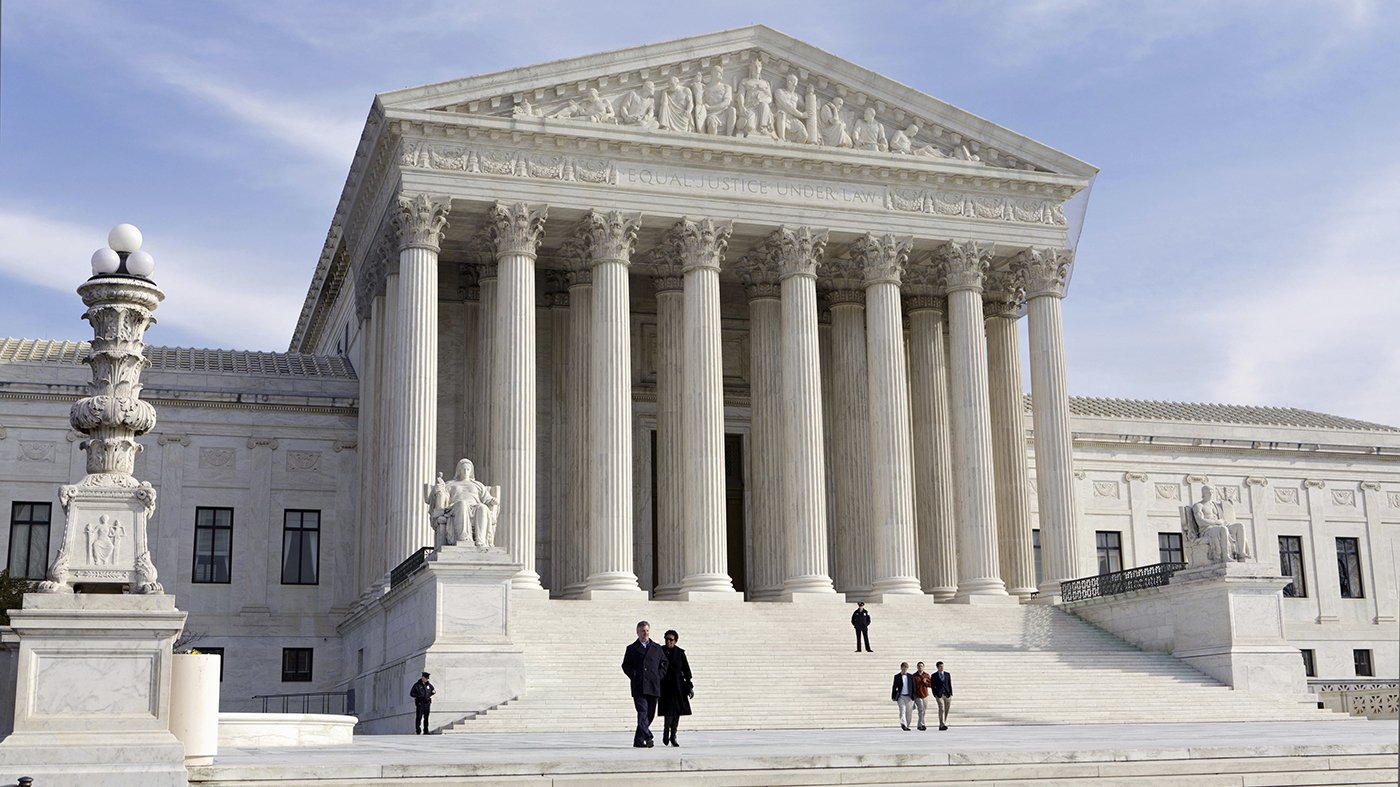
The Supreme Court has agreed to take up St. Mary Catholic Parish v. Roy, a case that could determine the constitutional limits of state-funded education programs when it comes to religious schools. At issue is whether Colorado can exclude Catholic preschools from its universal preschool program—and by extension, deny families the benefit of using tax dollars at schools that require adherence to religious teachings.
The dispute centers on Colorado's universal preschool initiative, launched by Governor Jared Polis (D) in 2023. The program offers 15 hours of free preschool per week—valued at roughly $6,000 per child—at participating public or private schools. But state officials ruled that Catholic schools like St. Mary Catholic Virtue School cannot take part because they require families to support the school's religious mission, which the Colorado Department of Early Childhood deemed a violation of the program's equal-opportunity requirement.
“When the government creates a broadly available state-funded benefit like Colorado’s universal preschool program, it cannot disqualify families and schools based on their religion,” the plaintiffs argue. The case has personal stakes for many families. One parent noted that their first child was already denied the benefit for the 2024–2025 school year, and now they face the same prospect for their second child.
Critics of the state's policy point to a double standard: Colorado makes exceptions for preschools that serve only specific groups, such as gay and transgender families, low-income families, or children with disabilities. Yet it refuses to accommodate Catholic schools that teach standard Catholic virtues. “In an effort to be inclusionary, the state is in fact being exclusionary,” said one affected parent. “It is keeping Catholic families out simply because of the teachings of our Catholic faith.”
The impact has been severe. Since the universal preschool program began, two Catholic schools in the Archdiocese of Denver—Wellspring Catholic Academy and Guardian Angels Catholic School—have closed due to enrollment losses and funding shortfalls. Across the archdiocese, Catholic preschool enrollment has dropped nearly 20 percent. “It is heartbreaking to see,” said a school official.
A federal district court in Colorado ruled against the Catholic schools, and the Tenth Circuit Court of Appeals in Denver praised the state's discriminatory actions as a “model” for other states. But the Supreme Court’s decision to hear the case signals that the justices may revisit the boundaries of religious liberty in public funding. The case asks the court to affirm that when a state creates a broadly available benefit, it cannot exclude religious families or institutions simply because of their faith.
Governor Polis has touted the program as “world-class” and part of “a Colorado for all.” But critics say the exclusion of Catholic families undermines that promise. “You don’t have to be Catholic, or even religious, to see the problem with Colorado’s approach,” said one parent. “A taxpayer-funded program advertised as universal should not exclude religious families just because the government dislikes their beliefs.”
The case also resonates with broader debates about religious freedom in America. As the U.S. religious freedom post sits empty amid global persecution, the Supreme Court’s ruling could send a powerful signal about how the country treats believers at home. Similarly, the Fifth Circuit ruling on Texas's Ten Commandments law has already raised questions about the limits of religious expression in public spaces.
For families like those at St. Mary’s, the issue is deeply personal. “We commute nearly an hour each way, twice a day, to bring our children to this school,” said one parent. “A school like this is worth every mile. Families should not be pressured to abandon Catholic education in order to receive a supposedly universal government benefit.”
The Supreme Court is expected to hear oral arguments in the fall, with a decision likely by next summer. The outcome could redefine the relationship between church and state in education funding for years to come.