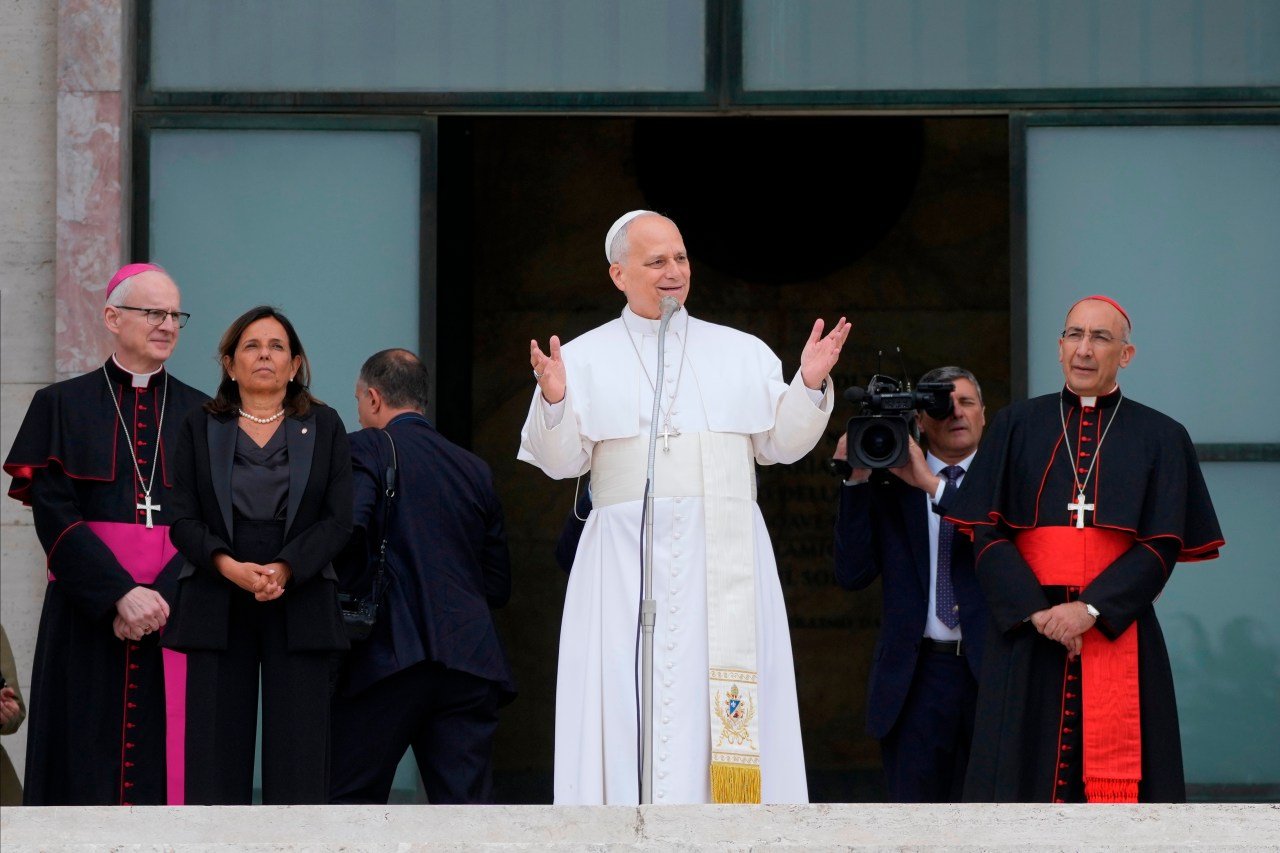
Pope Leo XIV delivered a sharp condemnation of artificial intelligence and advanced weaponry on Thursday, arguing that the global surge in military investment is pushing humanity toward a “spiral of annihilation.” Speaking at Rome’s La Sapienza University—the first papal visit since a 2008 controversy forced Pope Benedict XVI to cancel—the pontiff called for immediate de-escalation in conflicts across the Middle East and Ukraine.
Historic Return to La Sapienza
The American-born pope received a warm welcome at the 700-year-old institution, founded by Pope Boniface VIII in 1303. Among the students greeting him were young Palestinians who arrived in Italy this week via a “humanitarian corridor” from Gaza, part of a broader Italian effort—backed by Catholic organizations—to bring hundreds of Palestinians to study and receive medical care since the 2023 war between Israel and Hamas began. Leo met briefly with them in the campus chapel and again after his address.
Sharp Critique of Military Spending
In his speech, Leo denounced the dramatic rise in military expenditures this year, particularly in Europe, at the expense of education and healthcare. He accused the trend of “enriching elites who care nothing for the common good.” The pope urged stricter oversight of AI development and deployment in both military and civilian contexts, insisting it must not “absolve humans of responsibility for their choices” or “exacerbate the tragedy of conflicts.”
“What is happening in Ukraine, in Gaza and the Palestinian territories, in Lebanon, and in Iran illustrates the inhuman evolution of the relationship between war and new technologies in a spiral of annihilation,” Leo said. He called for education and research to pivot toward valuing “the lives of peoples who cry out for peace and justice.”
The pope’s remarks come amid ongoing debates over the role of AI in modern warfare, a topic he is expected to explore further in his first encyclical, set for release in the coming weeks. This aligns with broader political discussions, such as calls for Pentagon overhaul to address modern warfare challenges, and highlights the growing intersection of technology and defense policy.
A Personal Encounter with Gaza’s Suffering
Nada Rahim Jouda, a 19-year-old Gaza student now studying business science in Rome, described the city as “like heaven for me” after arriving just two days earlier. “Everything here is green and it’s not gray and troubles everywhere and miserable people in the streets,” she said. Yet she remains deeply worried about her family back home: her mother, battling leukemia, and two younger sisters, aged 17 and 13. The war forced them to move four times, leaving her mother without access to cancer care. “They all rely on me. I’m the only hope that they have,” Jouda said.
Leo’s address also touched on broader geopolitical tensions, including the ongoing war in Ukraine and the Republican-led push for a congressional vote on Iran, reflecting the pope’s call for diplomatic solutions over military escalation.
The pope’s message resonated with students and faculty alike, marking a stark contrast to the protests that greeted Benedict XVI in 2008. Leo’s focus on AI and warfare underscores his view that these issues are among the most critical facing humanity, as he seeks to steer global discourse away from high-tech destruction and toward peace and justice.