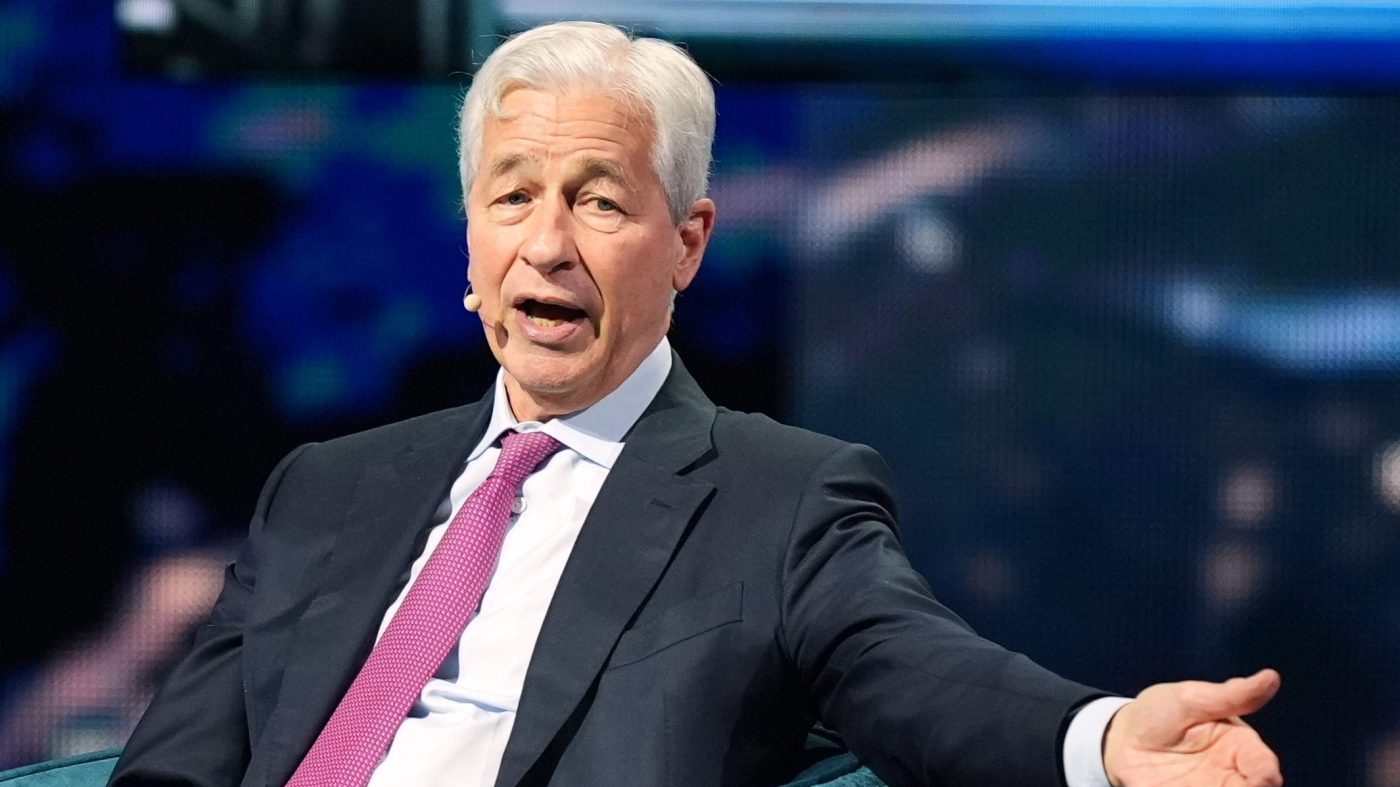
In a notable public endorsement, JPMorgan Chase CEO Jamie Dimon has defended the United States' military engagement in Iran, characterizing the action as a justified response to what he described as the Iranian regime's 45-year history of global violence and support for terrorism. Dimon made the comments during an interview on "The Axios Show," acknowledging the conflict creates significant "short-term risks" for the global economy but suggesting the long-term security threat outweighs them.
Justifying the Military Calculus
Dimon pointed to Iran's backing of militant groups like Hamas, Hezbollah, and the Houthis, alongside its continued pursuit of ballistic missile and nuclear weapons programs, as the core rationale for military action. "Does it create all this uncertainty? Absolutely," Dimon stated. "Does it create more short-term risks for oil prices? Absolutely. I'm praying it ends well. I don't know everything the American government knows." This stance aligns with the Trump administration's stated goal of dismantling Iran's missile capabilities and preventing it from obtaining a nuclear weapon.
Immediate Economic Fallout
The economic consequences of the war are already being felt worldwide. In retaliation for U.S. and Israeli strikes, Iran has restricted shipping through the critical Strait of Hormuz, a chokepoint for roughly one-fifth of global oil shipments. This has triggered a sharp rise in energy prices, pushing the U.S. national average for a gallon of regular gasoline above $4 for the first time since 2022. The disruption extends beyond crude oil, affecting supplies of liquefied natural gas and fertilizer, though Agriculture Secretary Brooke Rollins noted last week that most U.S. farmers had secured their fertilizer supplies in advance. The conflict's inflationary pressure has led to warnings from other quarters; for instance, Dimon himself has previously cautioned that the Iran conflict could push the economy into recession through similar channels.
Strategic and Political Context
The defense of the operation by a leading Wall Street figure adds a significant voice to a politically charged debate. The administration has framed the campaign, launched in concert with Israeli forces on February 28, as a necessary preemptive strike. However, the move is not without its critics on Capitol Hill, where some lawmakers warn of escalating costs. Rep. Matt Gaetz has explicitly warned President Trump against a ground invasion, highlighting the profound economic and security perils such an escalation would entail.
Dimon expressed confidence in the military's planning, noting the Pentagon has "been planning things like this extensively in a lot of detail." He voiced a hope that the conflict would ultimately yield a positive outcome for regional stability, stating, "I literally hope it turns out well and that somehow we get peace in the Middle East permanently."
Human and Operational Cost
The human toll of the conflict continues to mount. According to the U.S.-based Human Rights Activists News Agency, nearly 1,600 Iranian civilians, including at least 244 children, have been killed as of Tuesday. On the U.S. side, seven service members have been killed by Iranian retaliatory strikes, and six more died in a refueling aircraft crash in Iraq on March 12.
The economic ripple effects are spreading to other industries, compounding the strategic challenges. Major U.S. airlines are now warning of a potential jet fuel shortage as conflict-driven prices continue to soar, threatening another sector of the transportation economy. This interconnected crisis underscores how national security decisions can rapidly translate into broad domestic policy challenges, a dynamic that often forces political parties to balance immediate affordability concerns against longer-term strategic visions.
Dimon's comments place a powerful figure from the financial world squarely in the middle of a fierce geopolitical and economic debate, highlighting the complex trade-offs between immediate market stability and long-term national security objectives.