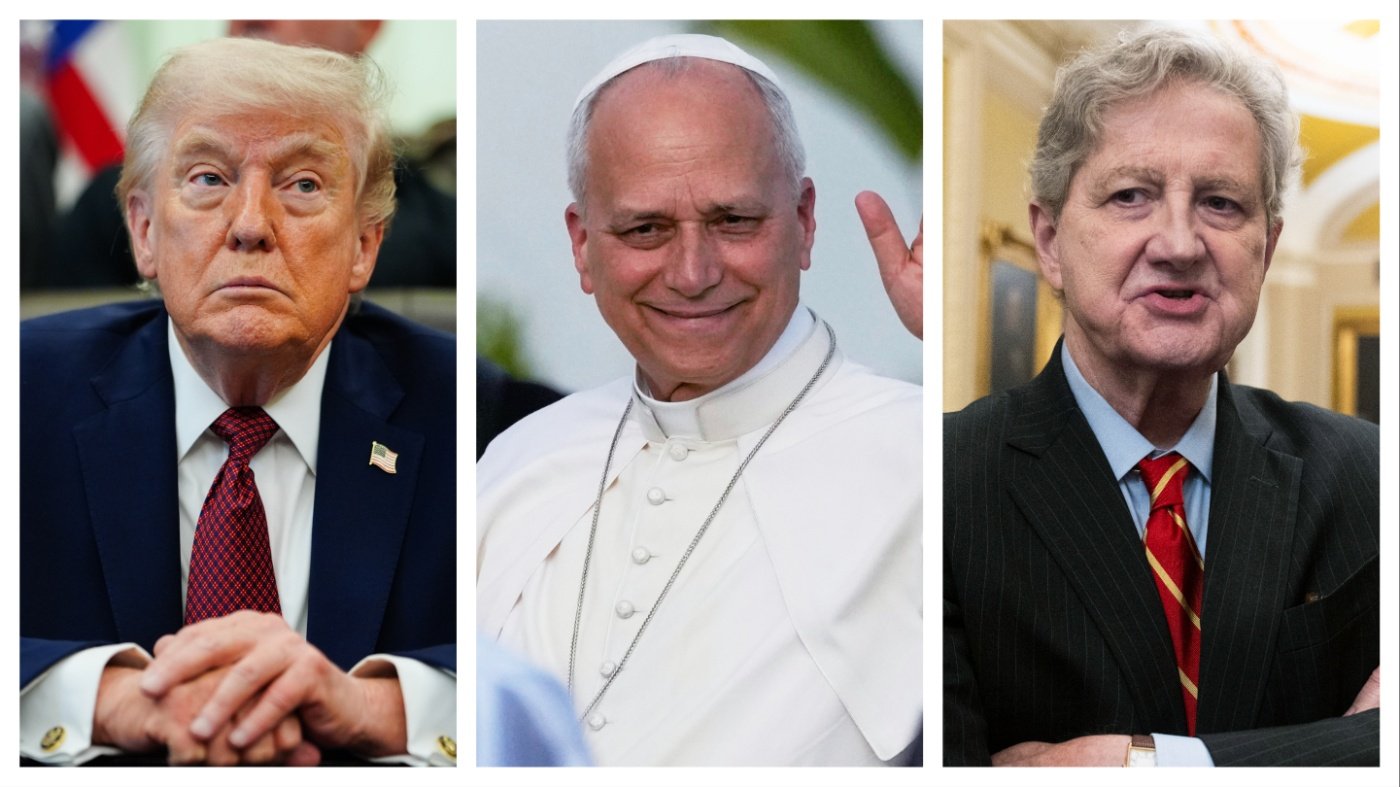
In a striking public rebuke, Senator John Kennedy of Louisiana has cautioned that the Republican Party risks losing the November midterm elections if it continues to be sidetracked by President Donald Trump and Vice President J.D. Vance's escalating public dispute with Pope Leo XIV. Kennedy argued that the party's focus must remain squarely on economic issues affecting American families, not on what he termed a "new holy war" with the Catholic leader.
A Warning Against Distractions
Appearing on Fox News, Kennedy expressed concern that high-profile spats with global religious figures are obscuring the GOP's core message. "If we lose the midterms, it will be because we didn't talk about what moms and dads are worried about when they lie to sleep at night and can't, and that's primarily the cost of living," Kennedy stated. He emphasized that the election outcome would not hinge on foreign policy achievements, like the recent military action in Iran, but on domestic economic anxiety.
The senator's comments follow a week of intense controversy sparked by President Trump, who took to social media to label the first American pope as "WEAK on Crime and terrible for Foreign Policy." The declaration sent shockwaves through Capitol Hill, drawing immediate pushback from senior Republicans, including Senate Majority Leader John Thune, who advised the president to "leave the church alone." Vice President Vance further inflamed tensions by publicly warning the pontiff to be cautious when discussing theological matters related to the ongoing conflict.
Defending Policy, Criticizing Rhetoric
While critical of the papal feud, Kennedy offered a full-throated defense of the administration's decision to invade Iran, asserting "it has worked" and predicting a diplomatic resolution within weeks. This defense aligns with other prominent Republicans who have publicly backed the administration's aggressive posture, such as Representative Mike Waltz, who has defended Trump's threats against Iranian targets as acceptable, and Representative Elise Stefanik, who clashed with CNN's Jake Tapper over the president's rhetoric.
However, Kennedy drew a sharp distinction between policy and personal conflict. "I love the president like a taco, don't always agree with him," he said, employing his characteristic folksy analogy. "But I don't agree with him about this new holy war with the pope. The pope is entitled to his opinion. Why do we want to have a fight with the pope? It's a distraction. And the press just sucks it up like a Hoover Deluxe."
Broader GOP Concerns and Electoral Calculus
Kennedy's warning reflects deepening anxiety within the Republican caucus as the midterms approach. Many strategists fear that Trump's penchant for controversy, which has often defined his political legacy through scandal and crisis, could alienate swing voters more concerned with inflation and gas prices. Recent polling suggests this is a valid concern, with a majority of voters holding Trump responsible for surging costs at the pump.
The internal GOP dynamic is further complicated by the administration's blending of religious and nationalist themes in its foreign policy rhetoric, a fusion that critics warn embodies profanity, Christian nationalism, and xenophobia. While the White House and the Vatican have attempted to downplay the tensions and blame the media, the public exchange has proven difficult to contain.
As a senior member of both the Appropriations and Judiciary committees, Kennedy's critique carries weight. His call to abandon the "holy war" is a pragmatic plea to refocus a party that is simultaneously managing a major military engagement and a volatile political landscape at home. With control of Congress hanging in the balance, his message is clear: for Republicans to succeed, they must talk less about Rome and more about the kitchen-table issues resonating in living rooms across America.