President Donald Trump's Easter Sunday social media post marked a stark escalation in his public rhetoric. On Truth Social, he threatened Iran, writing in part: "Open the F---in' Strait, you crazy bastards, or you'll be living in Hell — JUST WATCH! Praise be to Allah." Two days later, he followed with an ominous warning: "A whole civilization will die tonight, never to be brought back again. I don't want that to happen, but it probably will."
These statements drew rare condemnation from figures within his own political orbit. Commentator Tucker Carlson labeled them "vile on every level," while former Fox News host Megyn Kelly called them "completely irresponsible and disgusting." Conservative commentator Candace Owens denounced Trump as "a genocidal lunatic," and allies including Alex Jones and Rep. Marjorie Taylor Greene suggested invoking the 25th Amendment to remove him from office.
While coarse language from presidents is not new—from Lyndon Johnson's vulgarity to Richard Nixon's taped tirades and Joe Biden's famous "big f---ing deal" comment—analysts argue Trump's approach is fundamentally different. It is not merely the frequency of profanity but its strategic combination with Christian nationalism and explicit racial and religious prejudice. This fusion signals a vision of America where true belonging is reserved for those who are white, Christian, and of European descent, a perspective that weakens democratic norms and damages the nation's moral standing.
This pattern is evident in Trump's long-standing commentary on immigration. During his first term, he questioned why the U.S. would accept immigrants from "s---hole countries" like Haiti and nations in Africa, preferring immigrants from places like Norway. In his current term, he has intensified this rhetoric, attacking immigrants from "hellholes like Afghanistan, Haiti, Somalia and many other countries," and calling Minnesota's Somali community "garbage" he does not want "in our country." This aligns with broader public concerns about the administration's aggressive immigration stance.
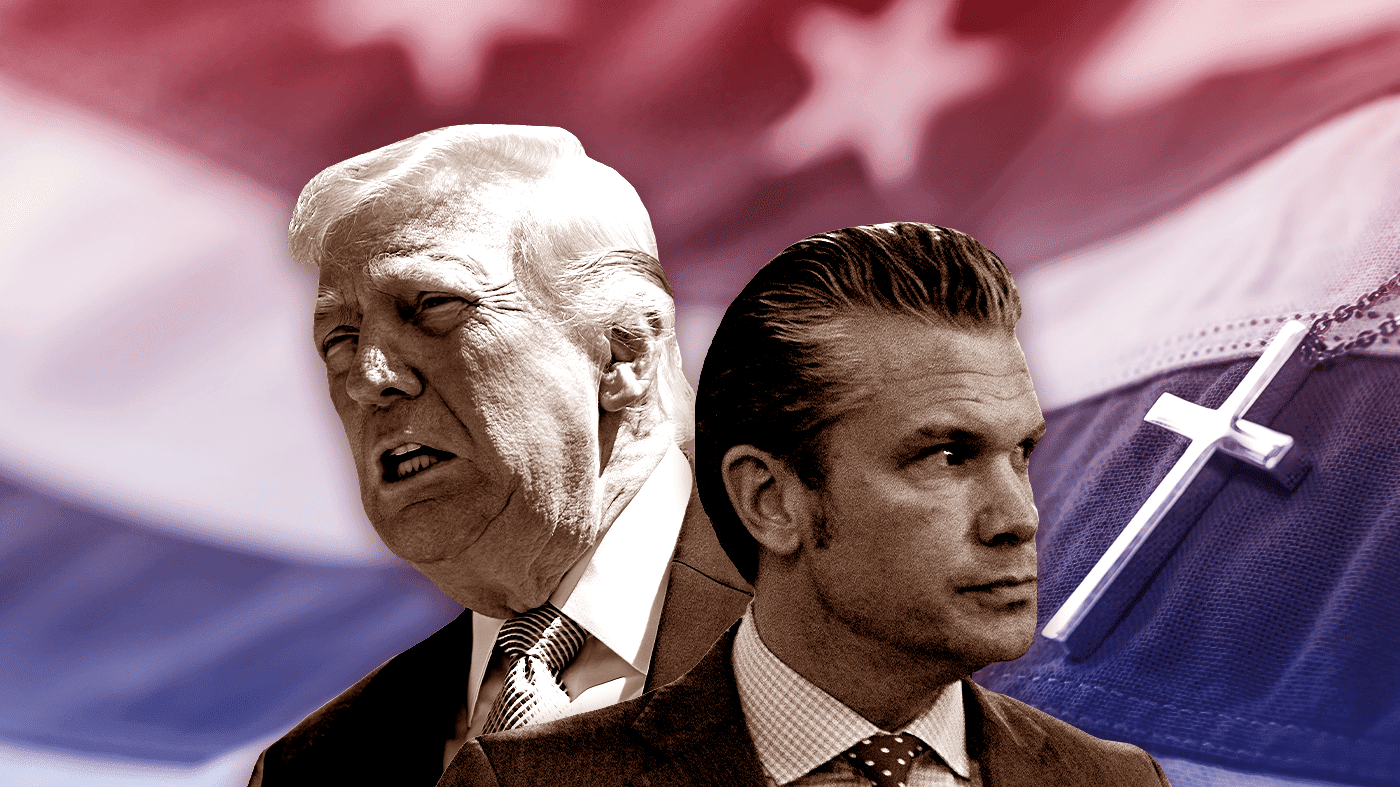
Now, this same toxic blend is being deployed to justify military action against Iran. After threatening to bomb "the entire country," Trump suggested divine endorsement, stating, "God is good, and God wants to see people taken care of." He concluded another threat with "Glory be to GOD!" This framing has been amplified by senior officials. Defense Secretary Pete Hegseth, who bears Crusade-inspired tattoos, has publicly framed the conflict in theological terms, asking Americans to pray for victory "in the name of Jesus Christ" and comparing a pilot's rescue to the Resurrection.
At a Pentagon religious service, Hegseth prayed for "every round" to "find its mark against the enemies of righteousness" and for "overwhelming violence of action against those who deserve no mercy." He later credited "divine providence" for the military's "miraculous protection." This rhetoric has encouraged some military commanders to invoke extremist language about biblical end times, framing the war as part of "God's divine plan." By casting geopolitical conflict as a holy war, the administration transforms political disputes into moral absolutes, making diplomatic compromise seem like a betrayal of faith.
The administration's threats to destroy Iranian civilization "in the name of Jesus" have provoked sharp international criticism. Pope Leo XIV explicitly rebuked this approach, quoting the Prophet Isaiah that God "does not listen" to leaders with "hands full of blood." The Pope's critique adds to a growing international chorus warning of democratic backsliding linked to the administration's rhetoric. The situation remains volatile, with Trump continuing to warn of renewed strikes as diplomatic deadlines approach.
The consequences of this rhetoric are profound and domestic. In a nation where only 62% of citizens identify as Christian, the president's justification for a war of choice as a Christian crusade is eroding public trust and intensifying political polarization. It contributes to an environment where nearly half of Americans view opposing partisans as existential threats. As President Abraham Lincoln once cautioned, the concern should be less whether "God is on our side" and more whether "we are on God's side." Trump's profane, nationalist, and religiously charged rhetoric, critics argue, is taking the nation down a dark path that redefines presidential authority and threatens the foundational pluralism of American society.