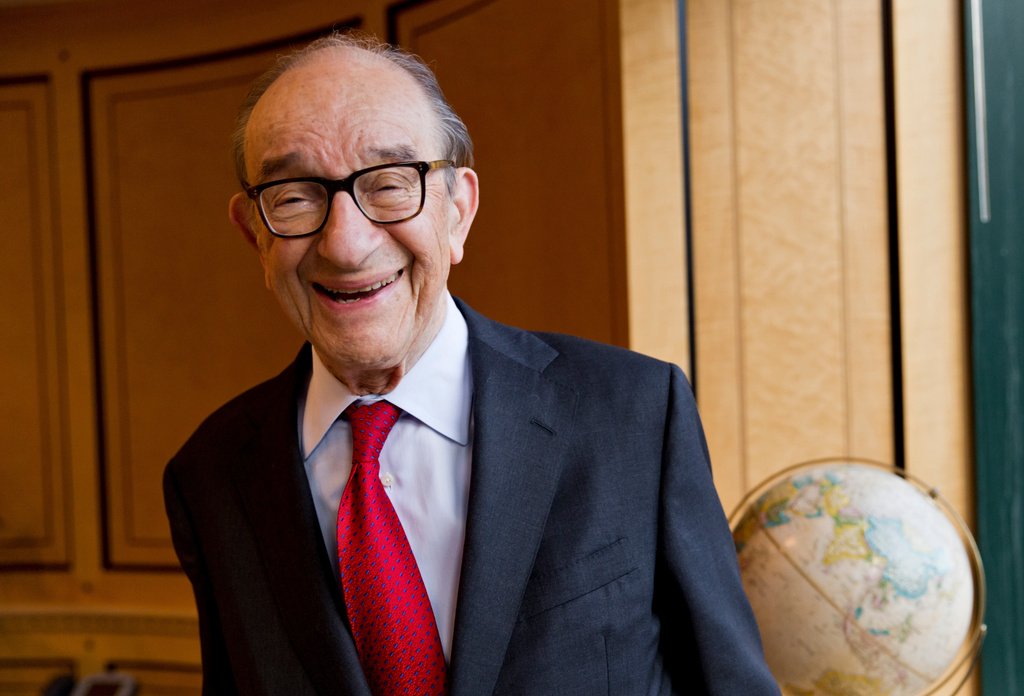
Alan Greenspan, the influential and often controversial former Federal Reserve chair who steered U.S. monetary policy through nearly two decades of economic transformation, died Monday at age 100. His death was announced by his wife, longtime NBC News correspondent Andrea Mitchell, who said the cause was complications from Parkinson's disease.
Greenspan served as the 13th chair of the central bank from 1987 to 2006, a tenure that spanned four presidencies—Ronald Reagan, George H.W. Bush, Bill Clinton, and George W. Bush. Only William McChesney Martin held the post longer.

In a statement to NBC News, Mitchell described her husband as “a giant of a man who helped shape the U.S. economy for decades under presidents of both parties, but was always honest in acknowledging his mistakes.” She added, “To me he was my husband, who shaped my life from our very first date in 1984. He had ‘irrational exuberance’ for baseball, the Washington Commanders, tennis, golf and music, especially jazz.”
Greenspan’s legacy is a study in contrasts. He was widely credited with navigating the economy through the 1987 stock market crash, the savings and loan crisis, and the dot-com boom. But his low-interest-rate policies in the early 2000s have been blamed by many economists for fueling the housing bubble that led to the 2008 financial crisis—a collapse that occurred just two years after he left office.
His famous 1996 warning about “irrational exuberance” in stock markets became a hallmark of his public persona, even as he later acknowledged that he had underestimated the risks of derivatives and financial deregulation. In his memoir, The Age of Turbulence, Greenspan conceded that his free-market ideology had been shaken by the crisis.
The news of Greenspan’s death comes at a time of heightened public skepticism toward federal institutions. A recent Fox News poll showed trust in the federal government hitting a record low, a trend that Greenspan himself had often lamented in his later years.
Greenspan’s influence extended well beyond the Fed. He was a key figure in Washington’s policy debates, often consulted by lawmakers on both sides of the aisle. His death marks the end of an era for a generation of policymakers who saw him as both a sage and a cautionary tale.
Mitchell’s tribute highlighted the personal side of a man who was often seen as an enigmatic figure. “Being his life partner was the joy of my life,” she said. The couple married in 1997 after a long courtship that began in 1984.
Greenspan’s passing will undoubtedly reignite debates about the Fed’s role in the economy, the perils of deregulation, and the long shadow of his tenure. For now, Washington and Wall Street pause to remember a figure who, for better or worse, helped define modern American capitalism.