The Iran conflict has taken another unexpected turn. President Trump briefly floated a 20 percent toll for safe passage through the Strait of Hormuz, only to reverse course the next day. Secretary of State Marco Rubio had already flagged that such a levy would violate international law.
But Trump's fallback—accepting financial investments from Gulf states in lieu of tolls—raises its own red flags. While legally defensible, it undercuts a core principle the United States has championed since its founding. It contradicts the origins of both the Navy and the Marine Corps, undermines American sacrifices in two world wars, and reverses a stance Washington held during the Cold War in the Middle East.

In short, it would upend nearly 250 years of American history as a champion of commercial freedom.
From Trump's transactional perspective, these unspecified investments would offset the cost of U.S. military presence in the region. But this approach misses the broader symbolism. America has traditionally stood for open seas, not protection rackets.
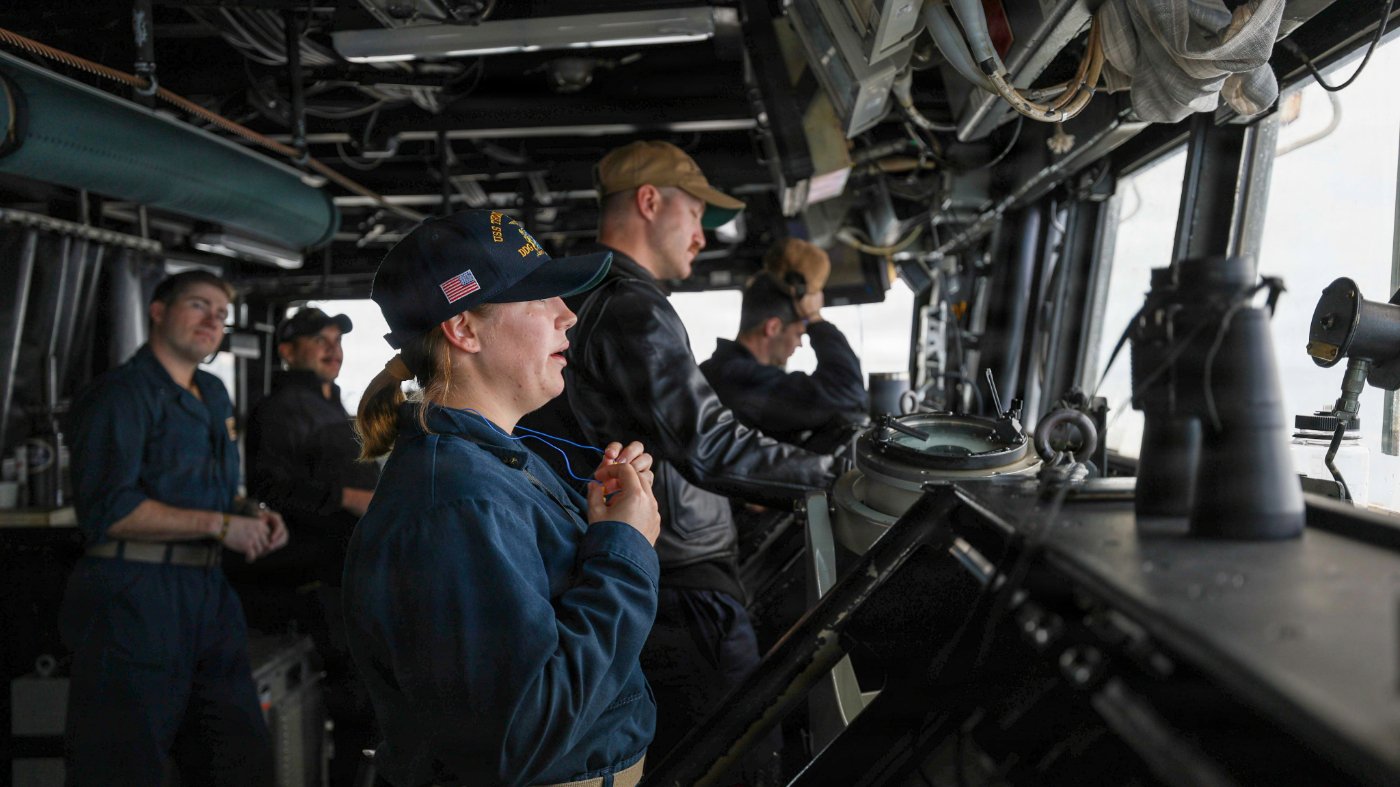
The U.S. Navy's mission statement is to "keep the seas open and free." That mission dates to its creation. After the Continental Navy disbanded in 1785, the young nation faced extortion from four semi-independent states along North Africa's Barbary Coast. These so-called Barbary pirates demanded tribute for safe passage and ransom for captured sailors. President George Washington responded by signing the act that established the U.S. Navy in 1794, enshrining freedom of navigation as a national principle.
Washington and his successor John Adams tried diplomacy while continuing to pay. But in 1801, Thomas Jefferson rejected tribute and sent a naval squadron. The ensuing conflict—immortalized in the Marine Corps Hymn's line about the "shores of Tripoli"—continued until 1815, when American force and European pressure ended the pirate practices.
Now, over two centuries later, a successor is flipping that legacy. The Navy won't enforce a toll system, but accepting Gulf investments in lieu of tolls is still tribute by another name. It's the same scheme that made the Barbary pirates America's enemies.
Freedom of navigation has been foundational to U.S. power. In 1918, Woodrow Wilson's Fourteen Points included "absolute freedom of navigation upon the seas, outside territorial waters, alike in peace and in war." The only exception was international action to enforce covenants—not protection money. In 1941, the Atlantic Charter, agreed with Winston Churchill, called for a peace that would "enable all men to traverse the high seas and oceans without hindrance."
Even Dwight Eisenhower upheld this principle during the 1956 Suez Crisis. When Egypt nationalized the canal, his administration deemed it legal as long as Egypt compensated the private owners and allowed free passage—even at the cost of alienating allies.
Americans of all political stripes should ask whether Trump's new policy reflects who we are. Our history says it does not. America has long protected freedom of navigation. It does not collect tribute, whether as illegal tolls or as "investments" in their stead.
This debate comes amid broader questions about America's role in the Iran conflict and its aftermath. As rebuilding the defense industrial base becomes a priority, and with most Americans expecting a prolonged war, the administration's approach to maritime policy could have lasting consequences. The White House's recent clashes over the 'Gulf of America' decree show how sensitive these issues are.
Michael Szalma, a retired U.S. Army officer and history professor in Central Florida, wrote the original analysis.