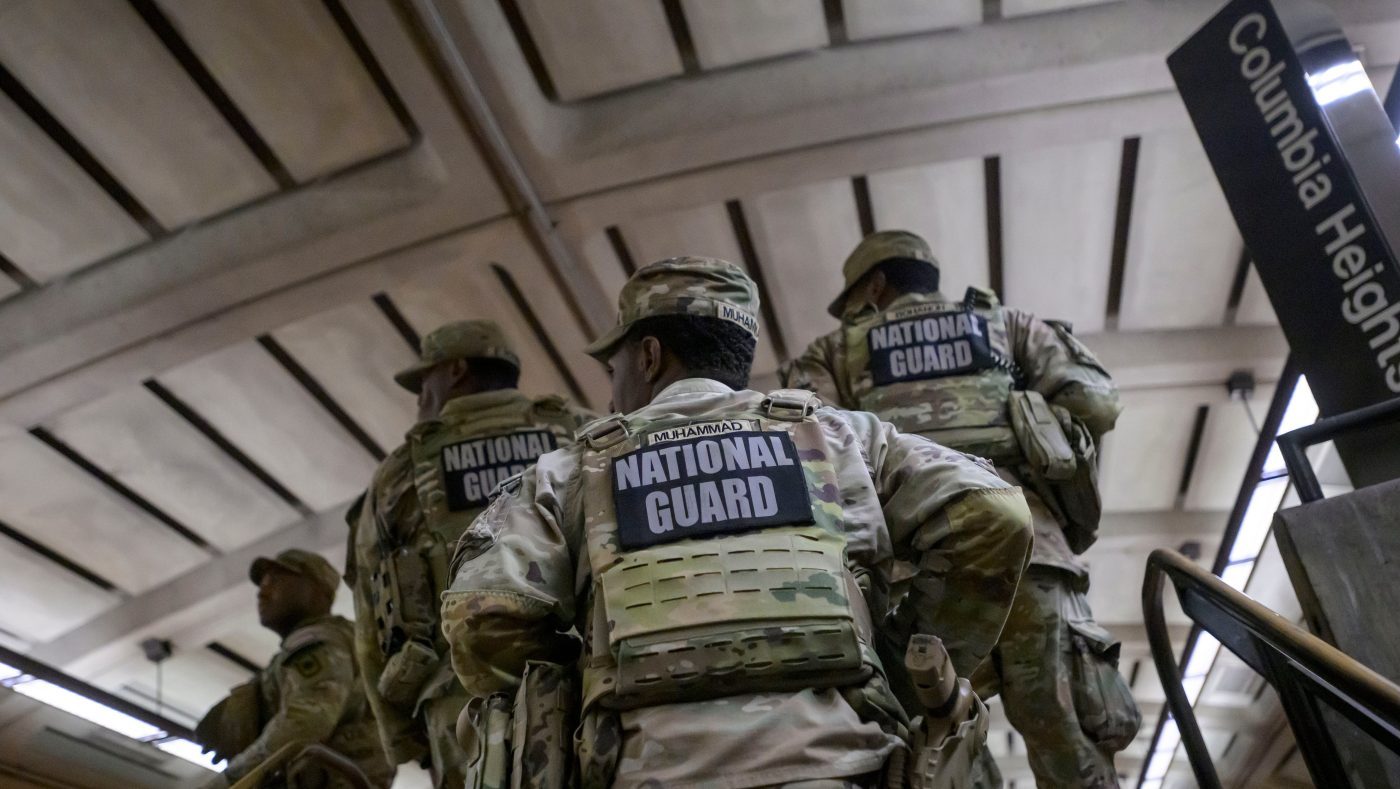
The National Guard is set to significantly expand its footprint in the nation's capital, adding boats, up to 60 marked police cars, and military tactical vehicles to its arsenal, according to a Pentagon official who confirmed the move on Thursday. Defense Secretary Pete Hegseth authorized the changes in an Oct. 29 memo, first reported by Politico, though the rationale behind the escalation remains unclear.
The new capabilities are designed to support federal and local law enforcement under the White House's "Make D.C. Safe and Beautiful" initiative, the official said. The authorization includes "up to 60 marked patrol cars, military tactical vehicles, up to 20 light towers and generators, and D.C. National Guard maritime boat assets." While the specific military vehicles were not disclosed, Politico reported that the memo specifies Humvees and light medium tactical vehicles, equipment typically used in combat zones.
Troops will not be permitted to pursue suspects or make arrests using these vehicles, which are slated to remain in place through the end of the year. The boats, however, will provide "perimeter security" for police operations targeting suspected gang leaders and drug traffickers in the Anacostia area of southeast D.C. According to the memo, federal officers "must always be on board" Guard vessels to arrest suspects who might attempt to escape by water, ensuring that surveillance of U.S. citizens is not conducted.
The National Guard Bureau deferred comment to the Pentagon, which has not yet responded to requests for further details. This expansion comes as nearly 3,100 Guard troops are already deployed in D.C. since late summer, when the federal government temporarily took over the city's law enforcement through a presidential executive order. The number of guardsmen has fluctuated, swelling to roughly 5,000 around the Fourth of July.
Critics argue that the Guard's presence is not only costly—projected at $2.1 billion through the end of President Trump's second term—but also ineffective at curbing violent crime. Guardsmen cannot make arrests and largely patrol neighborhoods and tourist areas with lower crime rates. City officials, Democrats, and civil liberties advocates have decried the mission as an infringement on civil liberties and lacking a clear strategy.
Several studies support these concerns. A May report from the Niskanen Center found that while the Guard's presence reduced opportunistic property crime, it was not the right tool for violent offenses and came at a far higher cost than traditional policing. In July, the Center for American Progress released a similar report, which Trump publicly criticized. More recently, the Cato Institute found that while robberies and theft declined since the Guard's deployment, homicides remained unchanged and assaults with dangerous weapons actually increased.
The Guard troops, a common sight patrolling in small groups across the city, are expected to remain in Washington through Inauguration Day 2029. This expanded military role in domestic law enforcement has drawn comparisons to the court ruling that deemed Trump's National Guard move in Los Angeles illegal, raising questions about the legality of such deployments. Meanwhile, similar National Guard deployments for midterms have drawn scrutiny in seven states, highlighting a broader trend of militarizing domestic policing.
As the Pentagon pushes forward with this expansion, the debate over the effectiveness and appropriateness of military involvement in civilian law enforcement continues to intensify.