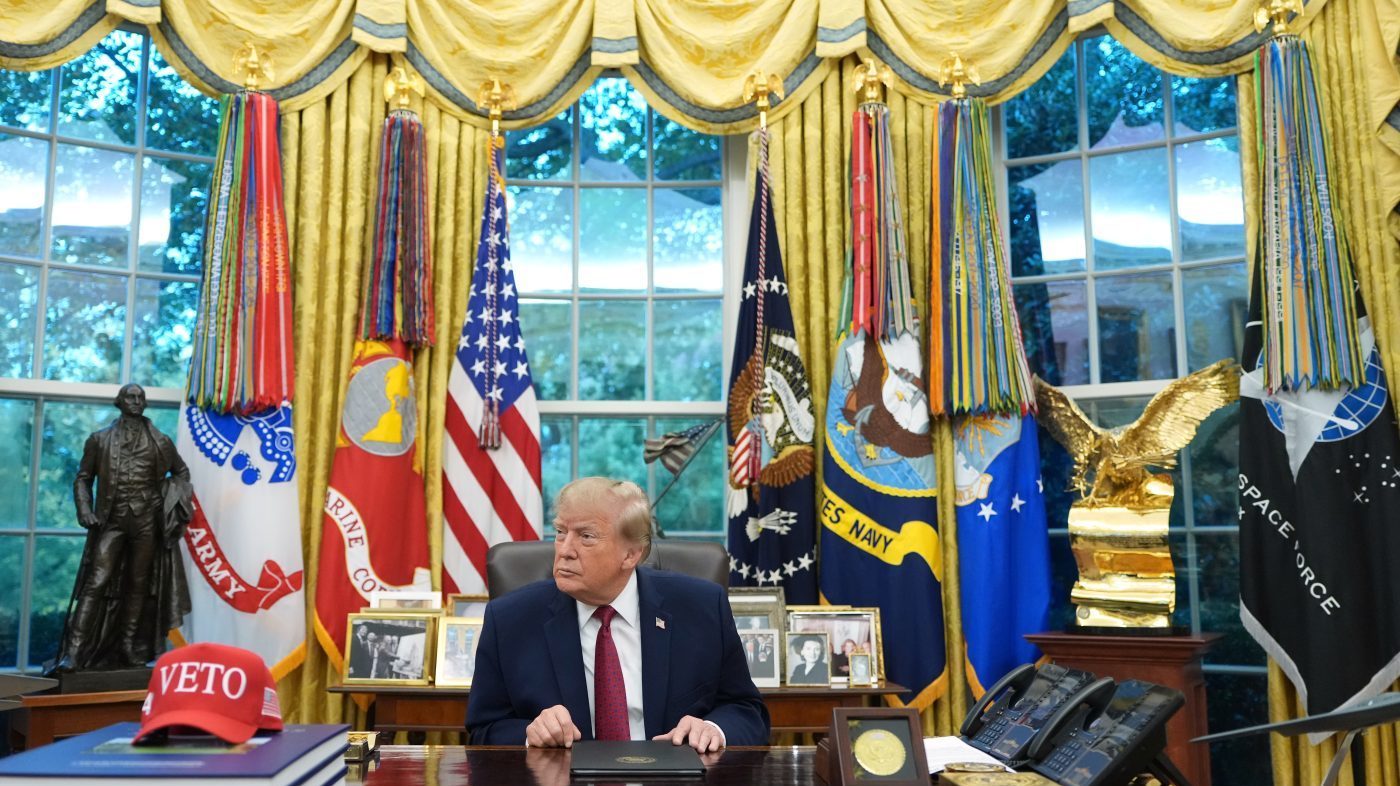
President Trump on Thursday signed a proclamation seeking to designate two of the White House's most recognizable spaces—the Oval Office and the Cabinet Room—as national monuments, a move that would protect them from significant alterations without congressional consent.
"It's a symbol of our country and the greatness of our country," Trump said of the Oval Office, where he announced the decision to reporters. He added, "If anyone ever decides to come and start knocking down walls, you call me, and I will come back here, and I will make sure it never happens."
The proclamation, which Trump said would need ratification by Congress, would make it so that no one could make "major modifications" to the rooms without lawmakers' approval. The announcement comes amid ongoing debates over presidential authority and the use of historic spaces.
The move follows Trump's controversial decision earlier in his second term to demolish the East Wing to build a ballroom costing up to $400 million, a project he pursued without congressional authorization. Despite legal challenges, the Supreme Court ultimately allowed construction to proceed.
Critics have questioned the timing and motivation behind the proclamation, especially in light of the recent midterm elections that saw Democrats regain control of Congress. Some see it as an attempt to preempt future changes by incoming administrations, while supporters argue it is a fitting tribute to the rooms' historical significance.
The Oval Office has long been a symbol of presidential power and a backdrop for major addresses and diplomatic meetings. The Cabinet Room, adjacent to the Oval Office, has hosted countless policy discussions and decisions. Designating them as national monuments would place them under federal protection similar to landmarks like the Statue of Liberty.
Legal experts note that the Antiquities Act, typically used to protect natural and cultural sites, may not have been intended for interior spaces, and the proclamation could face legal scrutiny. However, Trump's administration has shown a willingness to test legal boundaries, as seen in the East Wing project.
Congressional reaction has been mixed. Some Republicans have praised the move as a way to preserve the nation's heritage, while Democrats have expressed skepticism, suggesting it may be a political stunt. The proclamation is expected to face a tough path in Congress, where it will require a two-thirds majority in both chambers to override a potential presidential veto—a high bar in a divided legislature.
Meanwhile, other White House changes have drawn attention, including the proposed triumphal arch that the National Capital Planning Commission is considering. That virtual meeting, held Thursday, crashed during public testimony, adding another layer of controversy.
As the political landscape shifts, the fate of this proclamation remains uncertain. For now, the Oval Office and Cabinet Room stand as they have for decades, but their future status is now a matter of national debate.