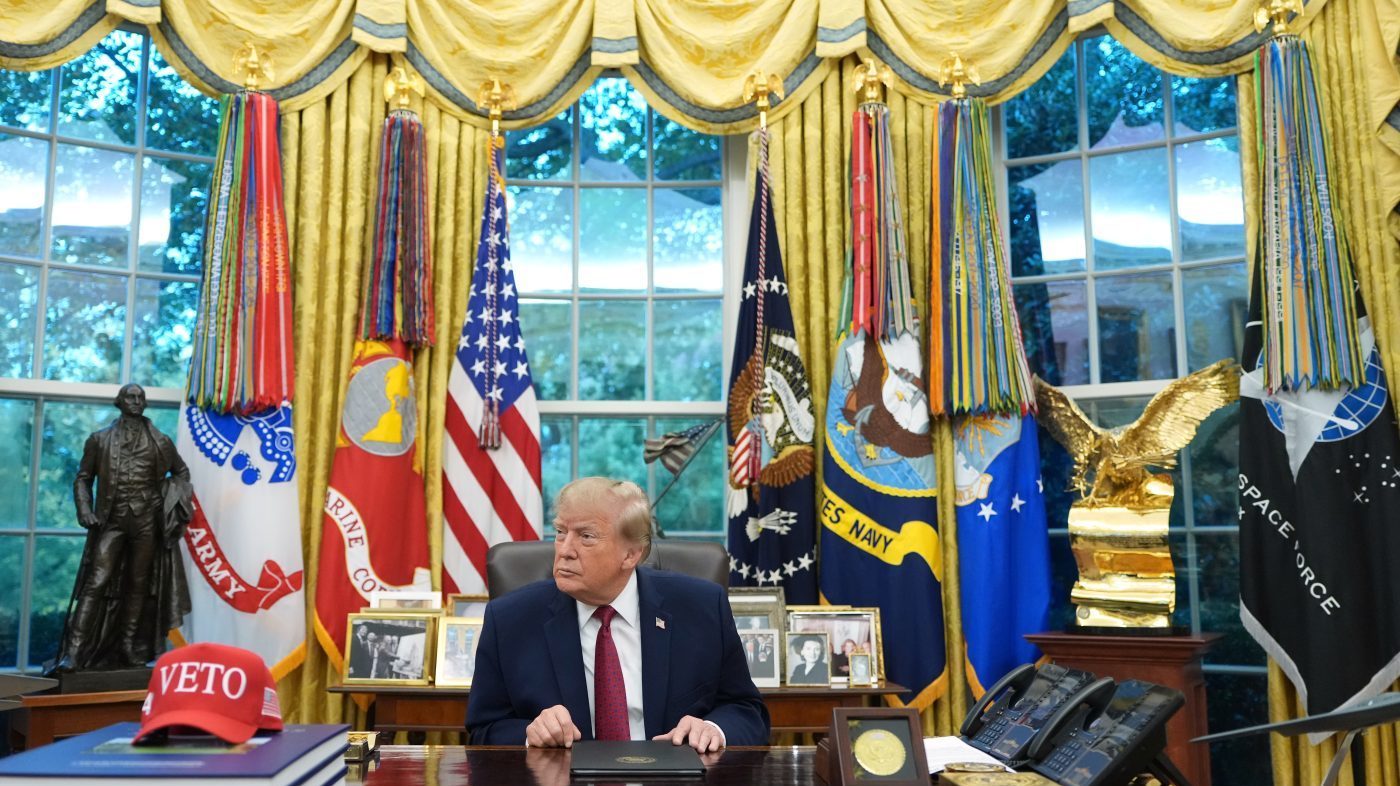
President Trump on Thursday signed a proclamation designating the Oval Office and the Cabinet Room as national monuments, a symbolic move that would shield the two rooms from major alterations without congressional approval.
Speaking to reporters in the Oval Office, Trump said the designation was meant to preserve a symbol of American greatness. “It’s a symbol of our country, and the greatness of our country,” he said, referring to the room. He added, “If anyone ever decides to come and start knocking down walls, you call me, and I will come back here, and I will make sure it never happens.”
The proclamation, which Trump acknowledged would need ratification by Congress, comes after his administration has made significant changes to the White House campus during his second term. Most notably, Trump ordered the demolition of the East Wing to build a new ballroom, a project that proceeded without congressional authorization. That move sparked legal challenges, but the Supreme Court ultimately allowed construction to continue.
On Wednesday, following his party’s midterm defeat, Trump invited the White House press pool to the ballroom construction site to witness the installation of the final steel beam. The event underscored his continued focus on the physical transformation of the executive mansion.
The president has also made a series of cosmetic upgrades around the White House, including adding gold embellishments throughout the Oval Office. “The Oval Office is a place of victory. It’s a place of prestige,” Trump told reporters. “See that beautiful white wall? There’s no gold in that.”
Trump also said he had fixed broken windows and cracks in the White House, including in the Oval Office, as part of his broader renovation efforts.
The designation of the Oval Office and Cabinet Room as national monuments is the latest in a series of executive actions that have drawn scrutiny from legal experts and critics, who question the scope of presidential authority over federal property. The move also comes as Trump faces political headwinds following the midterm elections, which saw Democrats make significant gains, as highlighted in analysis of the Democratic wave and the GOP's midterm rout.
The proclamation is unlikely to have immediate practical effect, given the need for congressional ratification, but it signals Trump’s intent to cement his legacy on the physical spaces of the presidency. It also raises questions about the future of the White House’s historic rooms, which have been renovated by successive presidents.
Critics have noted that the move could complicate future renovations, as any major changes to the Oval Office or Cabinet Room would require legislative approval. Supporters, however, see it as a fitting tribute to the rooms where presidential decisions are made.
For now, the proclamation stands as a testament to Trump’s ongoing efforts to reshape the White House to his liking, even as his administration navigates a changed political landscape. The ballroom project, which has been a centerpiece of his second-term agenda, continues to move forward despite the legal battles it has sparked.