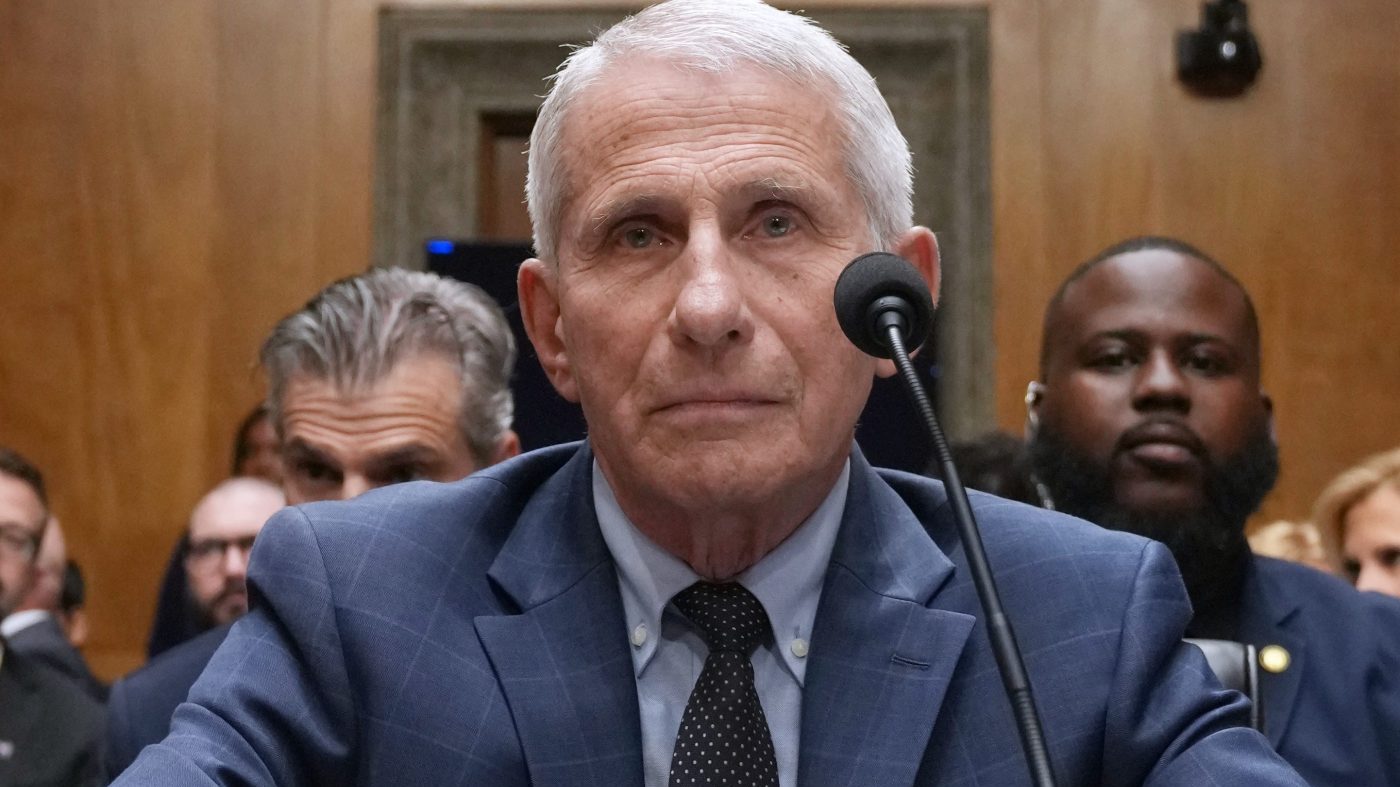
The Senate Homeland Security and Governmental Affairs Committee on Thursday voted along party lines to hold Dr. Anthony Fauci in contempt of Congress, escalating a long-running clash between the former White House adviser and Republicans who accuse him of evading accountability for his role in the U.S. COVID-19 response.
The 8-5 vote, with two additional no votes cast by proxy, came after Fauci appeared before the panel last week and invoked his Fifth Amendment rights 111 times, declining to answer any substantive questions about the origins of the pandemic, gain-of-function research, and his communications with other officials. The committee is chaired by Sen. Rand Paul (R-Ky.), who has been a persistent critic of Fauci and pushed for the contempt referral.
“Holding a witness in contempt is a serious thing, and it should be rare. But the contempt power exists for precisely this circumstance. Oversight is not a courtesy this committee extends or a favor a former official grants us. It is a constitutional obligation,” Paul said in his opening remarks, framing the vote as a necessary assertion of congressional authority.
The resolution now moves to the full Senate, though Paul has indicated he may bypass that step and send the referral directly to the Department of Justice to avoid delay. A criminal referral does not compel prosecution, and the final decision rests with federal prosecutors.
The vote highlights a fundamental disagreement over whether Fauci’s Fifth Amendment protections still apply given the sweeping pardon issued by former President Biden. That pardon, which took effect in January, covers any offenses Fauci may have committed between Jan. 1, 2014, and Jan. 19, 2025, potentially shielding him from federal prosecution for actions related to the pandemic.
Committee Democrats, led by ranking member Sen. Gary Peters (D-Mich.), argued that the pardon does not erase Fauci’s constitutional right against self-incrimination. In a letter to colleagues, Peters wrote, “A federal pardon does not eliminate an individual’s Fifth Amendment protection if they still face a ‘real and appreciable’ risk of federal or state prosecution.” He and other Democrats have accused Republicans of using the hearing for political theater rather than genuine oversight, a point echoed in criticism of the hearing's focus.
Fauci’s attorneys have also pushed back, arguing that Paul’s stated desire to see Fauci imprisoned undermines any claim that he should testify without fear of legal consequences. In a letter to the committee, they noted that Paul had previously called for Fauci’s indictment over alleged false testimony about gain-of-function research, a matter that falls within the scope of the pardon.
The contempt referral is the latest in a series of confrontations between the GOP-led panel and the Biden administration over pandemic oversight. It also comes amid broader Republican efforts to hold former officials accountable, including similar referrals involving Energy Secretary Chris Wright, though those moves have drawn sharp partisan lines.
Fauci, who led the National Institute of Allergy and Infectious Diseases for nearly four decades, has maintained that his testimony was truthful and that he acted in the public interest during the health emergency. His supporters argue that the contempt vote is an attempt to punish a public servant for exercising his constitutional rights.
The full Senate will now decide whether to take up the referral, though no timeline has been set. If the DOJ receives the referral, it will determine whether to pursue charges, a decision that could take months. Meanwhile, the political battle over the pandemic’s origins and the government’s response shows no signs of abating.