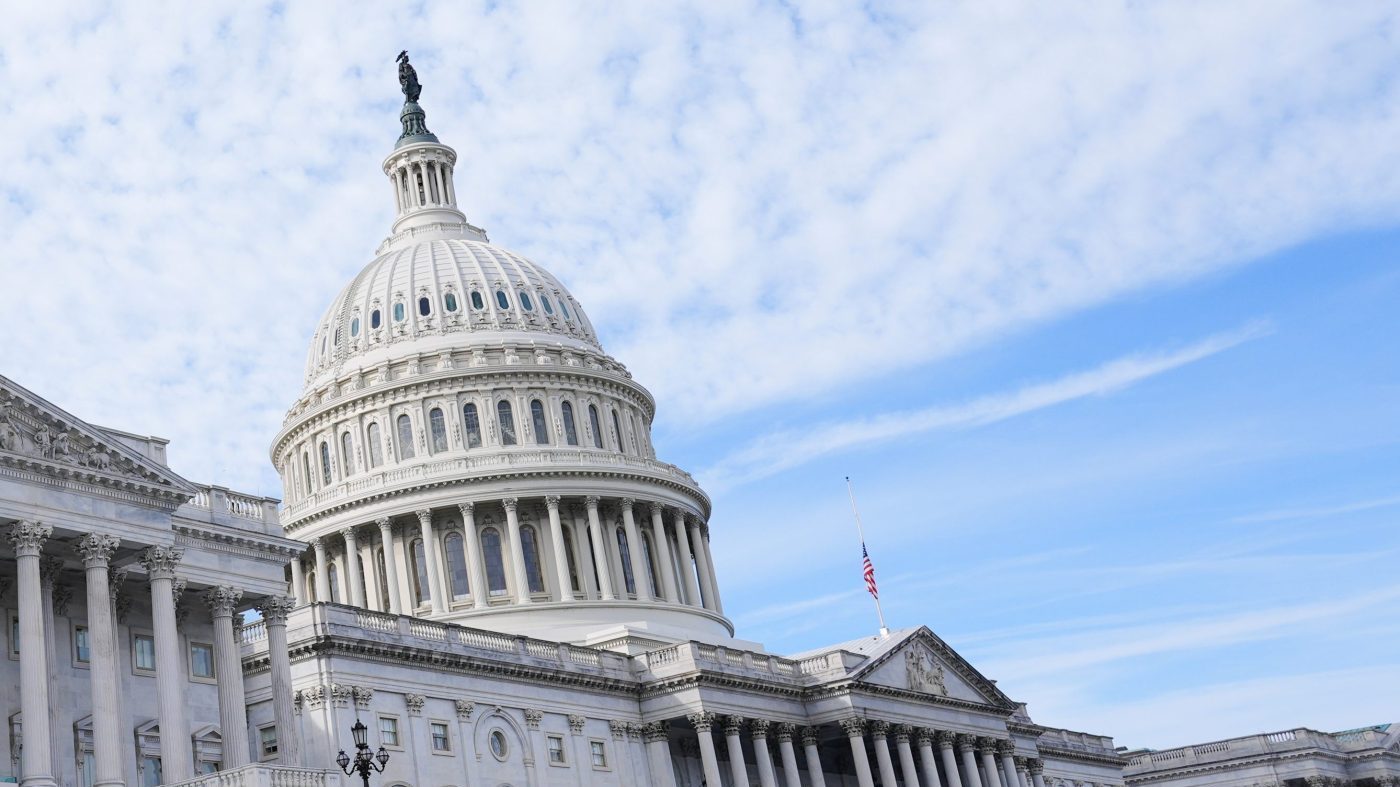
A divided federal appeals court on Friday struck down the $1.7 trillion government funding package enacted in 2022, ruling that the use of proxy voting during the pandemic violated the Constitution's Quorum Clause.
The New Orleans-based 5th U.S. Circuit Court of Appeals, in a 9-8 en banc decision, held that House members must be physically present to constitute a quorum, rejecting the argument that proxies could count toward the quorum. The ruling, written by Judge Cory Wilson, a Trump appointee, said the Constitution's text, history, and longstanding practice all require personal presence.
“Proxy presence does not count,” Wilson wrote. “While the chambers of the legislature have much discretion regarding their rules of procedure, the Quorum Clause's constraints on congressional power cannot be circumvented by congressional fiat.”
The case arose from the 2023 Consolidated Appropriations Act, which passed the House 225-201. At that time, 226 members participated by proxy, meaning fewer than half of the chamber's members were physically in the chamber during the vote. Wilson noted that the proxy rule was adopted during the COVID-19 pandemic to reduce infection risks, but he emphasized that the government's theory would allow the House to abandon in-person quorums even in non-emergencies.
“Under the Government's view, the House needs no external justification whatsoever before allowing Members to delegate their presence to a proxy for quorum purposes,” Wilson wrote, quoting an earlier precedent: “While an emergency may afford a reason for the exertion of a living power already enjoyed, an emergency may not call into life a power which has never lived.”
Texas Attorney General Ken Paxton, who recently lost his Senate primary, brought the lawsuit in 2023 to block enforcement of the Pregnant Workers Fairness Act in his state. The appeals court's decision affirms the district court's relief for Texas but does not extend beyond that specific remedy.
Judge James Graves Jr., an Obama appointee, wrote a sharp dissent, arguing that the majority misinterpreted the Constitution. He noted that no House member objected to the lack of a quorum at the time, and that requiring physical presence “shoehorns a much larger requirement into the Constitution.” Graves pointed out that 99% of lawmakers participated in the vote, and he cited 235 years of historical practice, including the First Congress, as evidence that physical attendance was not always required.
The ruling is likely to have far-reaching implications for how Congress conducts its business, especially in the wake of the pandemic-era changes. It also adds to ongoing debates about legislative procedure and the balance of power between the branches. For more on related legal challenges, see recent court limits on surveillance and how court rulings are reshaping defamation rules.
The decision is a setback for the Biden administration's approach to governing during a public health crisis, but it remains to be seen whether the Supreme Court will take up the issue. Legal experts are divided on the constitutionality of proxy voting, and the case could become a landmark in the ongoing struggle over congressional authority.