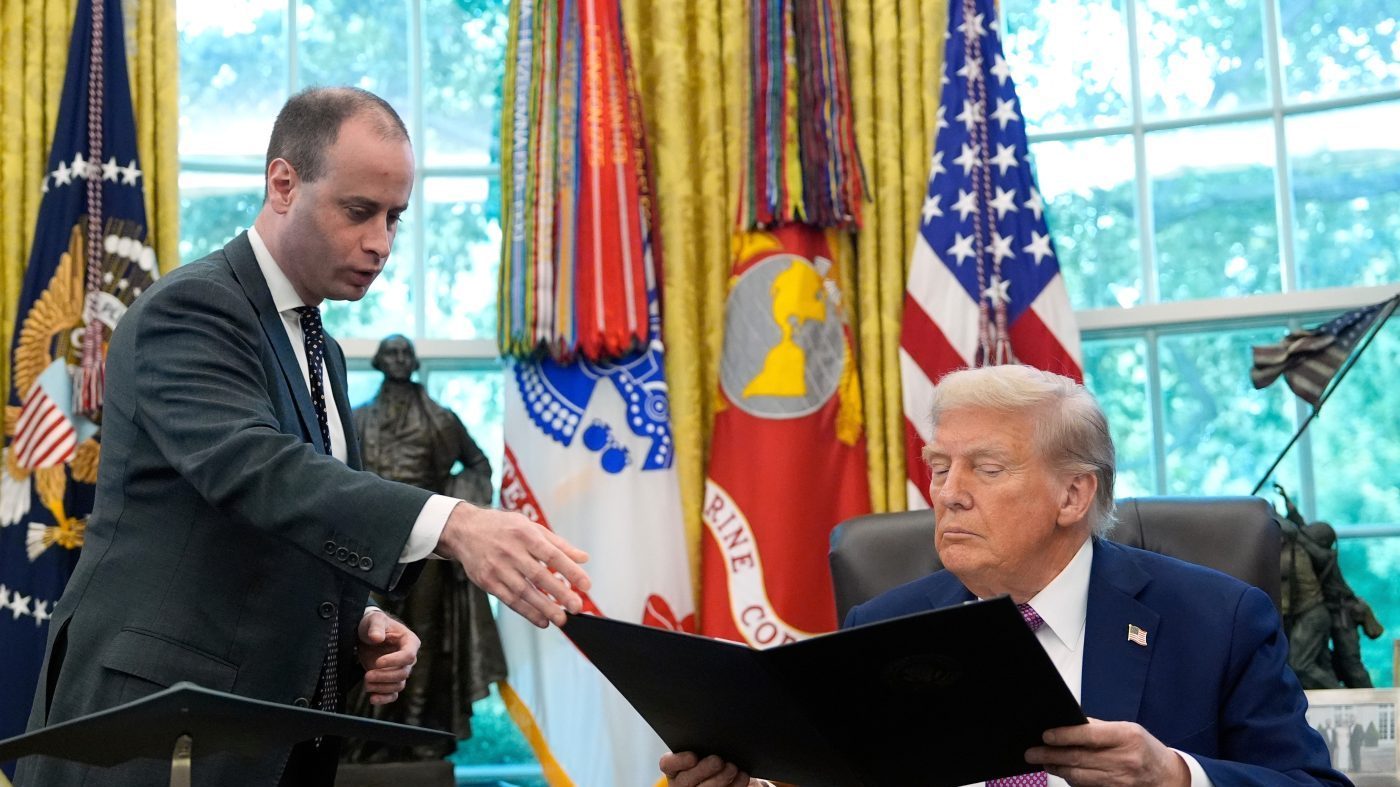
President Trump on Friday signed an executive order aimed at restricting Congress's ability to obtain certain information from federal agencies and their employees, a move widely seen as a preemptive response to Democrats' promises of aggressive oversight when they assume control of the House and Senate next month.
The order, titled "Protecting the Executive's Privileges and Enhancing Efficiencies in Federal Contracting," asserts that Congress may not request information from government workers or contractors without a "valid legislative purpose." The text argues that the legislative branch's power to demand executive branch information is limited and cannot intrude on "core Executive functions."

Specifically, the order instructs federal contractors to notify the White House and the relevant contracting agencies of any pending or future congressional request, and to comply with any instructions from the White House regarding the release of information. This effectively gives the administration a veto over contractor communications with lawmakers.
Incoming House Oversight Committee Chairman Robert Garcia (D-Calif.) signaled on election night that Democrats would pursue investigations, posting on social media, "Lawyer up." White House Counsel Will Scharf responded with a letter vowing to fight back against Democratic probes and argued that Democratic lawmakers lacked authority to send investigation notices until they officially hold the majority in January.
Scharf also issued an internal directive requiring White House staff to obtain administration approval before testifying to Congress. The executive order builds on that directive, extending similar constraints to contractors and agencies.
The order could set up legal battles over executive privilege. The Justice Department has previously defended the administration's right to withhold information from Congress, and any dispute may ultimately land in federal court. Democrats have pledged to investigate Trump and his allies, echoing their efforts after the 2018 midterms.
The move has drawn sharp criticism from Democrats, who argue it undermines congressional oversight and transparency. Republicans, however, contend that the order is necessary to protect the executive branch from overreach and to ensure efficiency in federal contracting.
As the new Congress prepares to convene, the clash between the White House and Democratic investigators is expected to intensify. The order is likely to face legal challenges, and its implementation will be closely watched by both parties.