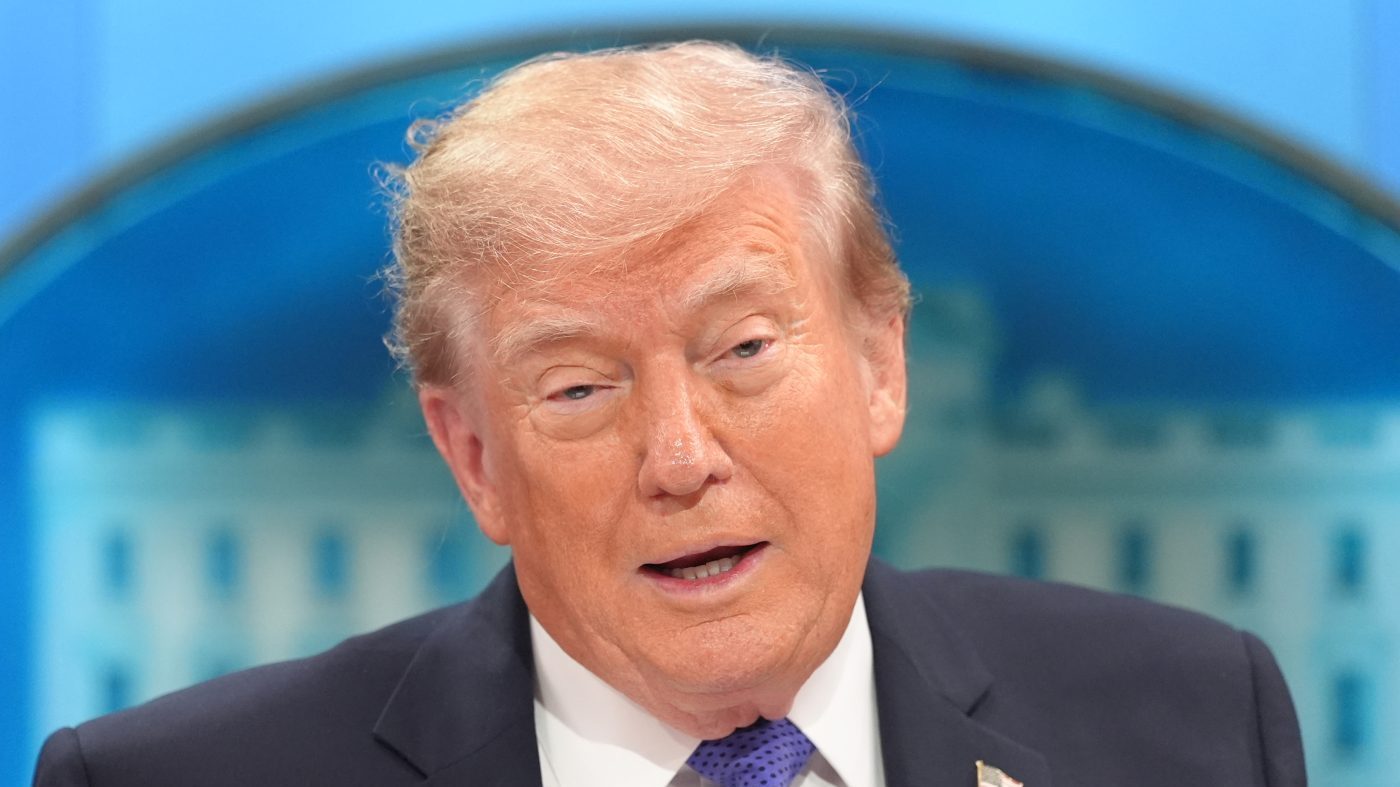
President Trump on Friday announced that he will not permit American companies to construct data centers outside the United States, warning of a “tremendous tax” for any firm that defies the directive. Speaking at a White House press briefing, Trump framed the move as essential to national competitiveness, particularly in the race for artificial intelligence dominance.
“We’re not going to allow our companies to build data centers outside of our country,” Trump said. “We’re not going to allow that to happen.” He drew a parallel to the semiconductor industry, arguing that past offshoring had weakened the nation. “They allowed that to happen with chips and everything else, and it was very destructive to our country,” he added. “That’s where we started going behind.”
The president acknowledged the announcement was a “breaking story” that he hadn’t yet shared with his own team. He reiterated that firms that proceed with overseas facilities will face significant financial penalties, and he warned that without such restrictions, “China will take all of them.”
Trump emphasized that data centers should be built domestically, suggesting states like Texas, California, and West Virginia as prime locations. “We want them to build it here,” he said. “If they won’t go in Texas or they won’t go in California, they’re going to go in West Virginia. We have a lot of places that want them badly, and they’re great places.” He pointed to Loudoun County, Virginia, which hosts a dense cluster of data centers, noting that the region is “making so much money they don’t know what to do with it.”
The president urged local communities to leverage their position. “You have to take advantage of the data centers,” he said. “Make them pay you. Make them pay your community. But take advantage; don’t shut them off.”
Trump has repeatedly stressed the need to outpace China in artificial intelligence, which he has dubbed “Super Intelligence” (SI). He returned to Washington Thursday evening from a trip to the Philippines and China, where he met with Chinese President Xi Jinping and Russian President Vladimir Putin. Trump said Xi “congratulated” him on U.S. AI progress and expressed approval of the SI terminology. “As he said, it’s more accurate. It is super. It’s not artificial intelligence. It’s not artificial. It’s super,” Trump said, adding, “Problem is, it may be too super.”
The president also said he and Xi agreed to establish joint guardrails on AI development. The announcement comes amid broader policy tensions over technology and national security, with recent reports of friction within the administration over AI strategy. For more context on these internal dynamics, see our coverage of AI policy tensions at the White House.
The threat of a tax on overseas data centers could have significant implications for multinational tech firms, many of which have expanded globally to serve international markets. Critics argue that such a move could hamper U.S. competitiveness and strain relations with allies, while supporters see it as a necessary step to secure critical infrastructure at home. The policy, if enacted, would likely face legal and diplomatic challenges. The president’s remarks also come as he seeks to regain political footing after recent setbacks, including a press conference aimed at rebounding from midterm losses.
No formal executive order or legislative proposal has been released yet, but Trump’s comments signal a clear policy direction. The administration has yet to clarify how the tax would be structured or enforced. This story is developing.