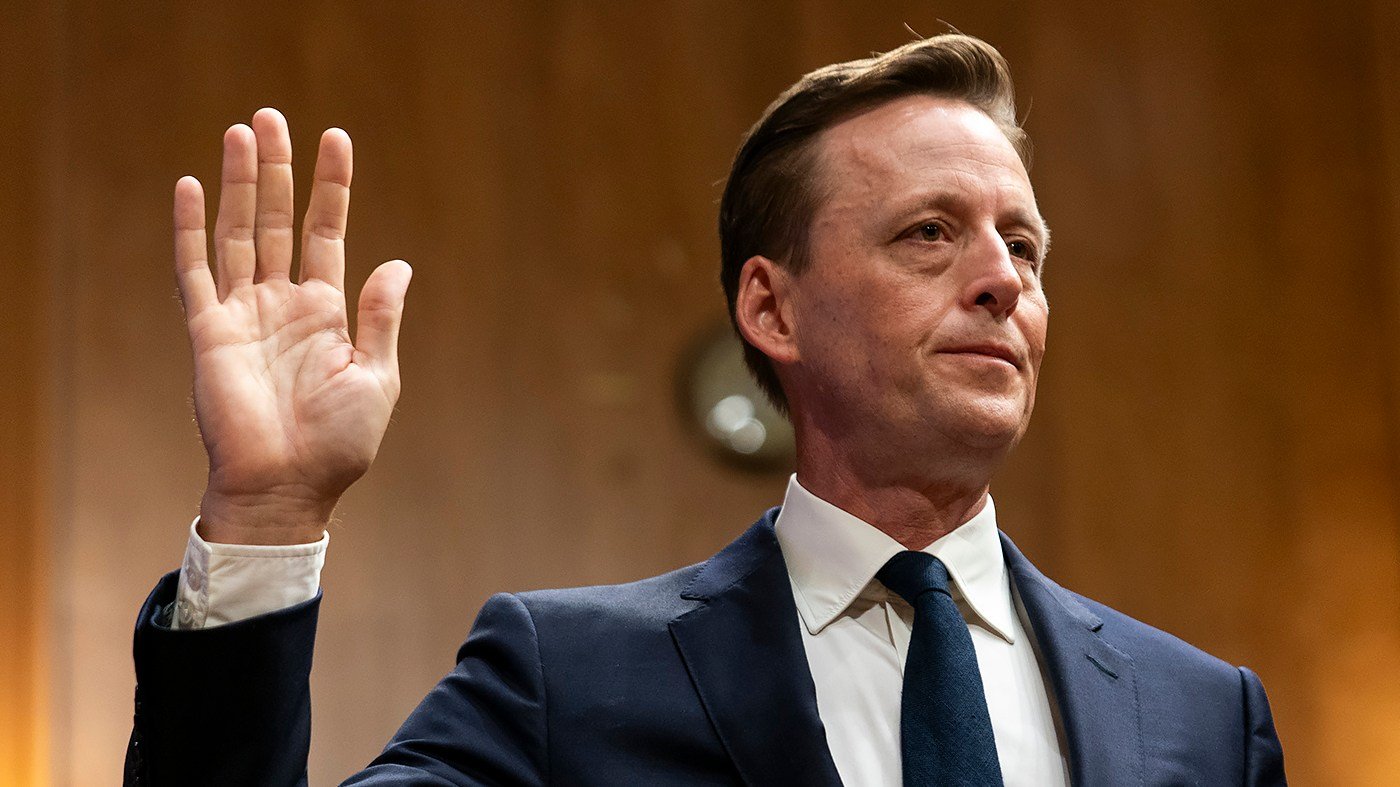
Sean Cairncross, the top cybersecurity official in the Trump administration, is resigning from his role as national cyber director, according to a White House official who confirmed the move to The Hill on Thursday. The departure, first reported by Axios, comes as the administration faces mounting questions over AI policy and a spate of high-profile tech outages.
Sources familiar with the decision told Axios that Cairncross opted not to extend his tenure by two additional years, instead choosing to step aside early so President Trump could nominate and secure confirmation of a successor before Democrats assume control of Congress in January. The sources described the split as amicable, with no indication of a forced exit.

Cairncross has led the Office of the National Cyber Director, the entity charged with coordinating cybersecurity strategy and policy across the federal government. In that capacity, he also played a role in the administration's AI initiatives, but his tenure was not without friction. According to Axios, Cairncross believed the Treasury Department had overstepped its bounds in the AI working group, while Treasury Secretary Scott Bessent and his allies countered that Cairncross was slow to respond to their queries on the technology.
The internal tensions highlight broader disagreements within the administration over how to approach artificial intelligence, a subject that has become increasingly contentious as both the public and lawmakers grow wary of potential risks. That unease was amplified by a series of attempted or successful cyber intrusions on government websites, as well as recent tech outages that disrupted operations across multiple sectors, including one that forced the Federal Aviation Administration to issue a nationwide ground stop.
Cairncross's policy chief, Thomas Lind, had already left the White House in June, reducing the number of senior officials with deep expertise in emerging technology. Lind later joined OpenAI in October as head of cyber and strategic risk on its national security policy team, a move that further thinned the administration's bench on AI-related matters.
Before his current role, Cairncross served in Trump's first term as chief of staff for National Security Council committees and later led the Millennium Challenge Corporation from 2019 to 2021. His political resume also includes stints as chief operating officer of the Republican National Committee from 2015 to 2017 and as a senior advisor to then-RNC Chair Reince Priebus until 2018.
The resignation lands at a delicate moment for the administration's digital defenses. U.S. intelligence officials, including Director of National Intelligence Jay Clayton, have publicly denied that cyberattacks were behind the recent outages, but the incidents have nonetheless fueled public skepticism and prompted calls for stronger federal action. In response, the Department of Homeland Security and the Department of Justice recently launched a joint cybercrime task force to investigate the disruptions, signaling that the issue remains a priority.
Lawmakers on both sides of the aisle have urged a more aggressive posture on cybersecurity, with some drawing comparisons to the Iron Dome missile defense system as a model for a similar digital shield. The departure of Cairncross, who was seen as a key player in shaping the administration's response, leaves a void that will need to be filled quickly as the transition period begins.