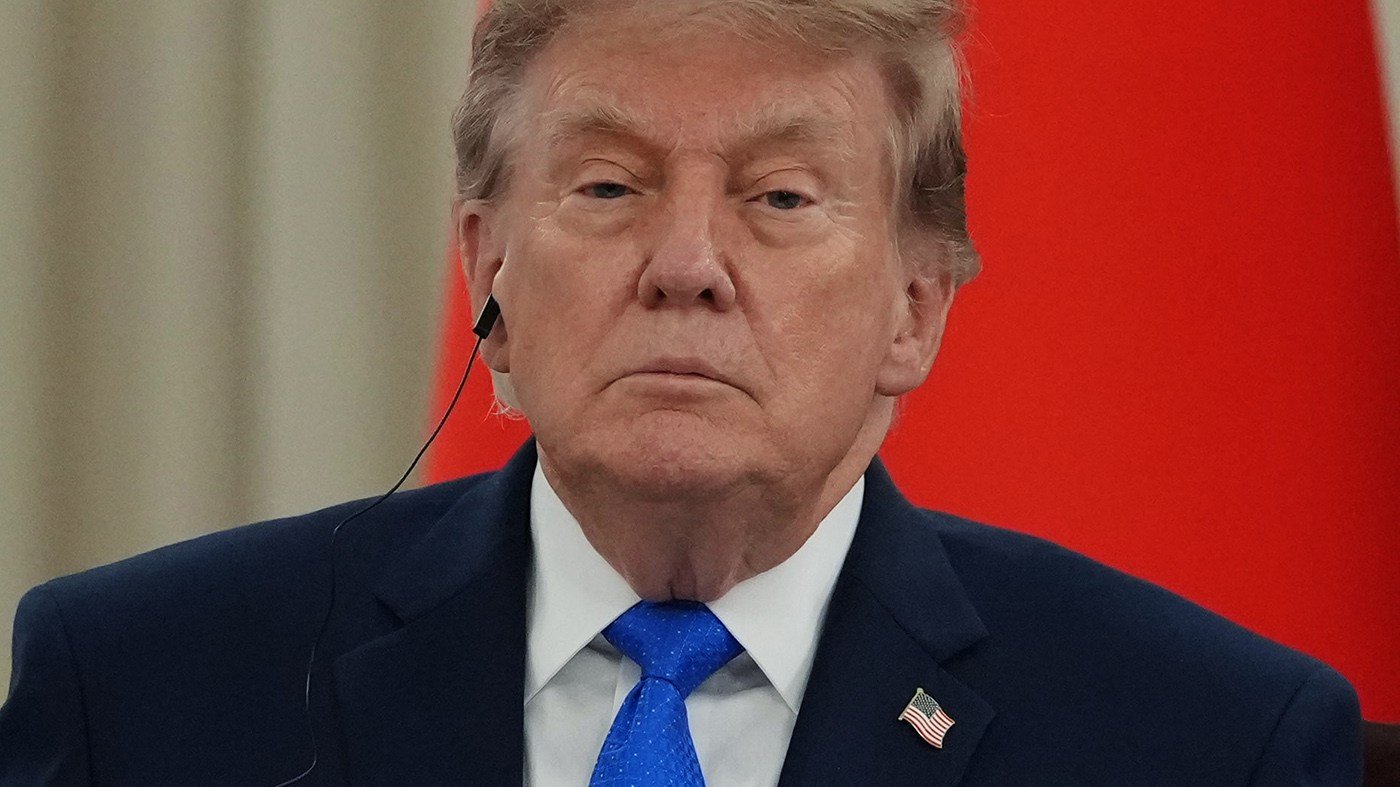
President Trump is set to hold a White House press conference at noon EST Friday, an event widely seen as an attempt to reset his political standing after a bruising midterm election cycle. The appearance comes as the president confronts a diminished Republican Party, an ongoing military engagement in Iran, and the prospect of aggressive Democratic oversight in the new Congress.
Trump announced the press conference on social media Thursday, framing it as an opportunity to discuss trade agreements from his recent trip to Asia. But few political observers expect trade to dominate the session. Stephanie Grisham, who served as White House press secretary and communications director during Trump's first term, predicted the president would offer vague claims of success on trade, downplay the recent tech outages, and potentially blame the midterm losses on electoral fraud or misunderstand the Iran war.
The midterm results were a significant blow to the GOP. Democrats easily captured the House majority and flipped nine Senate seats, giving them a 56-44 advantage—the largest Senate gain for a party since 1958. The final Senate race was decided this week in Alaska, where a Democrat prevailed. Trump initially appeared to accept the outcome, but a Nov. 9 social media post questioning the election's honesty drew little traction. Conservative commentator Megyn Kelly's blunt response—"Just stop"—reflected widespread reluctance to entertain such claims.
The press conference offers Trump a chance to craft headlines and outline a path forward on key issues. However, his low approval ratings, driven largely by the unpopular Iran war and persistent cost-of-living concerns, complicate any reset. Gas prices, while down from their peak, remain elevated compared to pre-war levels, linking the two issues in the public's mind.
Trump's mixed signals on Iran add to the uncertainty. Last week, he wrote on social media that "We don't need a deal with Iran," suggesting a preference for continued economic pressure. Yet the arrival of another aircraft carrier, the USS Roosevelt, in the Middle East this week keeps military options open. The New York Times reported Wednesday that Trump is considering "extensive" new strikes on Iran, partly due to Israeli warnings about Tehran's rebuilding of missile and drone arsenals. Such an escalation would be highly contentious, though Trump may see it as a chance to secure a victory that has eluded him.
The president's poll numbers also reflect public fatigue with his chaotic style and self-promotional projects, including controversial plans to renovate Washington landmarks. In a post-midterm interview with CBS's "60 Minutes," Trump admitted his immigration policies might be seen as "too tough" by some, yet he simultaneously promoted Stephen Miller, a hard-line immigration hawk, to replace Susie Wiles as chief of staff. GOP strategist Ron Bonjean interpreted this as a signal that Trump is ready to fight, even as he offers conciliatory gestures toward Democrats.
Despite his weaknesses, Trump retains a firm grip on the Republican Party. Few GOP figures are willing to criticize him publicly, and his base—roughly a third of Americans—remains loyal. Strategically, Trump is likely to continue relying on executive actions to advance his agenda, bypassing the legislative process, and his allies are expected to resist Democratic investigations. Aaron Reitz, the U.S. attorney for the Southern District of Texas, has already written to the incoming House Oversight Committee, signaling potential friction.
The press conference could also touch on his recent return from a summit with Xi and Putin, where he touted a peace declaration. But critics question the substance of such meetings. As Trump faces a new political landscape, the event is likely to reveal whether he can pivot from a defensive posture to a more strategic approach. With the stumbles of his CISA pick and tensions over AI policy already making headlines, the administration's coherence is under scrutiny. The president's ability to shape the narrative will be tested, but his resilience should not be underestimated.