Vice President Vance on Friday declined to say whether he believed the Iran war was worth the political price Republicans paid in this month's midterm elections, instead deferring to President Trump's authority and his own duty to support the president.
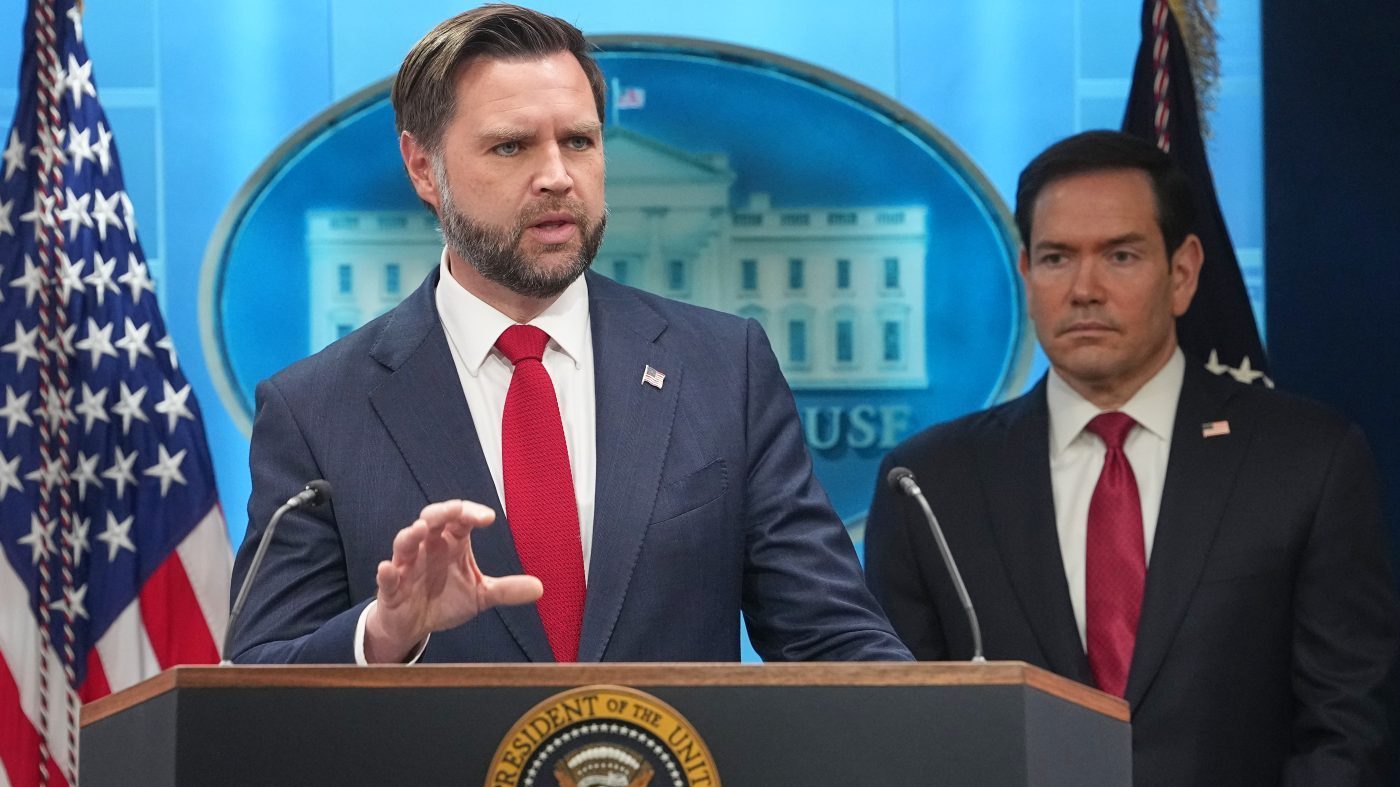
“The president is the one who makes the decision, and the president has said he would do it again,” Vance told reporters at a press briefing alongside Trump and Secretary of State Marco Rubio. Pressed on his personal view, Vance said, “My view is that my goal is and my job is to support the president of the United States.”
The exchange came just days after Vance posted a lengthy message on X blaming the ongoing Iran conflict for the GOP's loss of both the House and the Senate. “The reason we lost is the war. The president himself said so last night,” he wrote, adding that anyone arguing the war was worth losing the Senate for six years should say so openly. “But everyone knows why we lost. And any honest conversation about where we go from here must start there.”
Trump, appearing alongside Vance, said he had “no problem” with the vice president's social media post, calling it “very accurate.” But he added that he would have included one additional point: “I would have said that, ‘Would you do it again?’ And absolutely, the answer is yes, because we cannot allow Iran to have a nuclear weapon.”
Vance echoed that rationale Friday, arguing that preventing Iran from acquiring a nuclear weapon is a vital national security objective. “It's the biggest state sponsor of terrorism,” he said. “If they had a nuclear weapon, they would use it as leverage, or God forbid, they would attack and kill thousands, hundreds of thousands, potentially of innocent people.”
The midterms delivered a stinging rebuke to the administration, with Democrats reclaiming control of both chambers. The Iran war, which began under Trump's second term, has become a central issue in the post-election blame game. Vance's public acknowledgment that the war cost the party its majorities has opened a fissure within the GOP, with some conservatives arguing the sacrifice was necessary for national security and others questioning the administration's strategy.
Trump's unequivocal endorsement of the war effort, even in the face of electoral defeat, signals he intends to stay the course. But the political fallout is far from settled. As Republicans regroup, the debate over whether the Iran conflict was a justifiable trade-off—or a strategic blunder—is likely to shape the party's internal contests and the run-up to the next presidential cycle. Recent polling suggests that the political landscape has already shifted, with Secretary of State Marco Rubio emerging as a favorite among GOP primary voters, while Vance's standing has slipped amid the war's unpopularity.
For now, the administration is projecting unity. Trump's and Vance's public statements appear coordinated, with the president taking the lead on defending the war and the vice president focusing on the political reality. But the tension between those roles could intensify as the new Congress convenes and Democrats begin wielding their oversight powers.
The war's economic toll is also becoming a factor. Rising costs, including a 6% increase in Thanksgiving dinner prices, have added to public discontent. The administration's focus on Iran has also coincided with other foreign policy challenges, including a controversial summit in Shenzhen where Trump embraced Chinese and Russian leaders, raising questions about America's global alliances.
As the political dust settles, the central question remains: Was the Iran war worth the loss of Congress? Trump says yes. Vance won't say. And the GOP's future may hinge on how it answers that question in the months ahead.