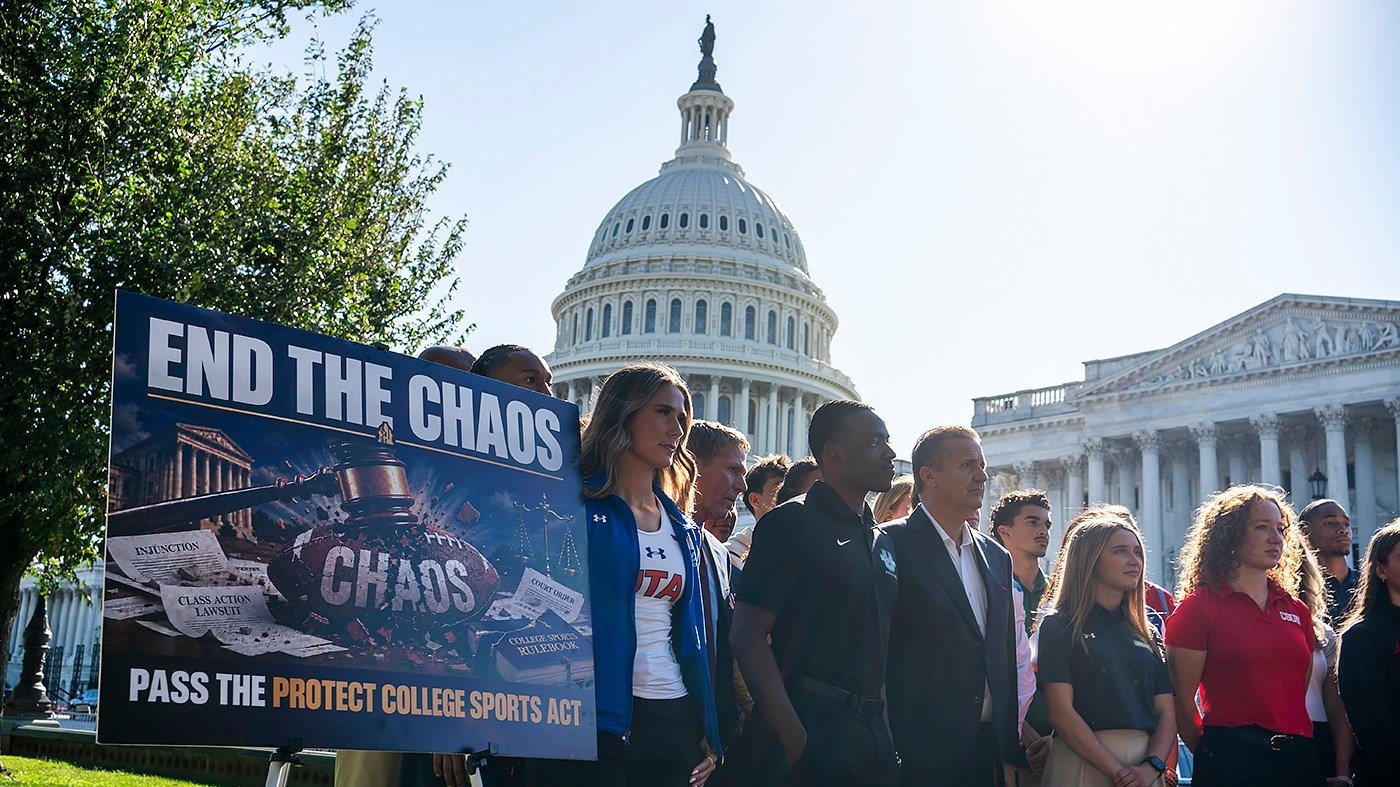
The House is set to take up a revised version of the Protect College Sports Act, a sweeping measure that would overhaul how college athletics are governed, as lawmakers scramble to finalize the legislation before the end of the year.
The bill cleared the Senate in late September with broad bipartisan support, but the House has introduced a key change: raising the maximum number of teams allowed in a conference from 20 to 22. That tweak is expected to accelerate further conference realignment, a topic of intense debate across the sport.

The legislation aims to end the legal chaos that has surrounded player eligibility, the transfer portal, and name, image, and likeness (NIL) deals. It would give the NCAA authority to enforce its own rules and protect it from lawsuits, a major shift intended to resolve conflicting court rulings that have left eligibility standards inconsistent across jurisdictions.
Sen. Ted Cruz (R-Texas), a lead co-sponsor, made the case for urgency on the Senate floor, arguing that the sport's popularity doesn't mean it's healthy. "Now I know some argue that college sports are doing just fine. They point to high television ratings, enthusiastic fan bases, and packed stadiums," Cruz said. "But popularity does not demonstrate that the system is healthy. It simply proves that the system is worth saving."
Sen. Maria Cantwell (D-Wash.) has been a key Democratic partner in pushing the bill, which has drawn support from President Trump and GOP House leadership. Trump praised the Senate's passage in September, calling it a "really big deal" and saying it "will not only save college sports, it will save the colleges themselves."
However, the timeline is tight. Some Democrats have raised concerns about the bill's provisions, and with Democrats set to hold a sizable majority in both chambers next year, supporters are pushing for a final vote before the current Congress adjourns. The clock is ticking, and failure to pass it now could mean starting over.
The NCAA and major conferences, including the Big Ten and SEC, have endorsed the legislation. But the conference cap change has drawn mixed reactions, with some smaller schools worried about competitive balance and the potential for super-conferences to dominate the landscape.
Beyond the cap, the bill's broader implications for college sports governance are significant. It would codify the NCAA's authority to regulate player compensation and eligibility, a move that could head off future lawsuits and bring stability to a system that has been in flux since the Supreme Court's 2021 decision in NCAA v. Alston opened the door to NIL payments.
As the House prepares to debate, all eyes are on whether the modified bill can attract enough Democratic votes to pass. The outcome will shape the future of college athletics for years to come.