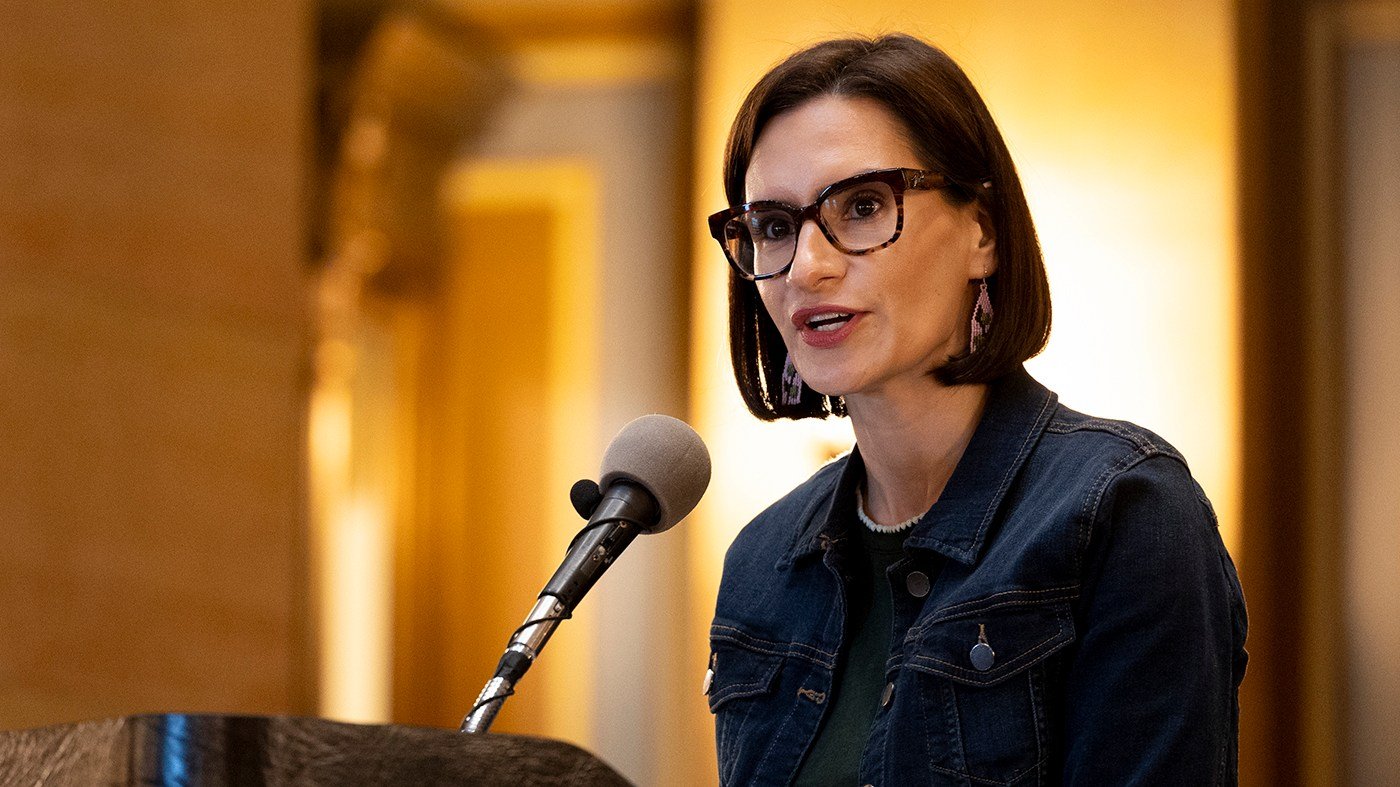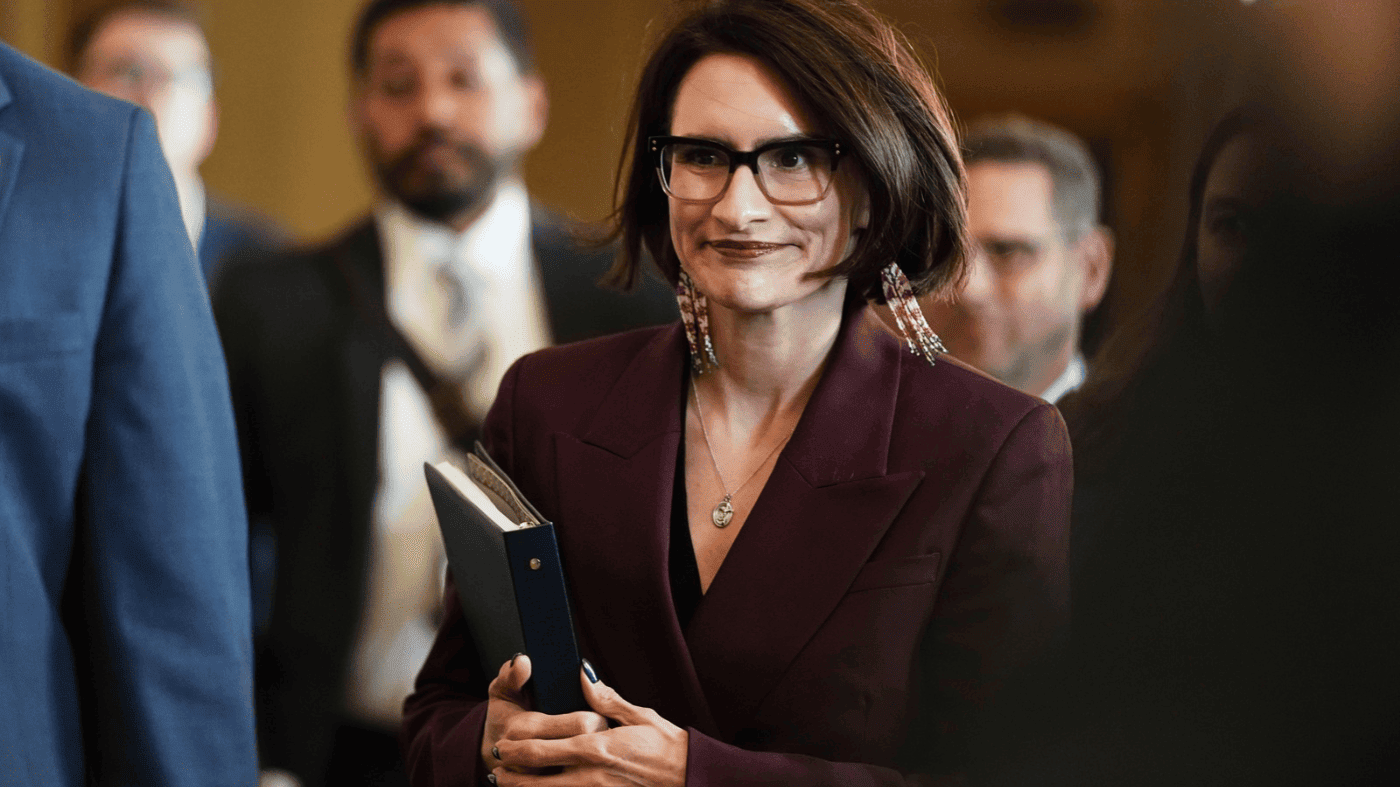
Sen.-elect Peggy Flanagan (D-Minn.) said Sunday that her victory alongside Sen.-elect Mary Peltola (D-Alaska) — the first Native American women ever elected to the U.S. Senate — means the Capitol now “looks a little bit more like America.”
Appearing on CNN’s “State of the Union” with Dana Bash, Flanagan was shown a photo she had posted of herself outside the Minnesota state House wearing a ribbon skirt, a traditional Indigenous garment. She said she didn’t run to make history, but added: “It is about time that a Native American woman served in the U.S. Senate, and I think it’s important for our democracy that it accurately reflects the people it seeks to represent.”
Flanagan, who is Ojibwe and Irish and a citizen of the White Earth Nation, said having both an Alaska Native woman and a Native American woman in the Senate makes the institution more representative. “That makes our capitol look a little bit more like America, and I think it helps us get better results,” she said. “And I am excited to serve with her.”
Peltola’s win last week was the final Democratic victory in a sweeping midterm cycle, as she defeated incumbent Republican Sen. Dan Sullivan. She will become the 56th Democrat in the Senate when the new Congress convenes in January. Peltola, who is Yup’ik and German American, previously served on the Orutsararmiut Traditional Native Council.
The two senators-elect are part of a broader wave of Indigenous candidates who won at various levels in the 2026 election. Crystalyne Curley, Speaker of the Navajo Nation Council, became the first woman to be elected Navajo Nation president, leading the largest reservation in the country. In the House, Reps. Sharice Davids (D-Kan.), Tom Cole (R-Okla.), and Josh Brecheen (R-Okla.) all won reelection, representing the Ho-Chunk, Chickasaw, and Choctaw nations respectively. Reps.-elect Clair Valdez (D-N.Y.) of the Ysleta del Sur Pueblo and Sean McCann (D-Minn.) of the Citizen Potawatomi Nation also secured seats in Congress.
Former Interior Secretary Deb Haaland was elected governor of New Mexico, becoming the first Native American to hold that office. Haaland, who served under President Biden as the first Native American Cabinet secretary, and Davids were the first Native American women elected to the House in 2018. The only previous Indigenous member of the Senate was Charles Curtis of the Kaw Nation, who served in the early 20th century and later became vice president under Herbert Hoover.
Flanagan’s comments underscore a growing emphasis on representation in American politics. She helped form the Minnesota House Native American Caucus and has been a longtime advocate for Indigenous issues. Her and Peltola’s arrivals in the Senate mark a historic shift, and Flanagan said she looks forward to working with Peltola to deliver results for their constituents.
The 2026 midterm elections saw a strong turnout for Democrats, with Peltola’s victory in Alaska capping a series of wins that gave the party a 56-seat majority in the Senate. Flanagan’s own win in Minnesota adds to the Democratic gains, and both women are expected to bring new perspectives to the chamber.
As the new Congress prepares to convene, the historic nature of these wins is not lost on Flanagan. “It’s about time,” she said, echoing a sentiment shared by many who see the Senate as finally beginning to reflect the diversity of the nation it serves.