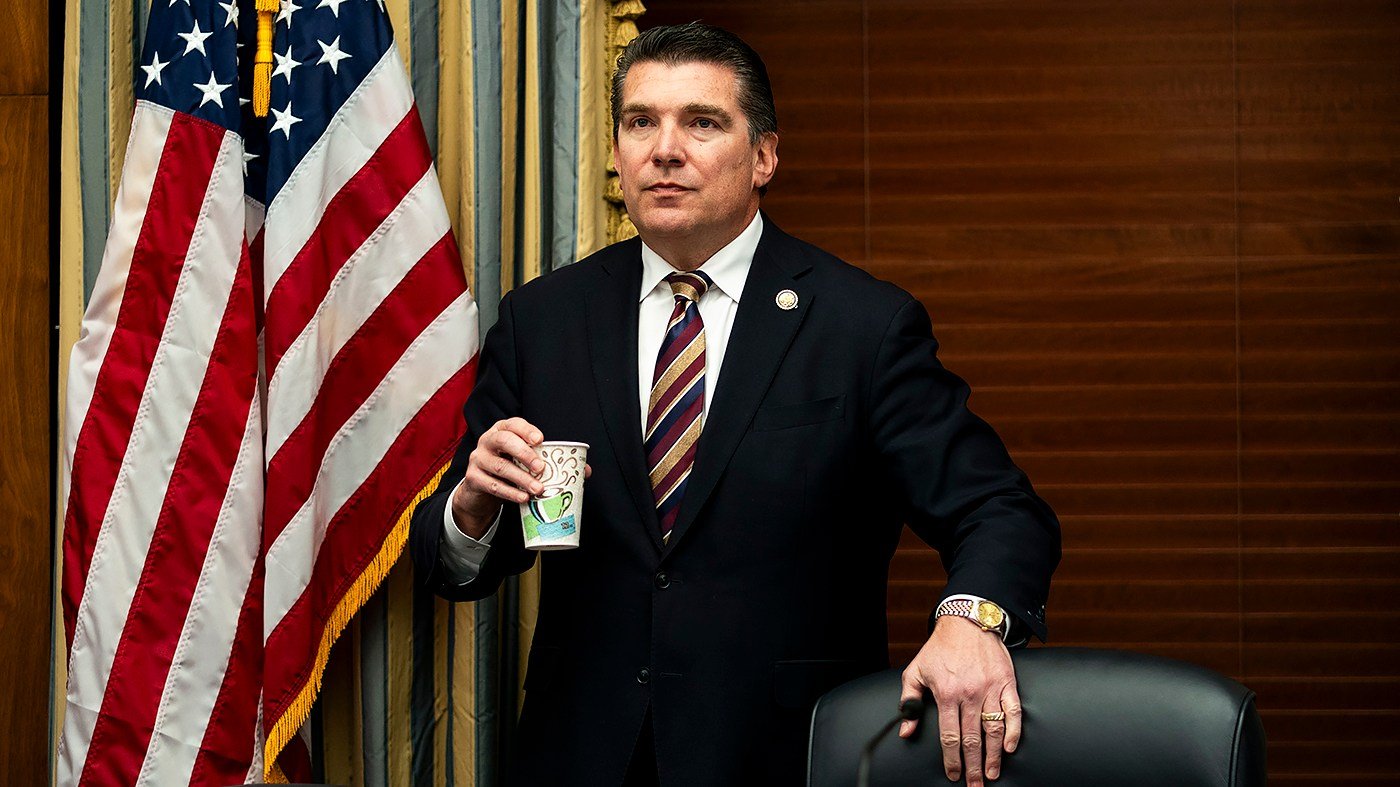
Rep. Jay Obernolte (R-Calif.) voiced confidence on Sunday that Congress can still pass a bipartisan artificial intelligence bill before the end of the year, even as Republicans face a shrinking legislative window ahead of the Democratic takeover of the House in January.
Obernolte, who chairs the House Republican Policy Committee, said lawmakers have made notable headway on the Great American AI Act (GAIA), a legislative package designed to establish federal safeguards for the rapidly evolving technology.

“I’m optimistic about our chances of getting something done in the current Congress,” Obernolte said during an interview on NewsNation’s “The Hill Sunday.”
“We have had major pieces of [GAIA] passed through the relevant policy committees, and they’re queued up for action on the House floor,” he told host Chris Stirewalt. “So we actually could get this done this year.”
The California Republican has emerged as a leading congressional voice advocating for federal AI regulations, citing the growing patchwork of state-level laws that have created compliance headaches for tech companies operating across state lines.
“All the 50 states are going in 50 different directions on AI regulation,” Obernolte said, stressing the need to protect Americans from AI misuse while still allowing the technology’s economic benefits to flourish.
The push comes as Democrats prepare to assume control of the House following this month’s midterm elections, a shift that could complicate efforts to reach a consensus on AI oversight. Obernolte acknowledged that any successful legislation will require bipartisan cooperation, regardless of which party holds the gavel.
“At the end of the day, anything that we pass, regardless of who controls the House and who controls the Senate, whatever gets passed needs 60 votes in the Senate to avoid the filibuster, and it’s going to need the signature of the president of the United States,” he said.
Obernolte noted that GAIA already has six bipartisan co-sponsors and that portions of the bill have drawn support from lawmakers in both parties. He remains hopeful that the current Congress can deliver.
“I’m optimistic that we can get the job done,” he said.
This legislative effort comes amid broader debates over AI governance, including recent moves by California’s attorney general to subpoena Nvidia over its AI chip sales in China, highlighting the regulatory scrutiny facing the sector.