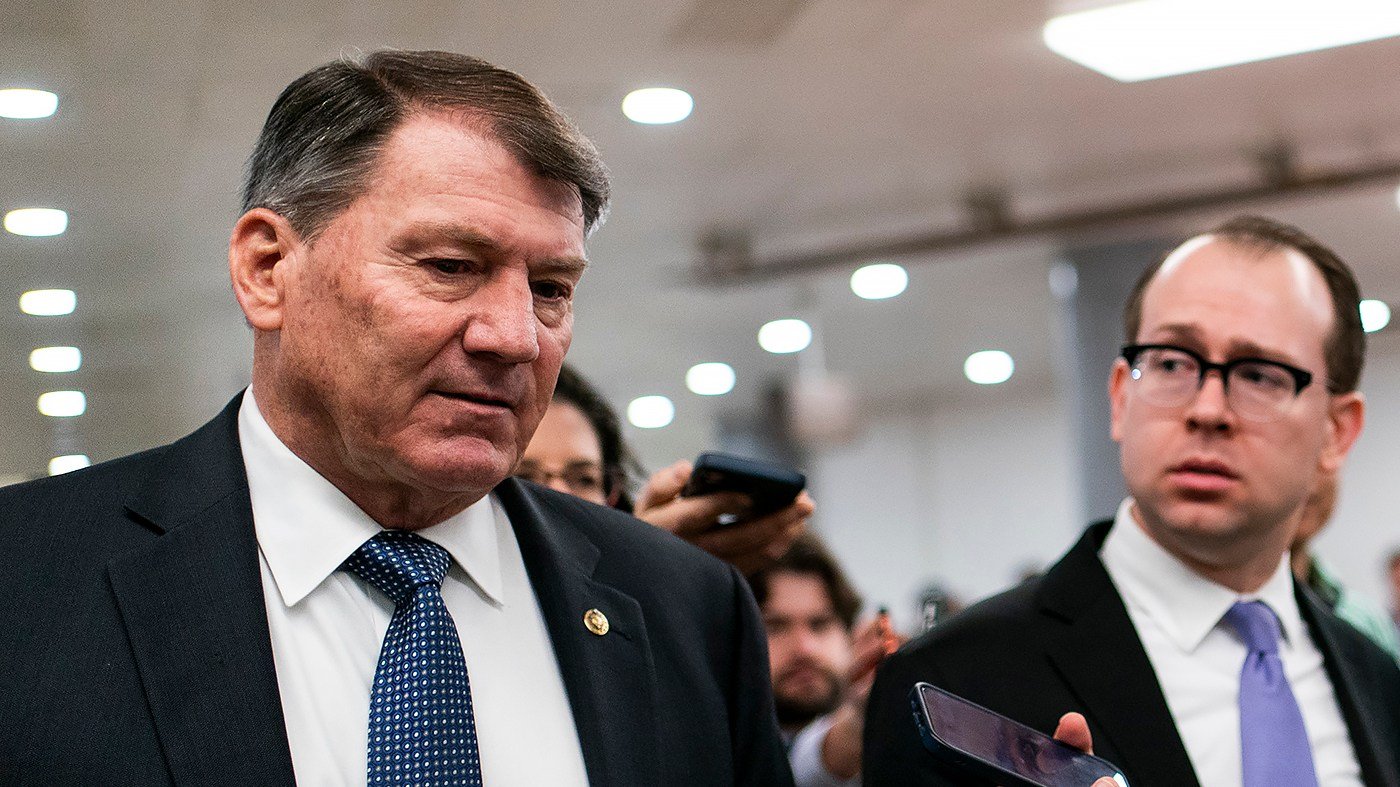
The Pentagon has quietly instructed its personnel to scale back informal and social engagements with their Canadian military counterparts, according to Sen. Mike Rounds (R-S.D.), who disclosed the memo on Saturday during the Halifax International Security Forum in Nova Scotia.
Rounds said the directive, drafted several months ago and only recently signed, does not affect formal alliance structures such as NORAD, NATO, or the Five Eyes intelligence-sharing pact. Instead, it targets casual contact between American and Canadian officers—an unusual step that has raised eyebrows among lawmakers from both parties.
“Really what this amounts to is, apparently, they were hoping that it would help promote and say, ‘Look, we really want you to bring up your defense spending,’” Rounds told reporters. He noted that Canadian officials at the summit indicated the policy matches what they have already been practicing for about a year and a half, suggesting it may be more of a formalization than a new restriction.
Rounds, who led a bipartisan congressional delegation that included Democratic Sens. Kirsten Gillibrand (N.Y.), Chris Coons (Del.), Tim Kaine (Va.), and Andy Kim (N.J.), said the memo was likely not intended for public release. He framed it as “a reaffirmation of what has already been” based on discussions with Canadian partners.
“Our goal up here is to find a way in which these types of memos are not necessary or issued in the future because of a renewed sense of cooperation between our two countries,” Rounds added.
The revelation comes amid broader debates over defense spending within the alliance. As NATO's spending surge risks being wasted on a fragmented defense industry, the memo could be seen as an attempt to pressure Ottawa to boost its military budget. However, lawmakers argued that such tactics are counterproductive.
Sen. Tim Kaine, a member of the Senate Foreign Relations Committee, called the memo’s tone “bad” and “unnecessary.” He expressed hope that the incoming Congress would adopt a more constructive approach. “We understand this actually goes backaways and is just a formalization of something that is now months and months old,” Kaine said. “I do think the new Congress is going to change the tone dramatically.”
Sen. Chris Coons echoed that sentiment, emphasizing the importance of unity among allies. “I’m relieved this has no significant operational impact,” he said. “But at the end of the day, as we’ve got our adversaries globally pulling together and working more closely — Iran, North Korea, China, Russia — the United States should be doing nothing to further aggravate some of the distance and division between the United States and Canada.”
The Pentagon’s move has also drawn attention to broader friction within the alliance. As Trump prepares to brief on a trilateral summit while GOP splits over defense spending, the memo could complicate efforts to present a united front. Some observers see it as part of a pattern of using informal channels to pressure allies, a tactic that may backfire diplomatically.
Meanwhile, the congressional delegation’s visit underscored bipartisan concern about the state of US-Canada relations. The senators stressed the need for closer cooperation, particularly in light of shared security challenges. As Danish lawmakers endorse a US-Greenland defense pact amid Trump's Arctic push, the Arctic dimension adds another layer of urgency to maintaining strong ties with Canada.
The memo’s existence raises questions about the Pentagon’s broader strategy toward allies. While formal military alliances remain intact, the restriction on informal interactions could signal a shift in tone. Lawmakers from both parties are expected to press for clarity on the policy and its implications for the US-Canada defense relationship.