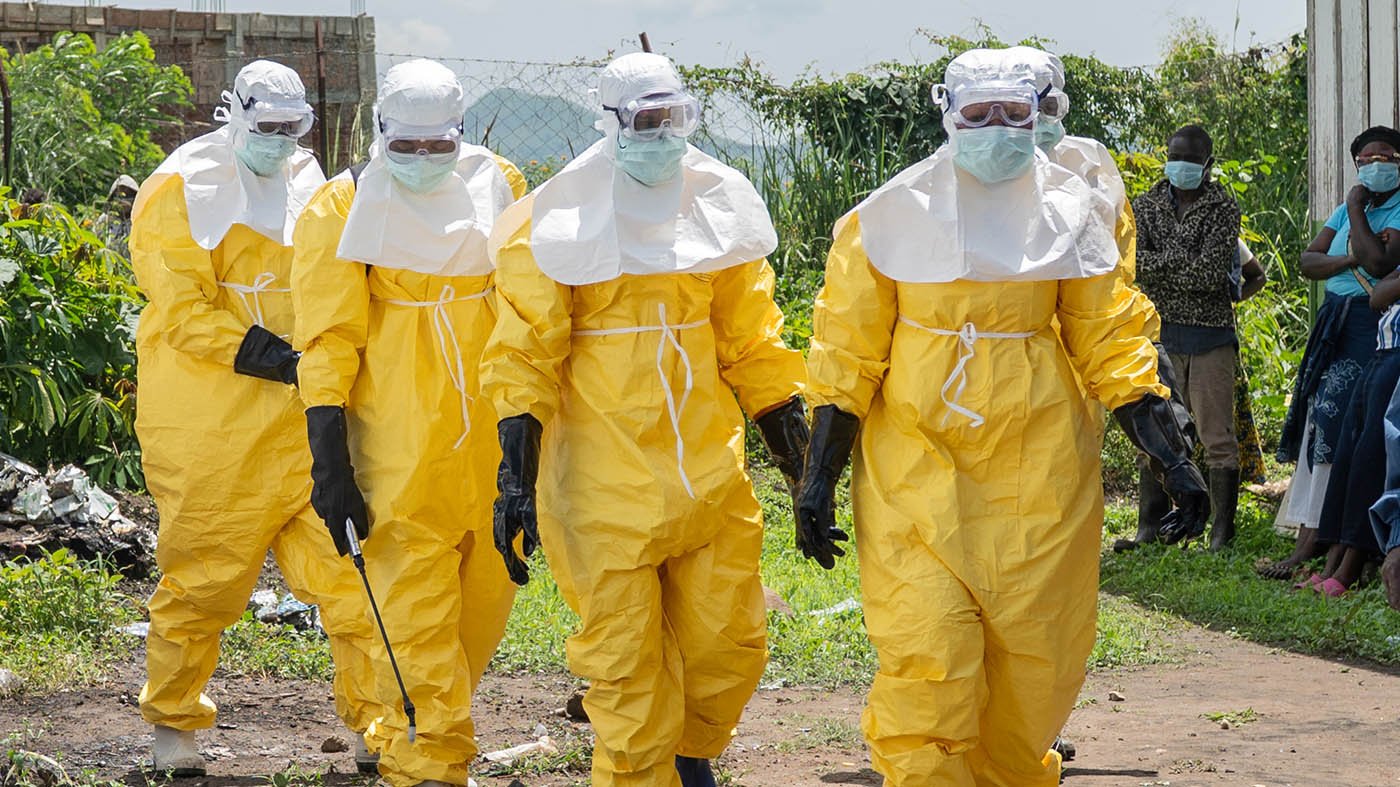
The World Health Organization's director-general has acknowledged that the Ebola outbreak in the Democratic Republic of Congo is spreading faster than international efforts to contain it, a stark admission that underscores the severity of the crisis.
In a statement released after a Wednesday meeting with health partners in Kinshasa, Tedros Adhanom Ghebreyesus said the "outbreak is spreading faster than our scale up of the response." The remarks came as new data showed the outbreak has become the largest in recorded history, with the majority of cases concentrated in Congo.
According to WHO figures as of July 30, Congo has reported 3,605 confirmed cases, including 1,587 deaths. Tedros noted that new cases of the Bundibugyo strain have doubled "over the past week alone" in hotspot areas, signaling an alarming acceleration.
"We all agree that we must urgently and massively scale up all our efforts across all pillars of the response and by all partners," Tedros said, calling for enhanced intergovernmental cooperation, better protection for healthcare workers, and expanded access to medical care.
The international response has been hampered by armed conflict and deep public mistrust in the region. In an open letter to Congo residents in late May, Tedros appealed to warring parties to declare a ceasefire, writing: "I urge you, I implore you: give us the space to help the people who need it most." He also acknowledged past missteps, stating, "Trust must be earned, it cannot be assumed. We have not always done things correctly. But I promise you, we are here to learn as much as we are here to help."
Dr. Jean Kaseya, director-general of the Africa Centres for Disease Control and Prevention, pushed back on the notion that funding is the primary obstacle. Speaking on a Thursday press call, he noted that the response has received more than $1.4 million in support from the U.S. and other partners. "Ladies and gentlemen, let me be clear that money is not the issue today," he said. "Then, what is the issue? The issue is we are not listening."
Kaseya said he has been working with leaders in Congo's Ituri province to develop a community-centered response, including free healthcare services, safe reopening of schools in September, and stronger cross-border coordination. These efforts aim to address the local dynamics that have fueled the outbreak's spread.
The political dimension of the crisis has drawn attention in Washington. In a letter to Secretary of State Marco Rubio last week, Senators Jeanne Shaheen (D-N.H.) and Lisa Murkowski (R-Alaska) urged the Trump administration to release funding for family planning and supplies to support women affected by the outbreak. Democrats have criticized the administration's cuts to global health programs, including the shutdown of USAID and the U.S. withdrawal from the WHO.
On Wednesday, the State Department announced an additional $242 million in assistance for the Ebola response, building on an initial $350 million already provided to Congo, South Sudan, and Uganda. The department has also imposed advanced screening at U.S. airports for travelers from affected countries and temporarily banned foreign nationals from those nations.
In an order extending the ban for another 30 days, Assistant Secretary for Health Admiral Brian Christine warned that the spread in Congo and Uganda, and the threat of spread to South Sudan, "constitutes a serious danger of the introduction of this disease into the United States due to the limited screening and testing and mitigation measures currently available."
As the outbreak continues to escalate, health officials and lawmakers alike are grappling with how to mount an effective response amid conflict, mistrust, and political upheaval. The situation remains fluid, with experts warning that without a massive and coordinated scale-up, the virus could spread further beyond the region.