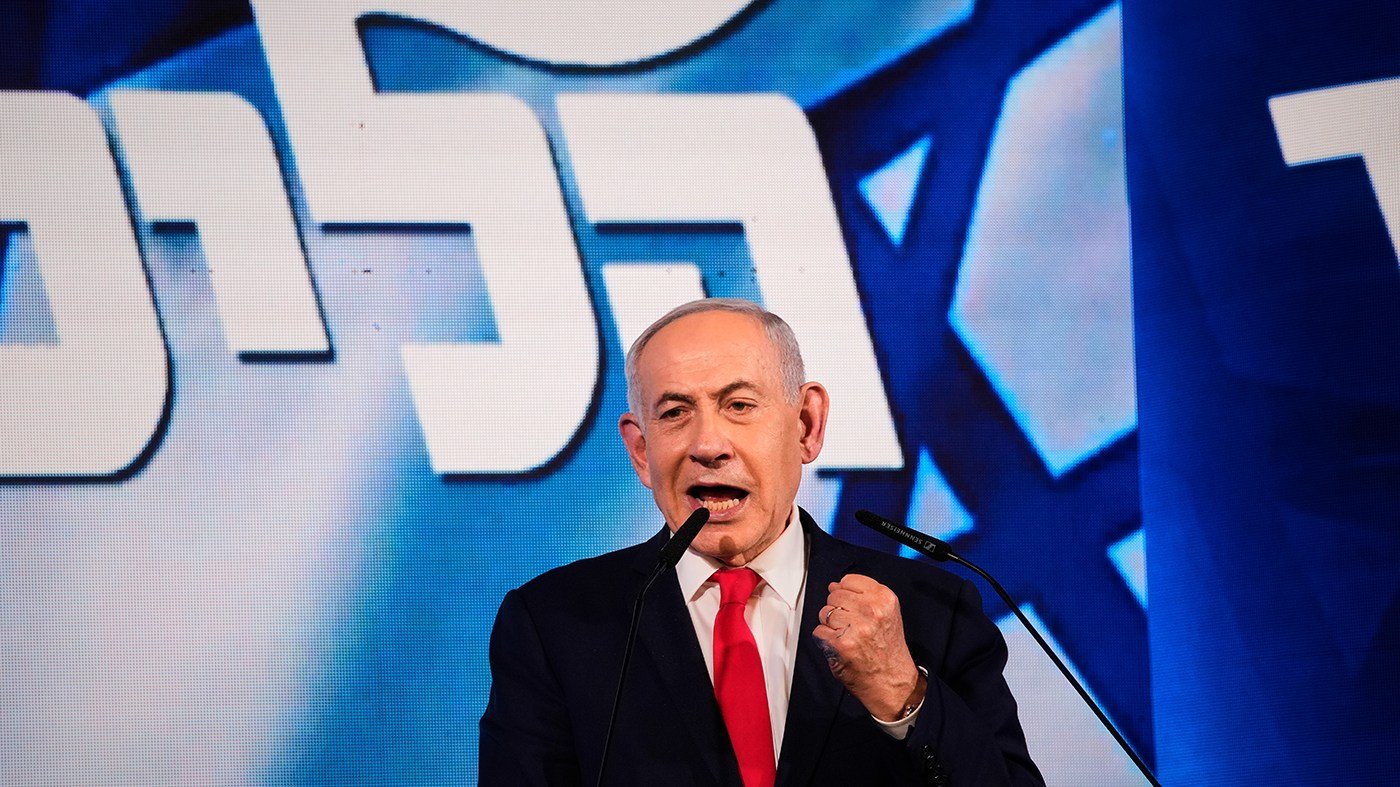
Benjamin Netanyahu's political survival is once again on the line. Despite failing to secure a Knesset majority—a feat he has never achieved—Israel's longest-serving prime minister is maneuvering to assemble a coalition that would keep him in power and shield him from conviction in his ongoing corruption and bribery trial.
The latest election results delivered a split verdict. Netanyahu's Likud party captured a plurality of seats but lost ground compared to its previous representation. Meanwhile, the opposition bloc, led by former military chief Gadi Eisenkot, claimed a larger combined plurality, though Eisenkot's own party trailed Likud. Unless Eisenkot can demonstrate a viable 61-seat majority, President Isaac Herzog may have little choice but to task Netanyahu with forming the next government.
Another Netanyahu-led government would be a troubling prospect for both Israel and Washington. The prime minister has repeatedly pressed President Trump to launch a military strike on Iran, and he did so again before the election, hoping that a conflict would rally voters behind him. That gambit failed. After the vote, Trump rebuffed Netanyahu once more during what was described as a candid conversation, but with the midterm elections now behind him, Trump faces a hostile Congress that could throttle his domestic agenda. Foreign policy offers him freer rein, making him more receptive to Netanyahu's urgings.
Eisenkot's path to power is fraught. He, like Netanyahu, has publicly ruled out including Arab parties in his coalition, a stance that reflects a historical reluctance—only three Israeli Arabs have ever held ministerial posts since 1948. Yet Eisenkot appears more pragmatic than his rival. Whereas Netanyahu might welcome a deadlocked Knesset to trigger another election, Eisenkot knows that opposition leaders who fail rarely get a second chance.
Adding to the complexity, former Defense Minister Avigdor Liberman has vowed not to serve in any government that includes Arab parties. Eisenkot must decide whether to offer concessions to win their support, potentially by elevating Mansour Abbas, leader of the Ra'am party, to a deputy ministerial role or a senior Foreign Ministry position. Such a move could secure Ra'am's backing and bolster ties with Gulf Arab states.
There is precedent for this approach. Israel's ultra-Orthodox parties long refused ministerial posts but accepted deputy ministerships, a compromise that allowed them to participate in government without full responsibility. A similar arrangement with Arab parties might entice Liberman to relent and join a coalition led by Eisenkot.
Netanyahu's tenure has exacted a heavy toll. He has damaged Israel's international standing, exhausted its military with multi-front conflicts, and overseen an economy that has eroded living standards for many citizens. His departure would be welcomed by many Israelis—and by many Americans, including a majority of Jewish Americans.
As the political maneuvering intensifies, the stakes extend beyond Israel's borders. The outcome will shape the U.S.-Israel relationship, particularly regarding Iran policy and regional stability. For now, the world watches to see whether Netanyahu can pull off another coalition miracle or whether Eisenkot can forge a new path.